The Well of Shadows Battambang memorial was the quietest hour of my weekend, and the one I’ve thought about most since. It stands on the grounds of an old pagoda that the Khmer Rouge turned into a prison. According to the memorial’s own inscription, 10,008 people were put to death there. We walked in on a Sunday morning to the sound of kids laughing on trampolines, and walked out an hour later feeling very differently. Here’s what you’ll find, what it costs, and why I think anyone trying to understand Cambodia should go.
What the Well of Shadows Battambang Memorial Is
The memorial sits at Wat Samrong Knong, a pagoda just outside Battambang. The pagoda itself is old. Cambodianess reports it was founded in 1707. From April 1975 to January 1979, the Khmer Rouge used it to house soldiers and to hold, interrogate and kill prisoners.
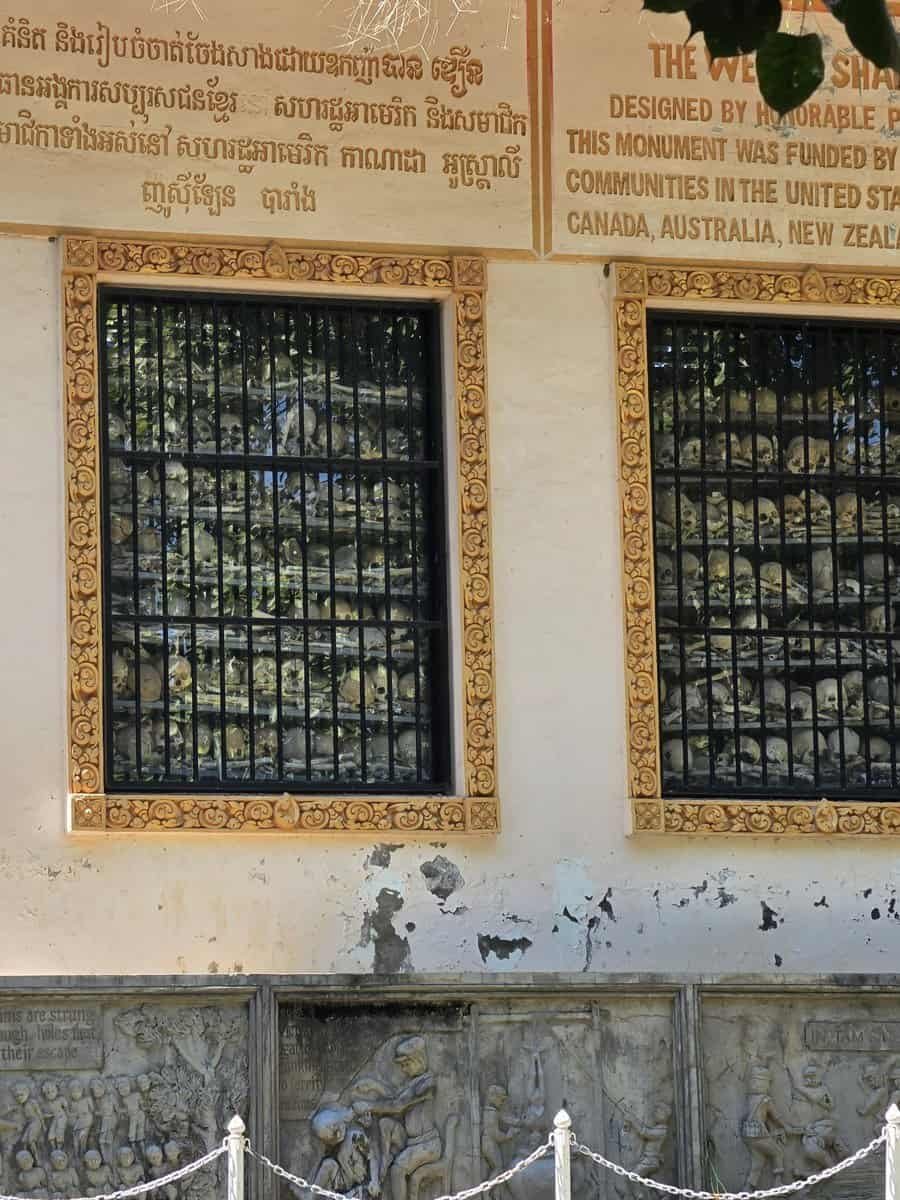
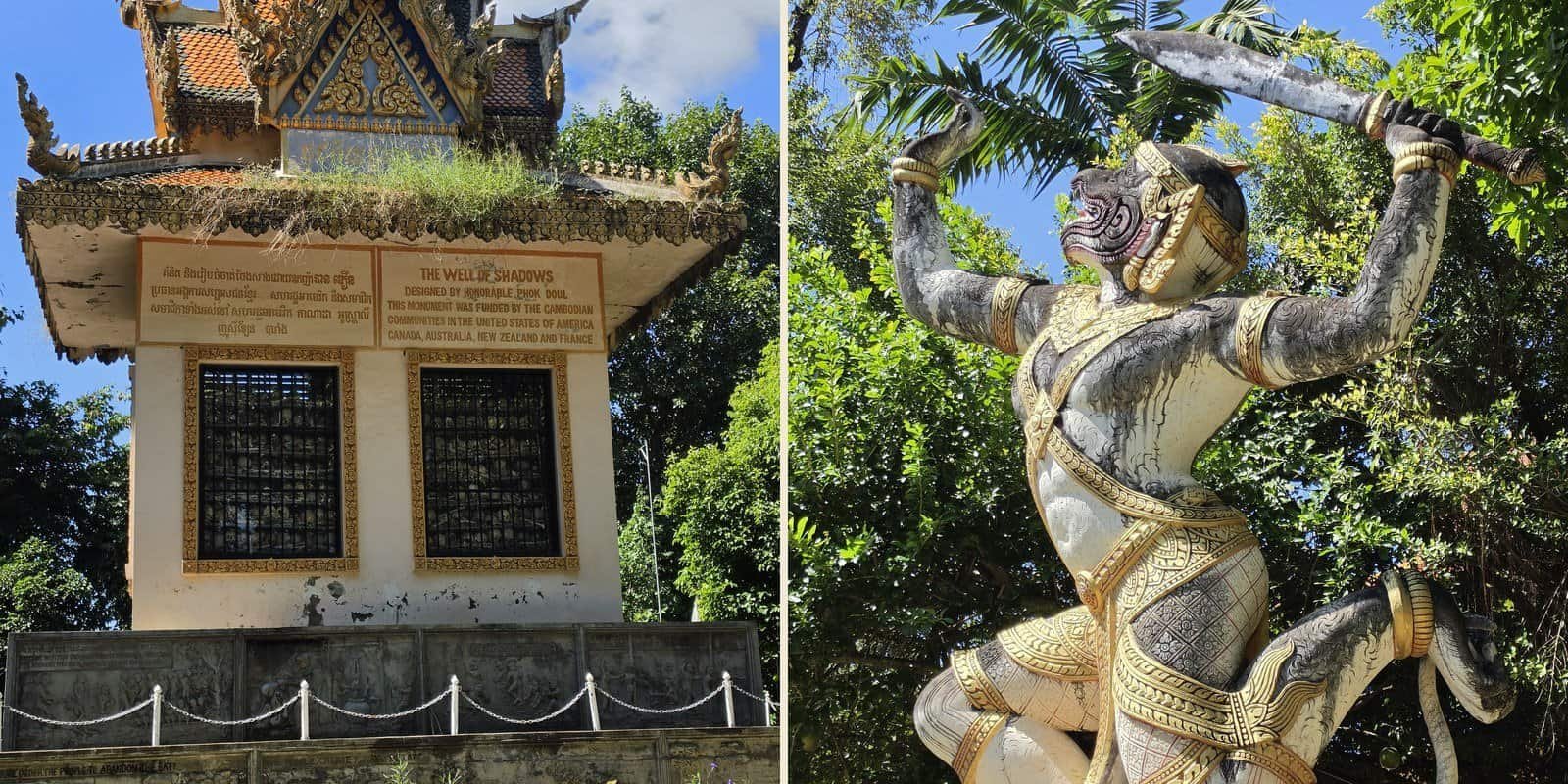
The memorial is a long rectangular structure with glass windows in its sides. Through the windows you see human bones and skulls. According to locals quoted by the Cambodia Tribunal Monitor, those remains were dug up from the ground the memorial now stands on. Carved panels around the outside show scenes from the Khmer Rouge years: forced labor, torture and executions.
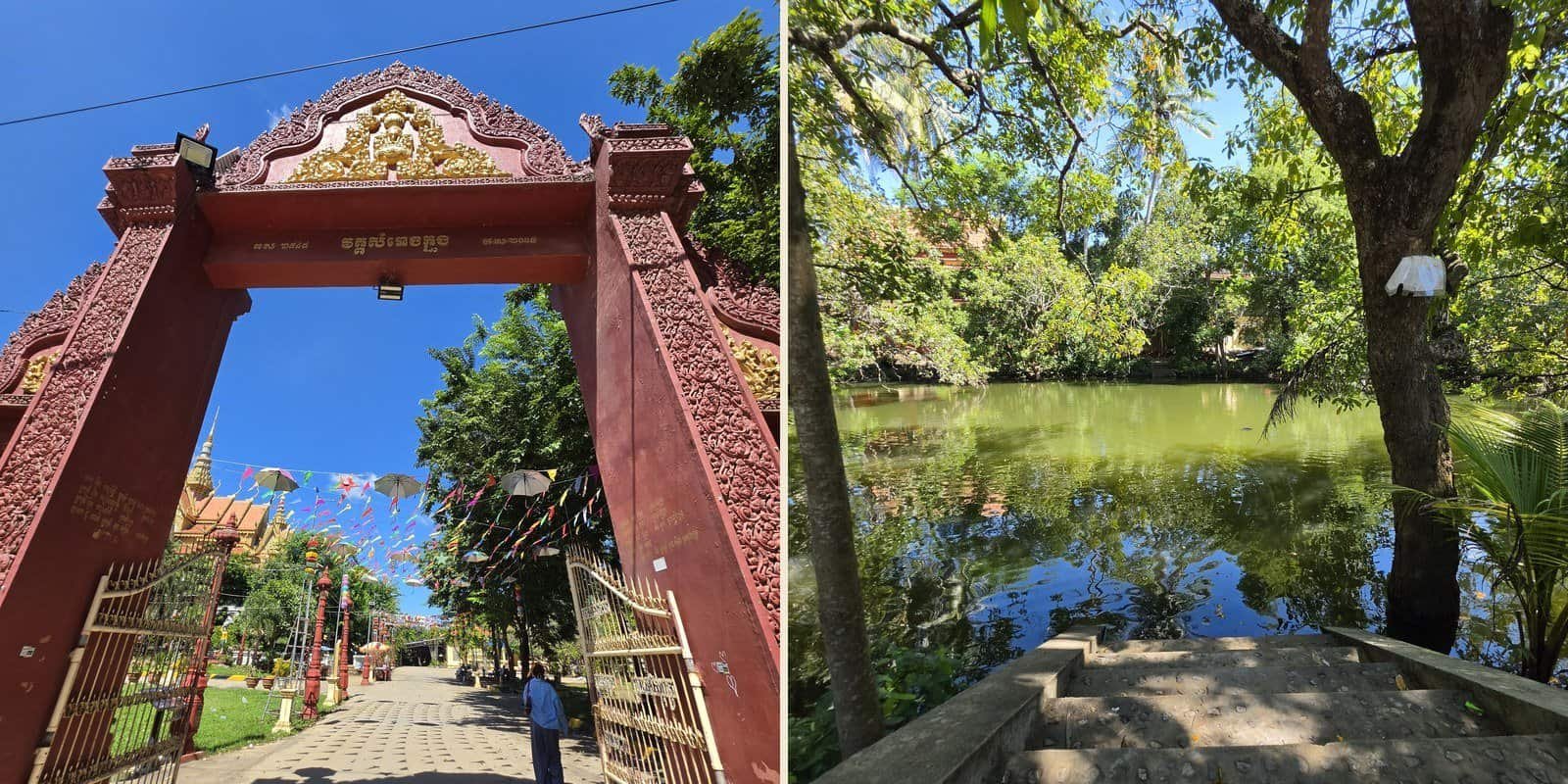
The name comes from the wells and pools on the grounds, where victims’ bodies were dumped. You can still see the pools as you walk deeper into the site. Here’s the location on Google Maps.
Walking In: Laughter at the Gate
We came here on our last morning, after checking out of our hotel, on a rented scooter. I was feeling sick by then, and I almost skipped it. I’m glad I didn’t.
The first thing that struck me was the noise. Near the entrance, locals had set up a few trampolines, and kids were jumping and shrieking with laughter. It felt strange at first, given where we were. Then it started to feel right. This is a living pagoda in a living neighborhood, and the children playing there are the generations the Khmer Rouge tried to make sure would never exist.
The deeper you walk, the quieter it gets. You pass the pools, the ruins of old structures slowly falling apart, and finally the memorial itself, with its windows full of bones.
The Carvings and the Bones
The carvings around the memorial don’t soften anything. Panel after panel shows people being worked, beaten and killed. Read together, they tell the story of what happened on this ground, and across the whole country, between 1975 and 1979.
Then you look through the glass and see the skulls. It’s one thing to know the number. It’s another to stand a few feet from the remains of people who died on the spot where you’re standing.
On the grounds there’s a reference to the Khmer Rouge saying about weeds: if you want to kill a weed, you pull it up by the roots. That was their policy toward whole families. They didn’t just kill the people they saw as enemies. They killed their parents, spouses and children too, so nobody would be left to remember or take revenge. Cambodia lost generations to that idea. Standing there, it stops being history and becomes something you feel.
Visiting the Well of Shadows Battambang: Entry and Etiquette
Nobody was checking or selling tickets when we visited. There’s a donation box, and we put in a dollar each, about 8,000 riel for the two of us. I think leaving something is the least you can do, ticket or no ticket.
The basics of visiting a site like this are simple. Dress the way you would for any pagoda, with shoulders and knees covered. Keep your voice down near the memorial. Take photos if you want; we did, and nobody objected. But think about what you’re photographing, and skip the smiling selfies in front of the bones.
We spent about an hour here. That was enough to walk the grounds, read the carvings and sit for a while. You won’t need longer, but don’t rush it either.
How It Fits Into a Battambang Trip
Battambang has more than one site from this period. On Phnom Sampov, the same hill as the bat cave, are the Killing Caves, which I didn’t visit. The Well of Shadows is closer to town, quieter, and much less visited.
The day before, at Mrs. Bun Roeung’s Ancient House, we learned that the Khmer Rouge seized that family home too and used it as a barracks. Seeing both gives you two sides of the same story: what the regime took from one family, and what it did to thousands of strangers in one place.
After the memorial, we rode out to Ek Phnom, an 11th century temple, where a Buddhist robe-offering festival was just getting started. Going from one to the other in the same afternoon felt like the right order. You see what Cambodia lost, and then you see what has survived.
Is the Well of Shadows Battambang Worth Visiting?
Yes, if you have any interest in history, and especially if you want to understand Cambodia beyond the temples. It’s a somber place, but it isn’t grim to visit. It’s peaceful, well cared for, and free apart from your donation.
If you’ve already seen Tuol Sleng or the Choeung Ek killing fields in Phnom Penh, this is a smaller, quieter version of that story, told in a provincial town. If you haven’t, the Well of Shadows Battambang memorial is a good place to start.
Final Word on the Well of Shadows Battambang
I came to Battambang for the bamboo train and the bats. The hour I spent at the Well of Shadows Battambang memorial is the one that stuck with me. Bring a dollar for the donation box, dress for a pagoda, and give it an hour. Leave the trampolines at the gate as your last memory of it, because that laughter is the point.
For the rest of the trip, including costs, where we stayed and whether Battambang is worth the ride, read my Battambang weekend trip breakdown. And if you’re planning a bigger Cambodia trip around history, start with the Cambodia travel guide.
Have you visited the Well of Shadows or another Khmer Rouge memorial in Cambodia? How did it stay with you? Tell me on Facebook or Instagram.