Hello Friends,
Boy, was I wrong about this one being just another easy woodland walk. The Iron Trail in East Canaan, Connecticut, delivers exactly what you want when you’re short on time but craving real elevation and genuine nature — a short loop that still makes your legs and lungs earn it. My sister and I rolled up one afternoon, laced up on the side of the road, and got more out of ninety minutes than we expected: fern fields, ancient lichen colonies, a summit cairn, and a random trailside conversation that turned into the best part of the day. Here’s how the Iron Trail Connecticut hike actually goes, and whether it’s worth your time.
Getting to the Iron Trail Trailhead
The trail technically starts at Beckley Iron Furnace State Park in East Canaan, but we accessed it from the junction off Route 7. There’s no formal parking lot here — you pull off on the roadside, and that’s part of the charm. Nothing fancy, no fanfare, just Connecticut hiking at its most authentic: pull over, lace up, and go.
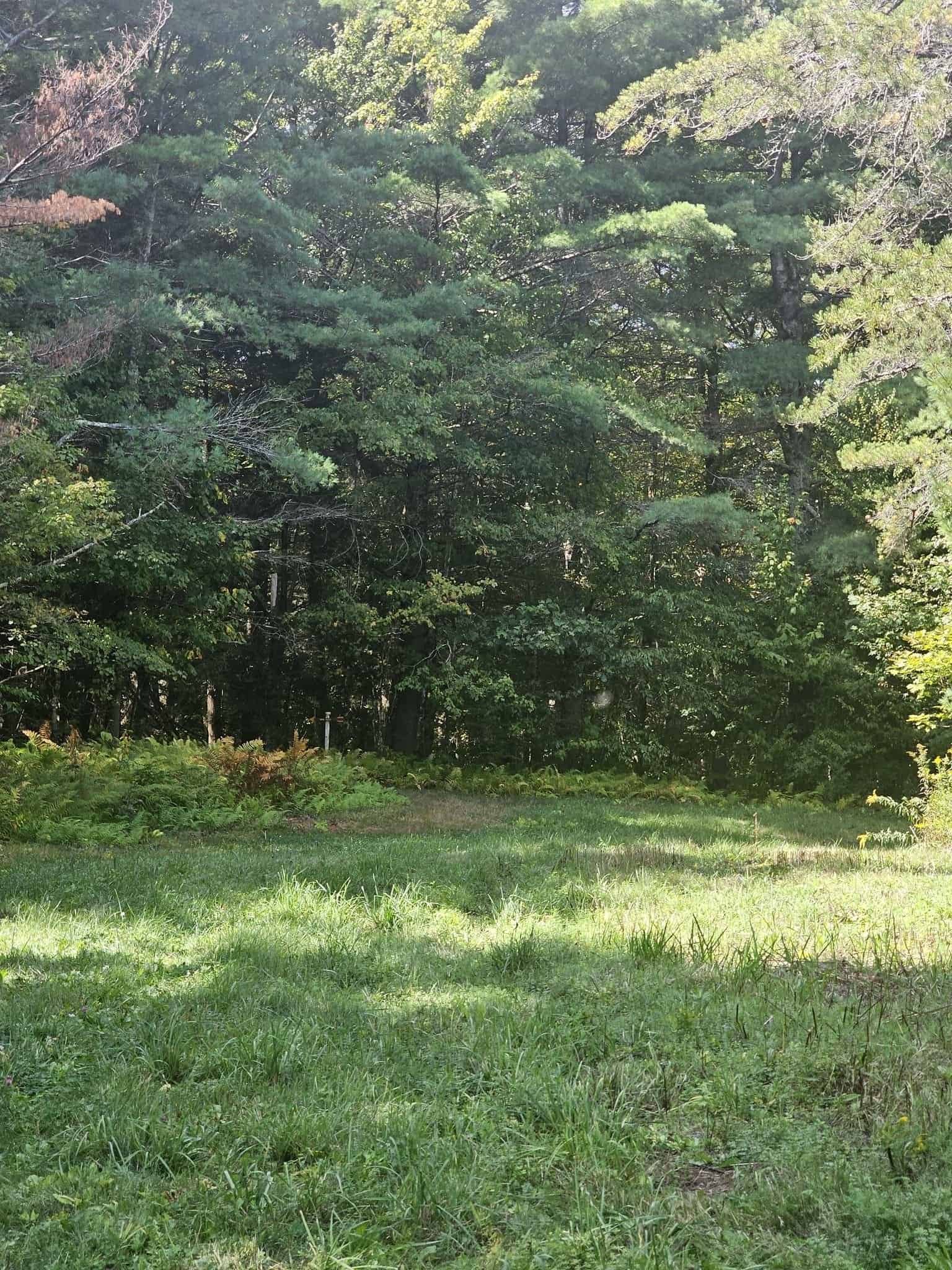
The area’s name is no accident. Beckley Furnace is a preserved piece of Connecticut’s iron-making history, when this corner of the state ran on ore and charcoal, and the trail threads through the same woods those old operations once worked. We were the only ones at the trailhead when we arrived, which gave the whole thing a raw, unfiltered feel. Cross a small field, spot the large arrow marker pointing toward the Iron Trail, and you’re committed.
The Initial Descent: Easier Now, Harder Later
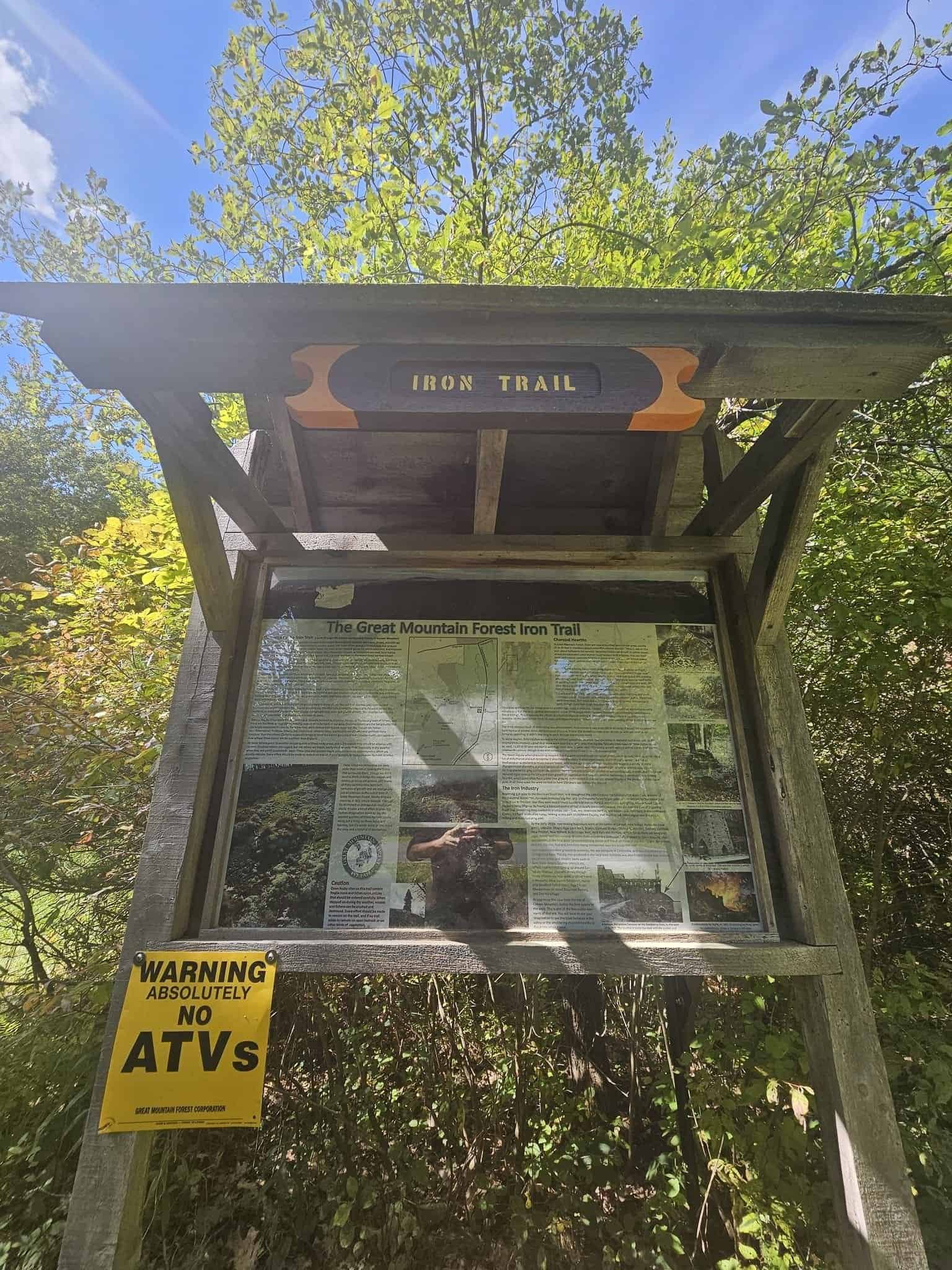
The path wastes no time getting interesting. Right off the bat you’re navigating uphill terrain, scrambling over old stone walls that tell stories of Connecticut’s farming past. Then comes the descent — a nice downhill stretch that feels great in the moment.
“This is going to suck on the way back,” my sister said, reading my mind.
She was right. Every foot you drop on this trail is a foot you’ll climb when you’re already tired. But that’s exactly what makes the Iron Trail Connecticut hike worth doing — it asks something of you. This is a loop that front-loads the easy part and saves the work for when your legs are already talking to you. Good. That’s the deal you make with a real trail.
Through the Fern Path and Across the Bridge
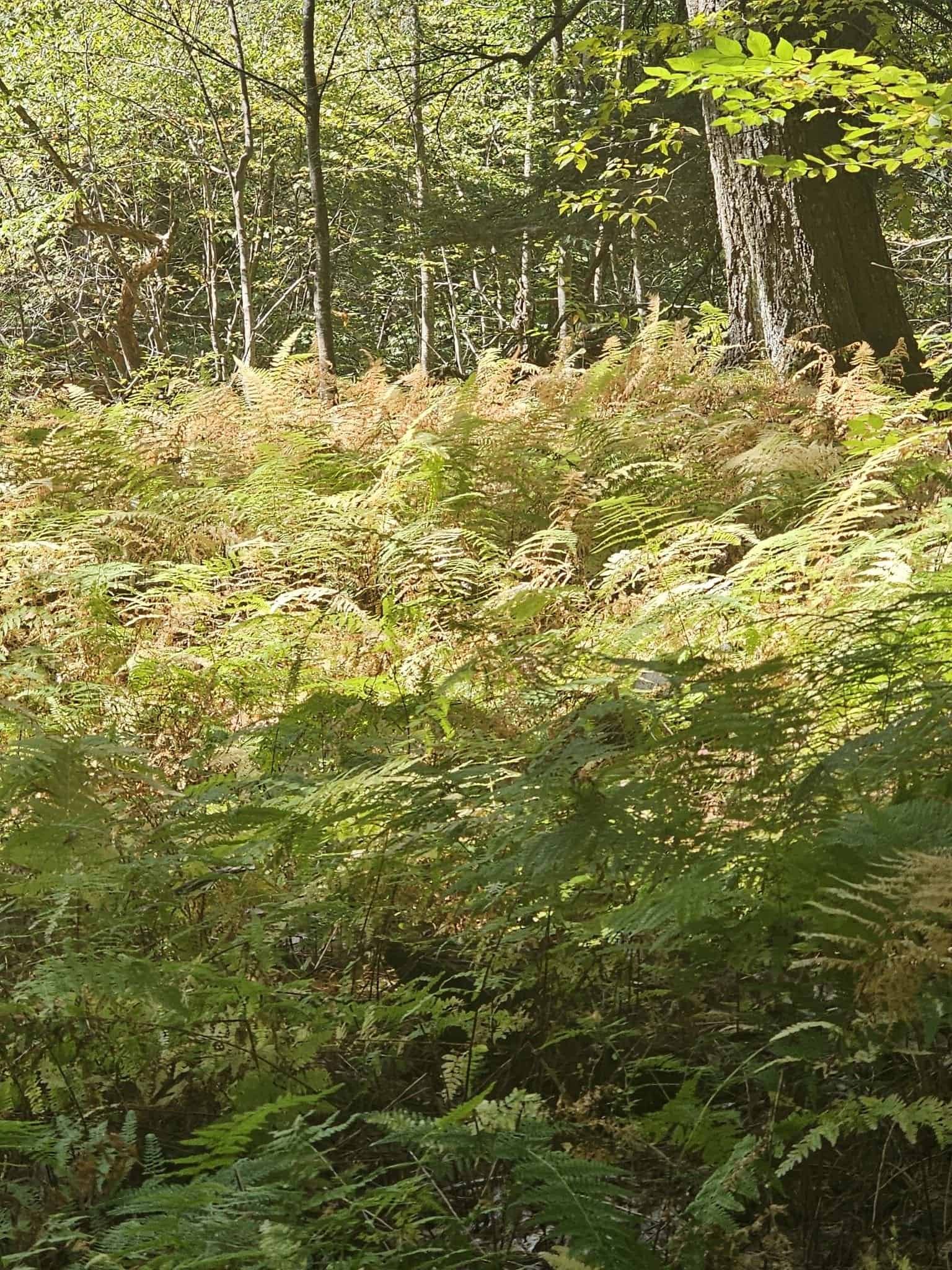
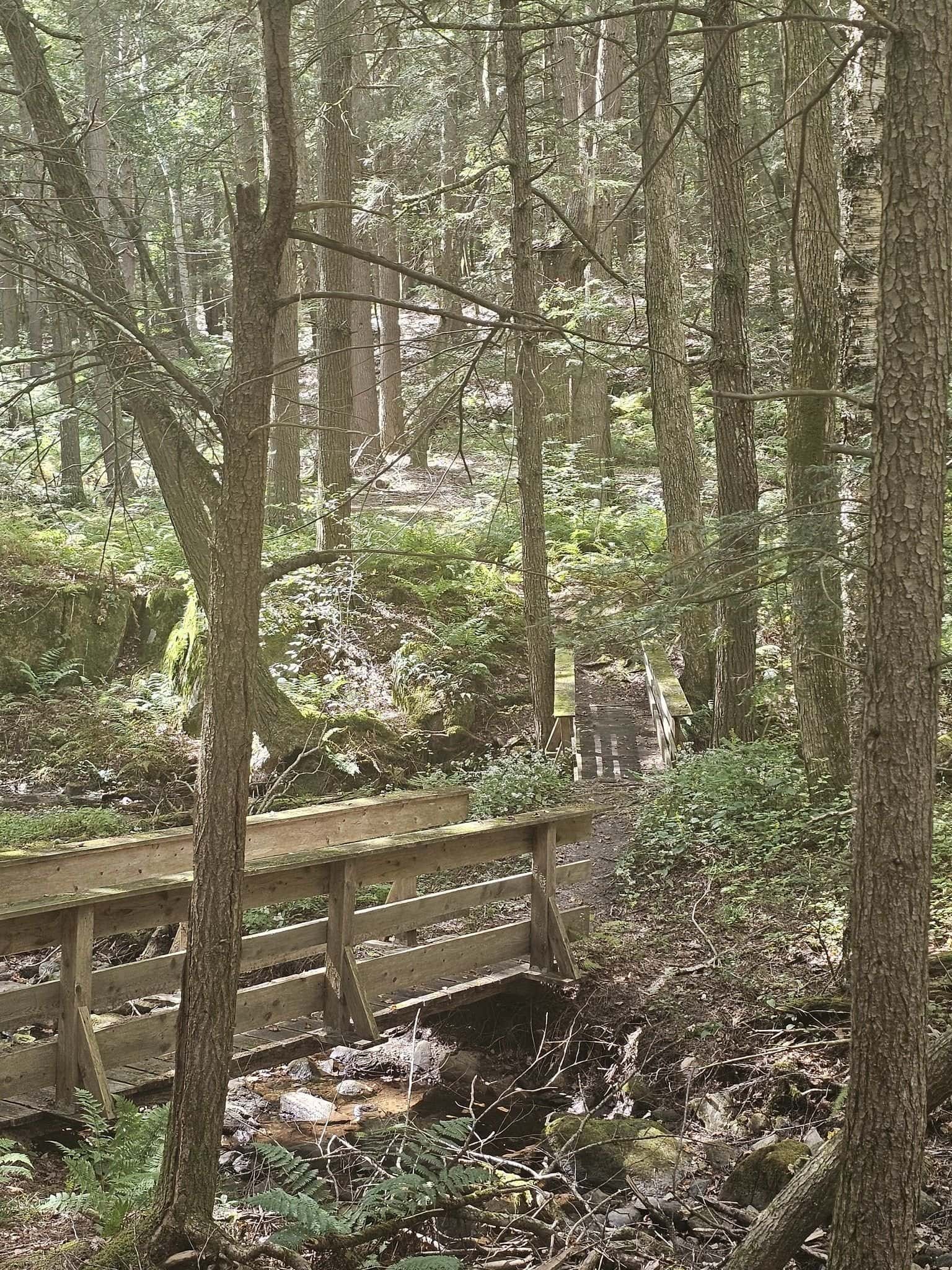
At the bottom of the descent, the trail opens into an expansive fern field — one of those moments where you stop and actually notice you’re in nature rather than just moving through it. The bridge crossing the river is solid and well-maintained, the kind of quiet infrastructure that makes you appreciate the local land trust’s work keeping these trails passable.
Then the real climb begins.
The Heart-Pumping Ascent and Protected Lichen Fields
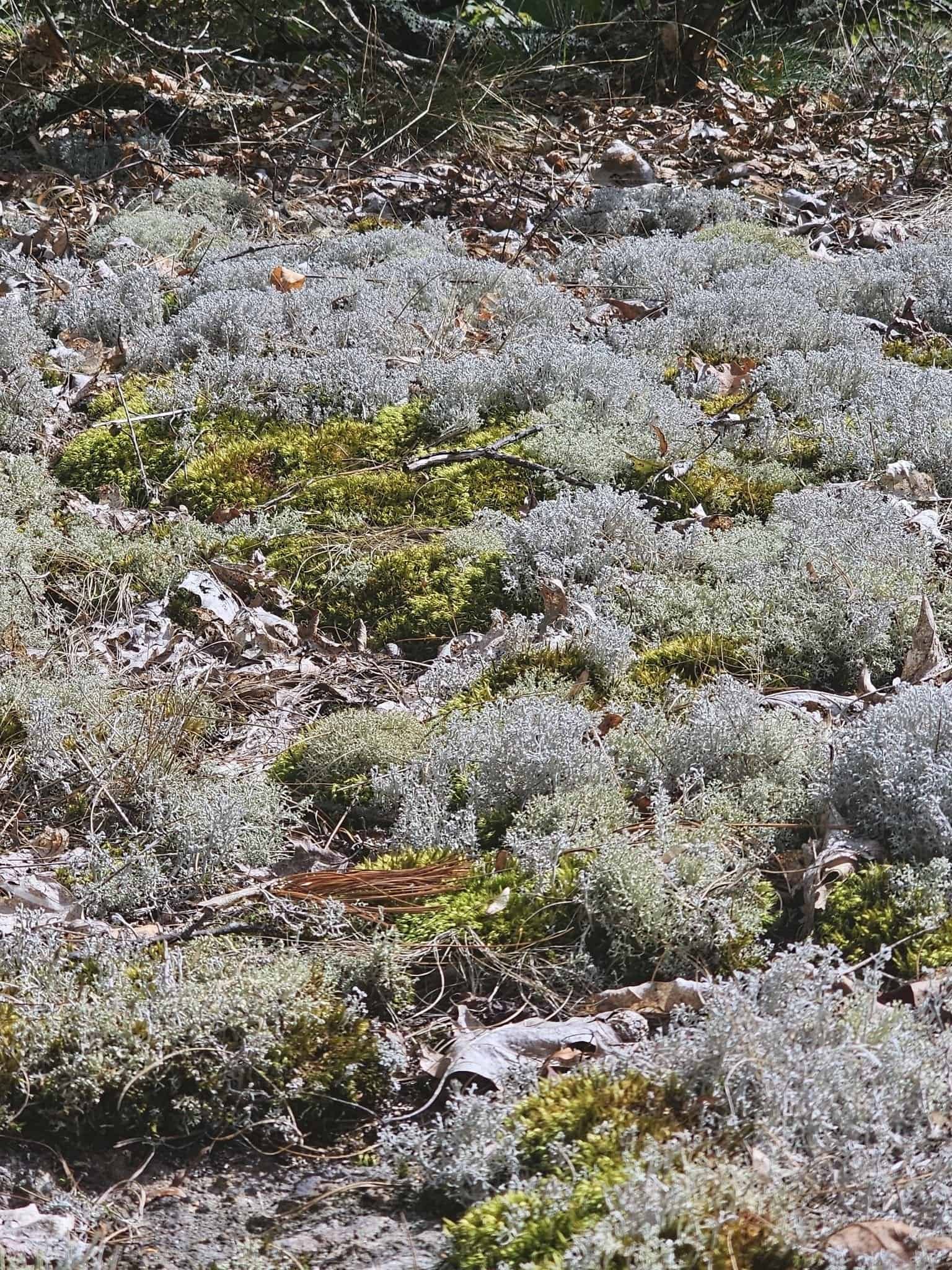
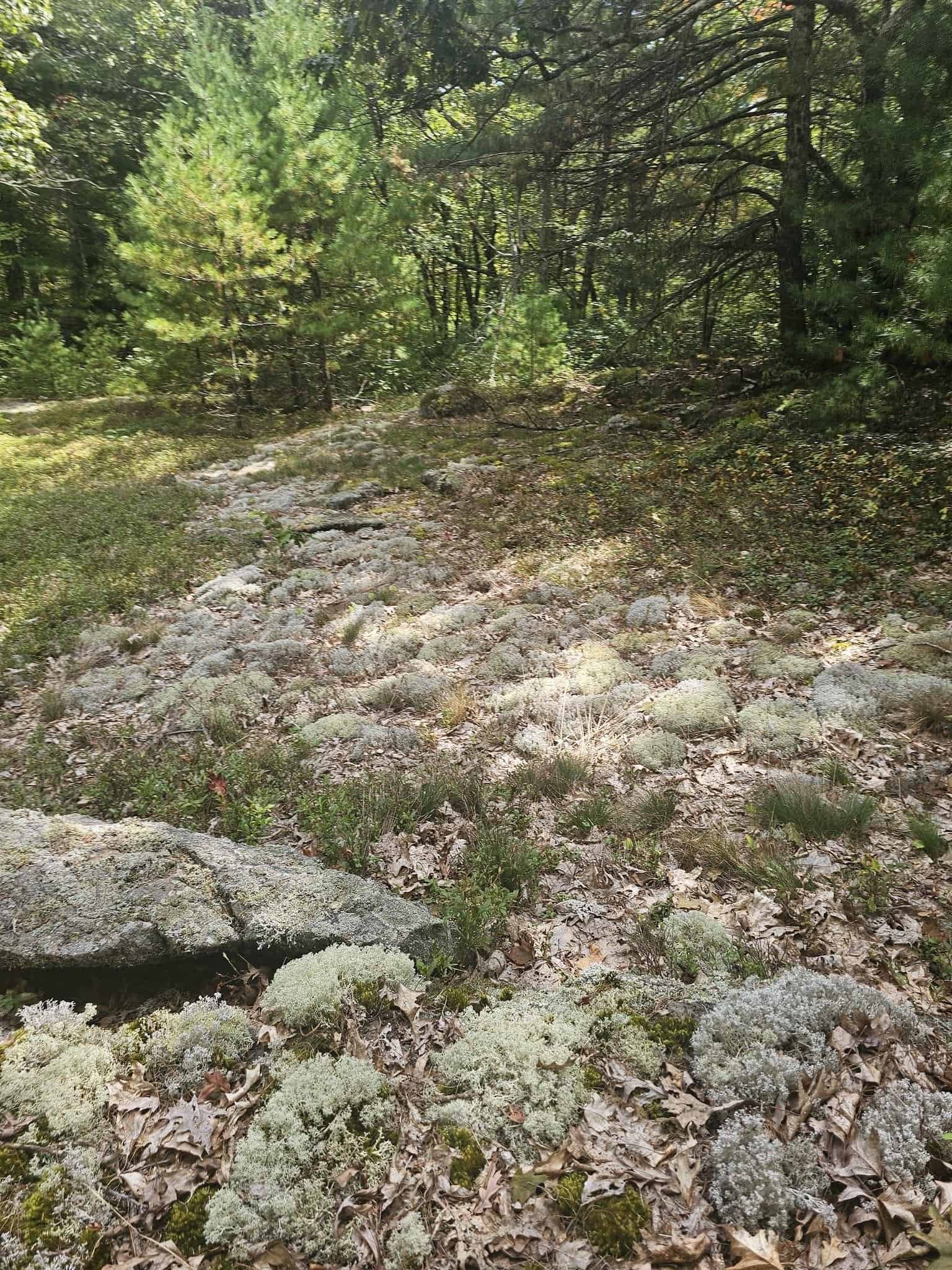
This is not your casual stroll uphill. The Iron Trail climb gets your heart rate up, no question. But what makes this section genuinely special are the protected lichen fields you pass on the way to the summit. These lichen colonies are ancient — decades, sometimes centuries of growth, spread across rocks and tree bases. Seeing them puts your own timeline in perspective. They’re elegant, intricate, and incredibly fragile.
One real pro tip: stay on the trail through here. Lichens take a staggeringly long time to grow, and a single careless boot print can wipe out years of it. It’s the kind of small, invisible thing that makes the difference between a trail that stays beautiful and one that gets loved to death. On the way up you’ll also start noticing the little discoveries this stretch is full of — mushrooms growing straight out of tree roots, odd branch formations, and, on our hike, a strange white stone shot through with black crystal that neither of us could identify. My favorite find was that mushroom on the roots: nature’s perfect composition, no staging required.
Reaching the Iron Trail Summit
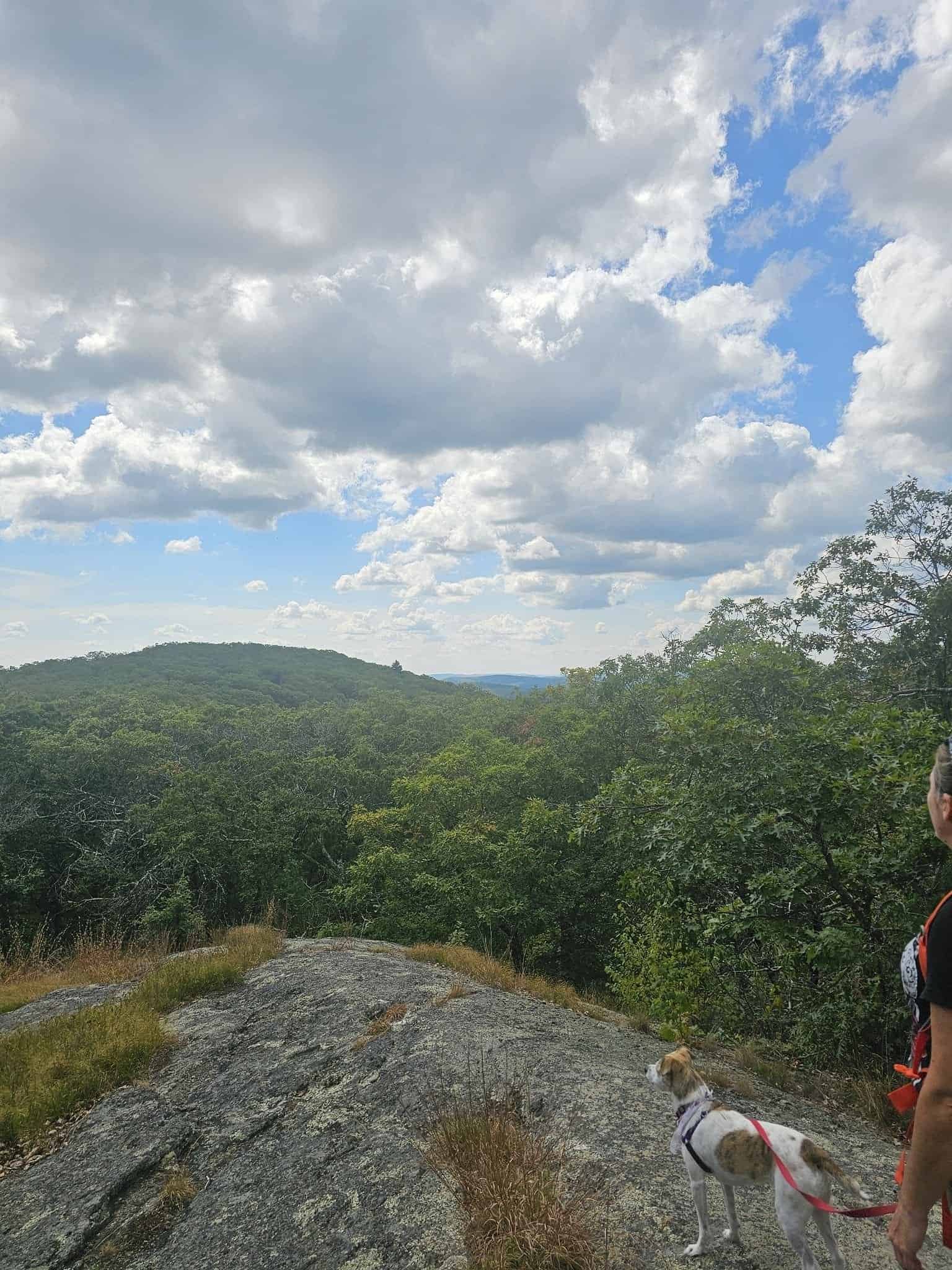
Just when you think you’ve topped out, the path dips again — one last little test before the final push. The summit marker is a simple stone cairn, nothing dramatic, but the accomplishment feels earned. We sat there a while, surrounded by oak trees dropping acorns, watching clouds drift across a blue Connecticut sky. That’s the real reward of the Iron Trail — not some sweeping panorama, but the fact that you pushed through the climb and earned the quiet at the top.
The Descent, and an Unexpected Encounter
The walk back down was easier on the lungs, harder on the knees — standard hiking physics. We passed that mysterious black-and-white crystal stone again, still puzzling over what mineral combination made it. Then we ran into a pair of hikers we’d seen earlier in the woods, and my curiosity got the better of me, so I asked what they were up to.
Turns out they were with the local land trust, running bat habitat surveys. They were identifying trees that could support bat colonies, marking nearby competition trees for removal, and generally working to boost the local bat population. “We’re trying to give them better roosting options,” one explained, pointing out specific trees with the right bark texture and sun exposure. That random conversation became one of the hike’s highlights — a reminder that these trails exist inside complex ecosystems, quietly looked after by people who care about the details most of us walk right past.
Trail Stats and What to Expect
The complete Iron Trail loop took us about ninety minutes, including the initial descent through the fern fields, the summit climb through the lichen colonies, rest time at the top, the return descent and final climb back to the trailhead, and plenty of photo stops for mushrooms and lichens along the way. It’s not a long trail, but it packs genuine elevation change into a short distance. You’ll feel it in your legs and lungs, which is exactly the point.
Come prepared for authentic, unmanicured conditions: roadside parking, no facilities, uneven footing, and a couple of real climbs. Solid footwear matters, and a bottle of water is plenty for a loop this length. Fall is a particularly good time to go — the oaks are dropping acorns, the bugs are gone, and the light through the thinning canopy is exactly what you came for.

Should You Hike the Iron Trail?
If you’re looking for a quick workout that doesn’t eat half your day, the Iron Trail Connecticut hike delivers. It’s not the longest trail in the state, it won’t take you above the treeline, and it doesn’t hand you a sweeping panoramic view. What it does offer is real hiking — elevation gain that matters, natural features worth noticing, and that satisfying tired-leg feeling that only comes from actually working for your summit. The protected lichen fields alone make it worth the trip; add the well-built bridge, the surprise bat-conservation encounter, and the manageable time commitment, and it’s a genuinely solid Connecticut option.
Give it a shot next time you need to get your heart rate up without committing to an all-day adventure — just remember that easy downhill at the start is waiting for you at the end. If you want more short-but-worthy hikes in this corner of the state, the waterfall at Campbell Falls and the tower at Haystack Mountain are both close by, and the whole northwest-corner cluster is mapped out in my guide to hiking in Connecticut. Cheers.