Hello Friends,
I have spent the better part of a year in Cambodia now, mostly up in Siem Reap where I live, and somehow I had never made it down to the capital. So I finally did. I came down from my temple town, checked into a hotel next to a market, and gave myself a few days to do the one thing I actually enjoy in a new city: walk it until my feet quit. This is Phnom Penh on foot — a bar lane I’d heard about, a riverside that runs on food and neon, and a day with no plan at all. No history lecture, no top-ten list. Just what I saw when I showed up curious and followed the lights.
Getting There, and Getting Around Phnom Penh
Phnom Penh sits about five or six hours south of Siem Reap, and getting between the two is its own small decision — bus, van, taxi, or the short flight — which I break down in my guide to the Phnom Penh to Siem Reap run if you’re planning the same trip in reverse. However you arrive, the capital hits you harder than Siem Reap does. It’s bigger, louder, and more of a proper city, with real traffic and real height to it. Siem Reap is a town you can walk across in an afternoon. Phnom Penh you cannot.
That said, I still tried. My rule in any new place is that a tuk-tuk gets me to a neighborhood and my own two feet do the rest. You miss everything from the back of a tuk-tuk — the smell of something grilling, a shopkeeper hosing down the pavement, the way one block flips from quiet to chaos and back again in fifty meters. On foot you catch all of it. So that became the pattern for my few days here: flag a ride to wherever I wanted to start, pay it off, and wander out from there with no particular place to be.
A Night on Bassac Lane
Since the whole city was new to me, I figured I’d start with the one part of it I’d actually heard about. A few people had mentioned a spot called Bassac Lane, and I knew almost nothing beyond the name — just that it was supposed to be a good time and a little more relaxed than the bigger, louder nightlife strips. That was enough to go on. I flagged down a tuk-tuk and headed over.
Bassac Lane turned out to be exactly what I was hoping for. It’s a narrow street tucked off the main roads, lined on both sides with little bars stacked up against each other, the whole thing easy to walk end to end in a couple of minutes. Nobody shoving past, nobody yelling at you to come into their bar. Just a relaxed lane you take at your own pace. On the night I went it was still dressed up from some celebration — banners and colored flags strung overhead from one rooftop to the next — and it was easy to picture how the place must come alive during a proper festival. Even on an ordinary night it had a good hum to it.
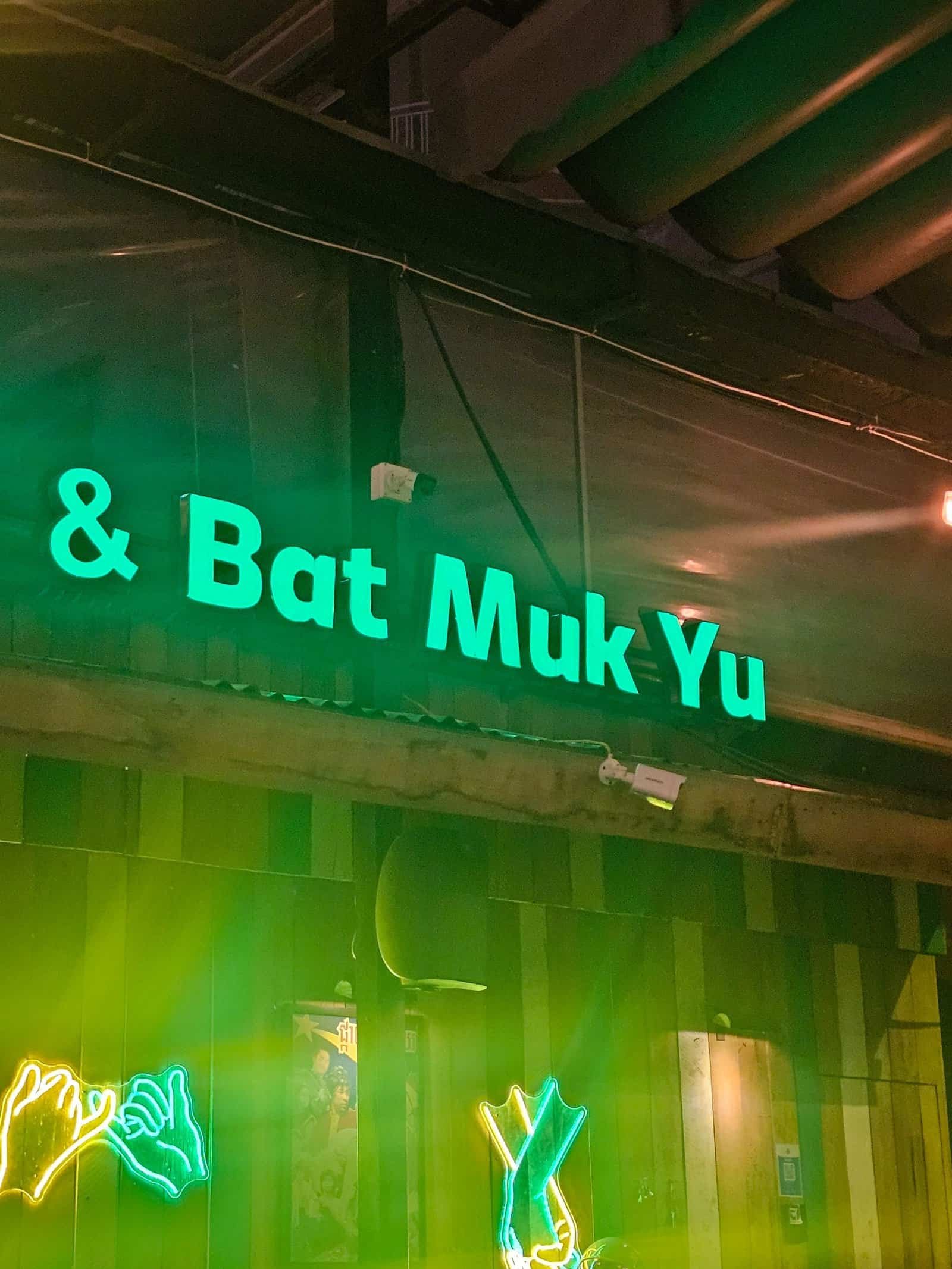
I ducked into my first stop, a bar with a green neon sign reading Bat Muk Yu out front. The way it was explained to me, the name plays on a Khmer phrase meaning something close to “nice to see you again,” which is a solid name for a bar if you ask me — welcoming by design. I grabbed some rice there, took a beat, and got my bearings before moving on. From there I crossed to another spot and ordered my go-to: a classic Negroni, over ice with a twist. Bitter, strong, no nonsense. It’s the kind of drink that doesn’t pretend to be anything other than what it is, and after a travel day that suited me fine. I sat with it a while and watched the lane do its thing.
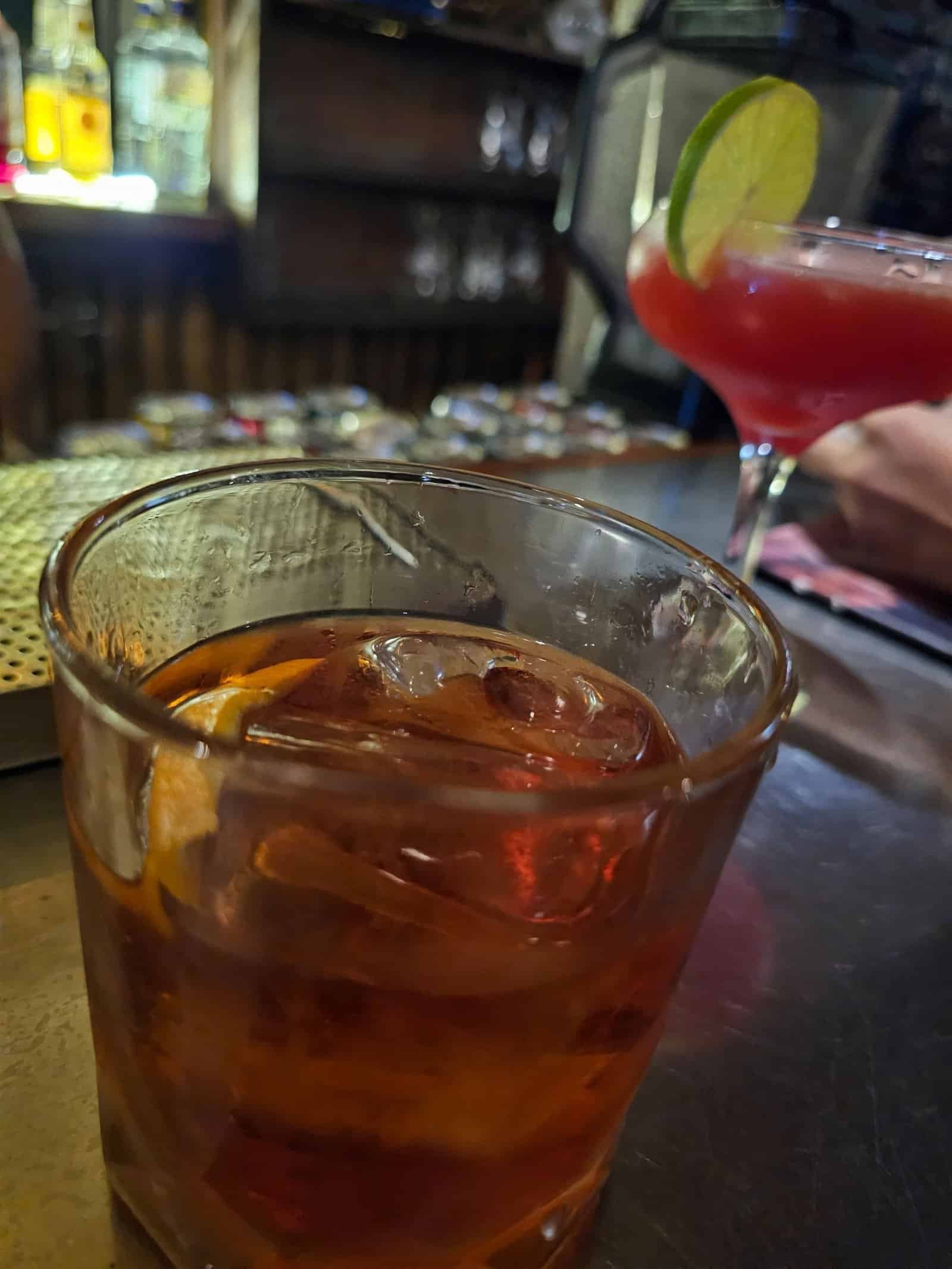
If you know my Siem Reap writing, you’ll know I have opinions about a good, cheap drink and a good seat to watch a street from — the same instinct that keeps sending me back to a three-dollar Negroni on Pub Street back home in Siem Reap. Bassac Lane scratches the same itch, but quieter and more its own thing.
The Back Alleys Are the Real Find
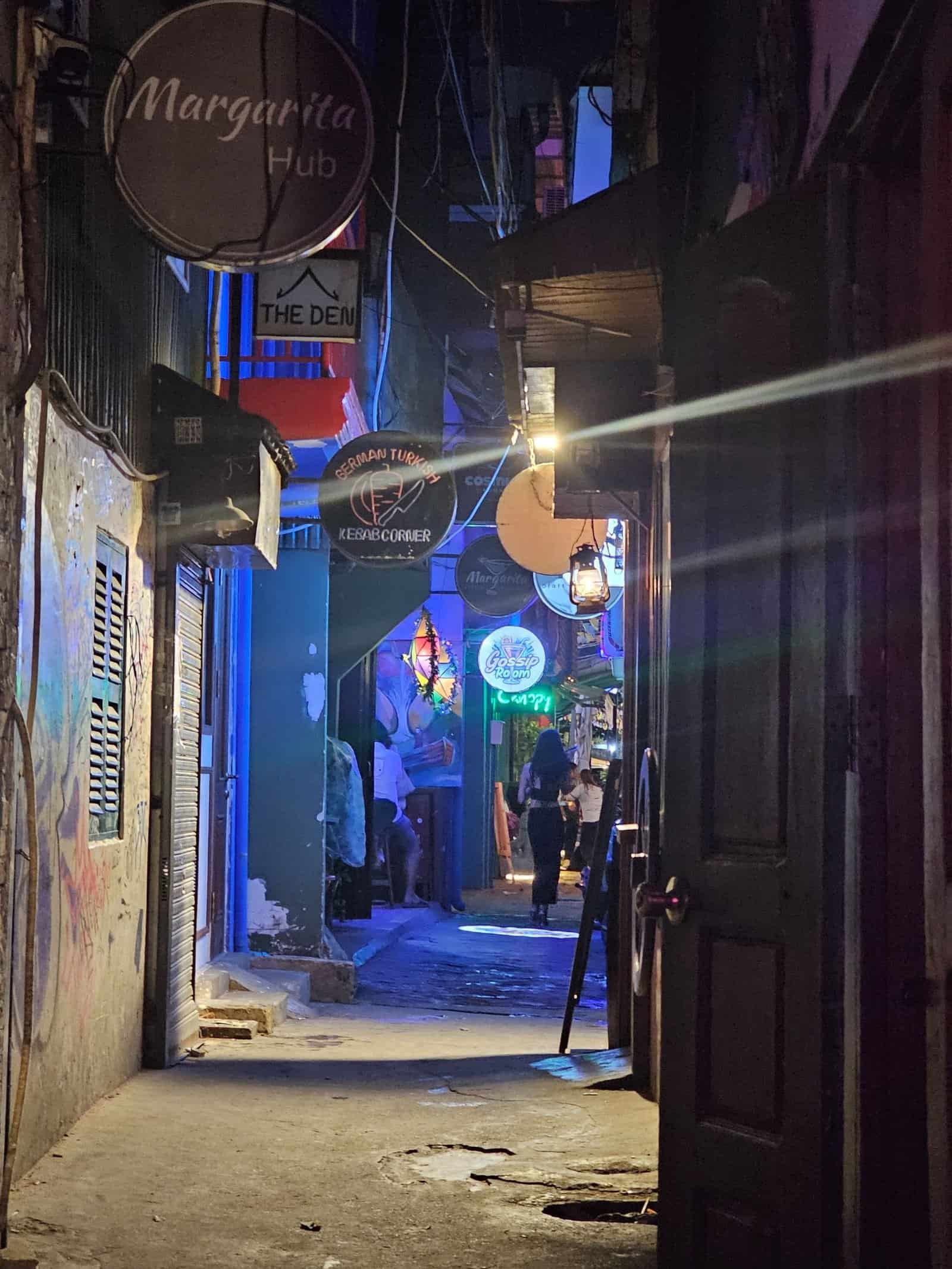
After a couple of stops I did what I always do: I just wandered. This is the part of traveling I like best — no destination, no plan, just walking a new neighborhood and seeing what’s down each turn. Bassac Lane and the streets feeding into it are built for exactly that. Every alley I poked into had its own pocket of neon: a green glow over one bar, blue spilling out of another, hand-painted signs and string lights and the odd old lantern hanging in a doorway.
The back alleys were the real find. Cracked pavement, motorbikes parked nose to tail, graffiti on the walls, little bars wedged into gaps you’d walk right past in daylight. It’s grungy in the best way, the kind of look you can’t fake or design on purpose. It just happens when a place has been lived in long enough. I didn’t do anything dramatic that night — some rice, one good Negroni, a slow lap around a neighborhood I’d never seen. But that’s a solid night in a new city as far as I’m concerned. Show up curious, follow the lights, see what’s around the corner.
The Riverside After Dark
If Bassac Lane was the part I’d heard about, the riverside was the part I didn’t see coming. Walking along the river at night is one of the best things you can do in Phnom Penh, and if you ask me it’s what really sets the city apart. It’s a proper melting pot — locals and travelers strolling up and down, families out for the evening, and vendors lined up the whole way selling every kind of food you can think of. One night I decided to point my camera at the food and just see what the riverside had cooking.
First up were the boats. There’s a row of them moored along the bank, big wooden river cruisers strung end to end with lights, glowing in pinks and purples and golds and throwing colored reflections all over the water. One of them, the Hanuman, was lit up bright enough to read by. They run up and down the river all evening, and even just watching them from the shore is a fine way to pass the time. Behind them the city stacks up — a skyline that has grown a lot faster than most people picture when they think of Cambodia. If you want the straight facts on the place, even the encyclopedia entry on Phnom Penh undersells how alive that waterfront feels at night.
The Food I Watched but Didn’t Eat
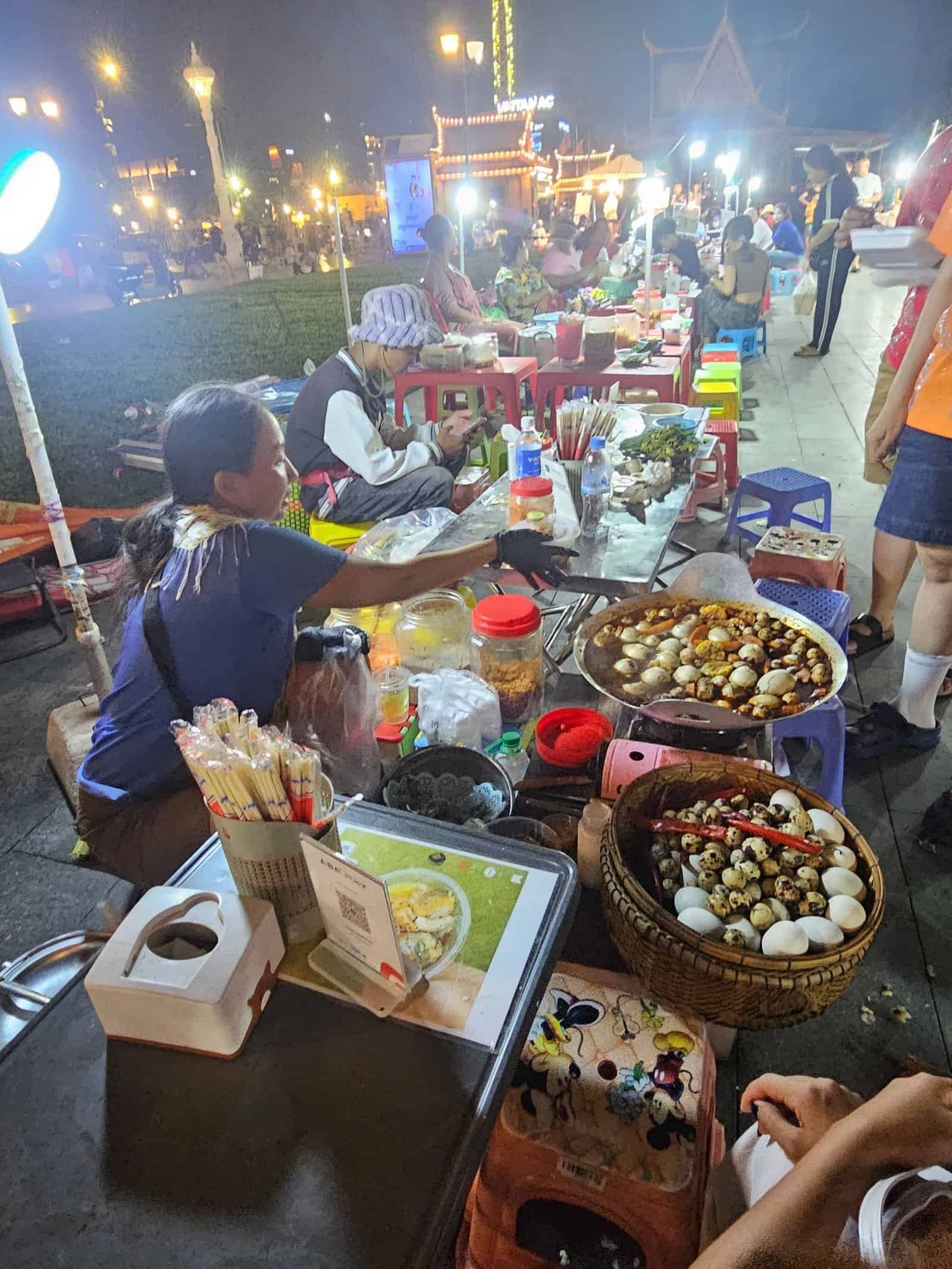
Here’s where I have to be honest about my own limits as a food writer: I’m a vegetarian, so a lot of the riverside’s best-loved snacks are a spectator sport for me. And I’m fine with that. There’s something I genuinely enjoy about watching people line up for the food they grew up on, whether or not it ends up on my plate. That’s the real flavor of a place.
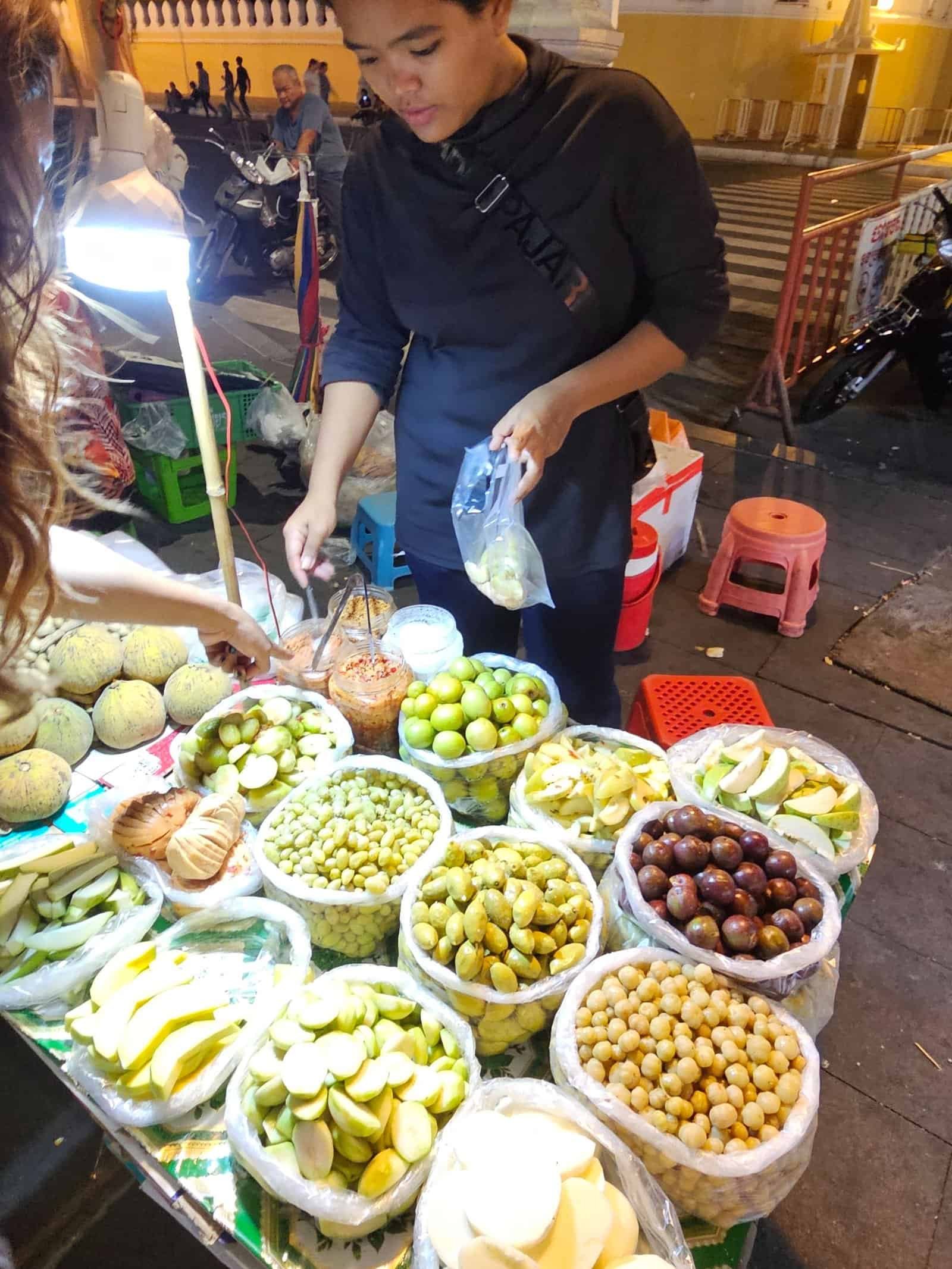
Further along I came across an older woman working a street-food cart, my friend happily digging into whatever she was serving. The cart was a whole operation — trays of eggs simmering in a dark broth, baskets of quail and chicken eggs, jars of sauces, a stack of plastic stools for anyone who wanted to sit and eat right there on the riverfront. Not my plate, but a good scene. Next to it was a fruit and pickle cart of the kind you see all over the city: bags of cut green mango, guava, little fruits I couldn’t name, and tubs of pickled odds and ends with chili and salt to dip them in. I was told, again, that it’s all great. Fresh fruit is one Cambodian thing I actually can get behind — I’ve written a whole love letter to the fruit stands back in Siem Reap — but the pickled-and-chili end of the cart I left to everyone else.
Bugs, Boats, and Bowing Out
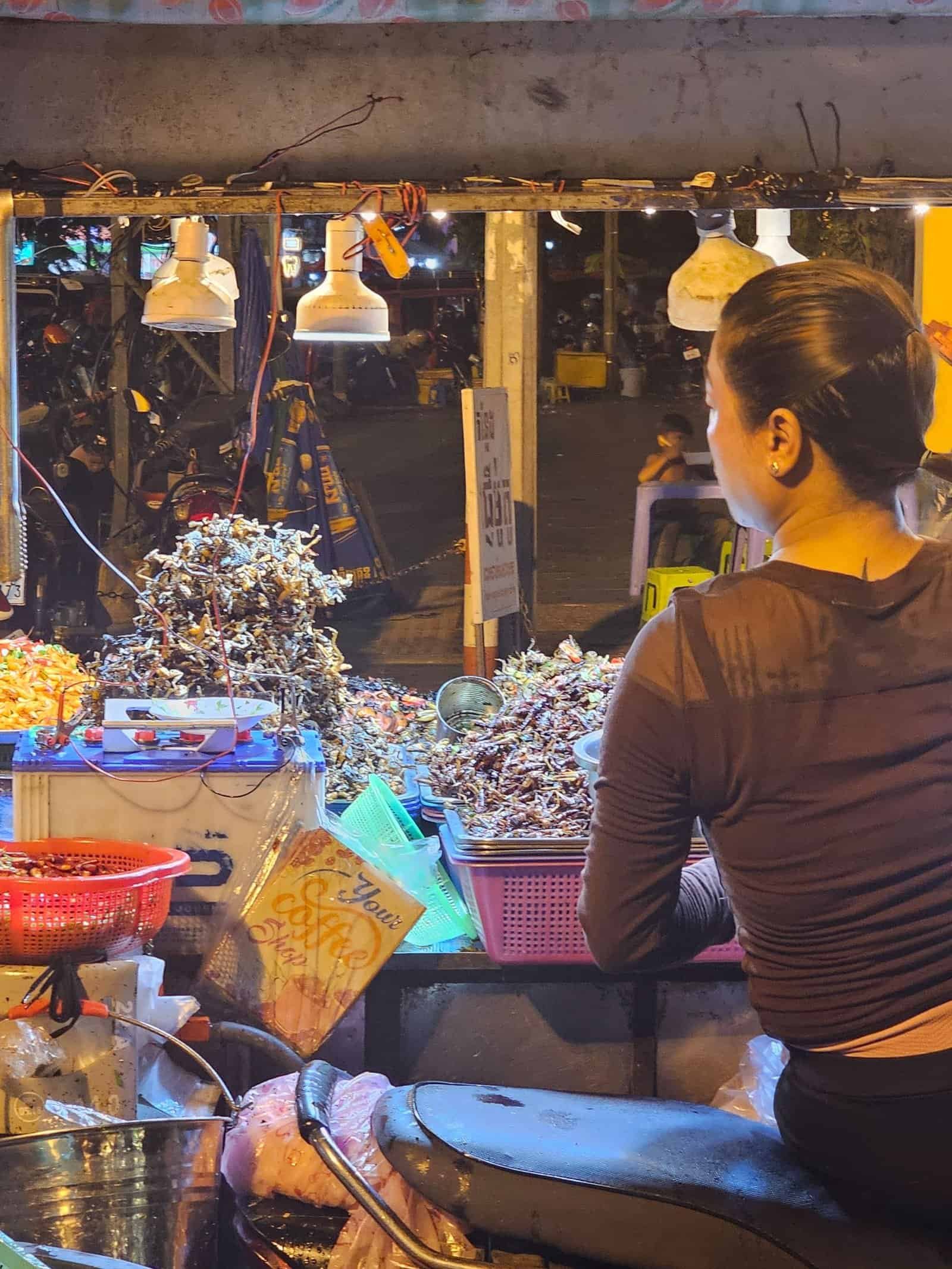
And then, of course, the bugs. You can’t walk far in this city without passing a stand piled high with fried insects — crickets, grasshoppers, the works, heaped up in glistening mounds with chili peppers tossed through them. These aren’t a tourist gimmick either. The locals genuinely love them, the stands are everywhere because people actually buy them, and eating insects is a completely normal part of the food culture across the region — there’s real history and nutrition behind insects as food long before any traveler pointed a camera at a cricket. I’ve seen a hundred of these carts by now and still haven’t worked up the nerve to try one.
The friend I was with took one look at the pile, told me they were delicious, and insisted I had to eat some. I gave my standard reply — I’m a vegetarian — and politely bowed out of the challenge. A bug is still very much an animal, last I checked, so my conscience and my diet were in full agreement on that one. But I’ll be honest: I keep looking. Maybe one of these nights the curiosity wins and I let a cricket talk me out of my vegetarianism, just to say I did it. Not that night, though. That night I was happy to walk, watch, take my photos, and let everyone else do the eating. That’s the riverside for you. You don’t have to taste it all to enjoy it.
A Day on Foot With No Plan
The next day I didn’t have a plan, which is usually when I get the most out of a place. I put on my shoes and went walking. No route, no list of must-sees, just me, the sidewalk, and a city I’d barely scratched the surface of. Walking is how I get to know anywhere new, and Phnom Penh rewards it — one block is quiet, the next is chaos, and you only catch the seams between them on foot.
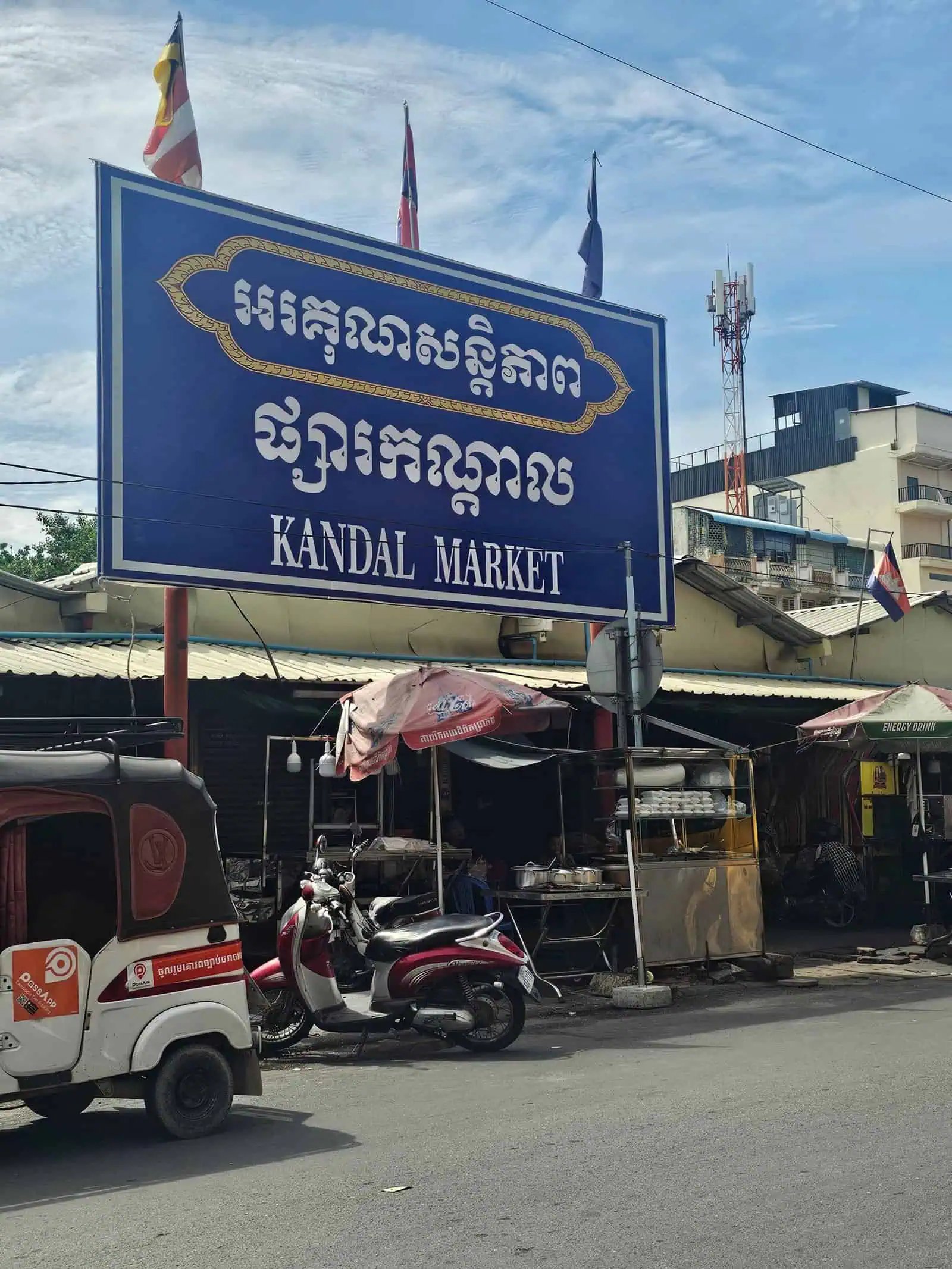
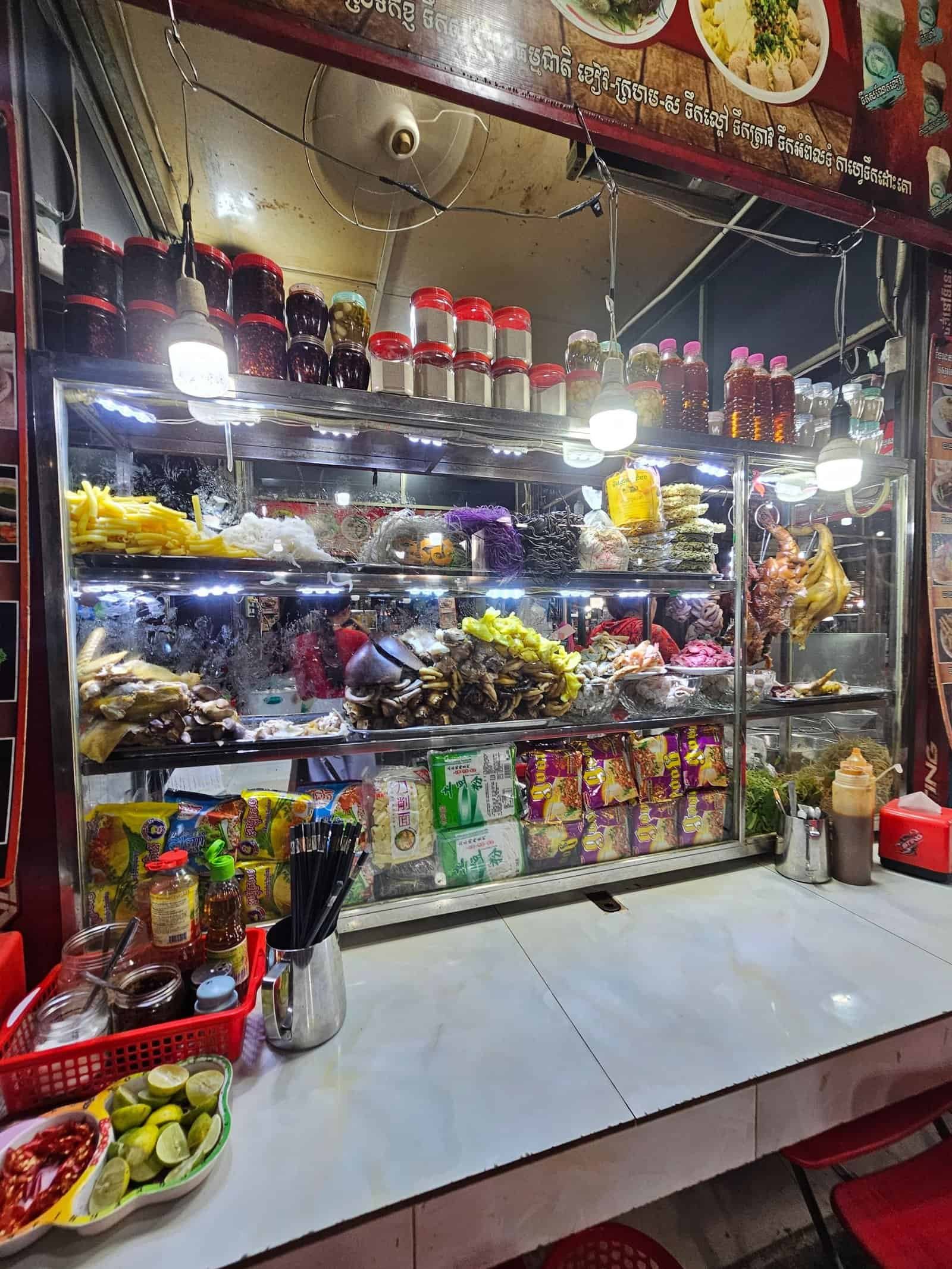
I passed through a few of the local markets, including Kandal Market, with its big blue sign out front and a row of food carts and motorbikes parked underneath. These markets are the real engine of the city. Step inside one and you get the whole operation up close: glass cases packed with noodles, fresh herbs, dried fish, mystery cuts of meat, jars of chili and pickled everything stacked to the ceiling, a couple of fans pushing the warm air around. It’s loud, it’s crowded, and it’s exactly the kind of place where a city actually lives, as opposed to where it poses for photos. If you’ve read my stuff on daily life over in Siem Reap, you know I’ll take a working market over a polished attraction every time.
Lucky Cats and a Rooftop View
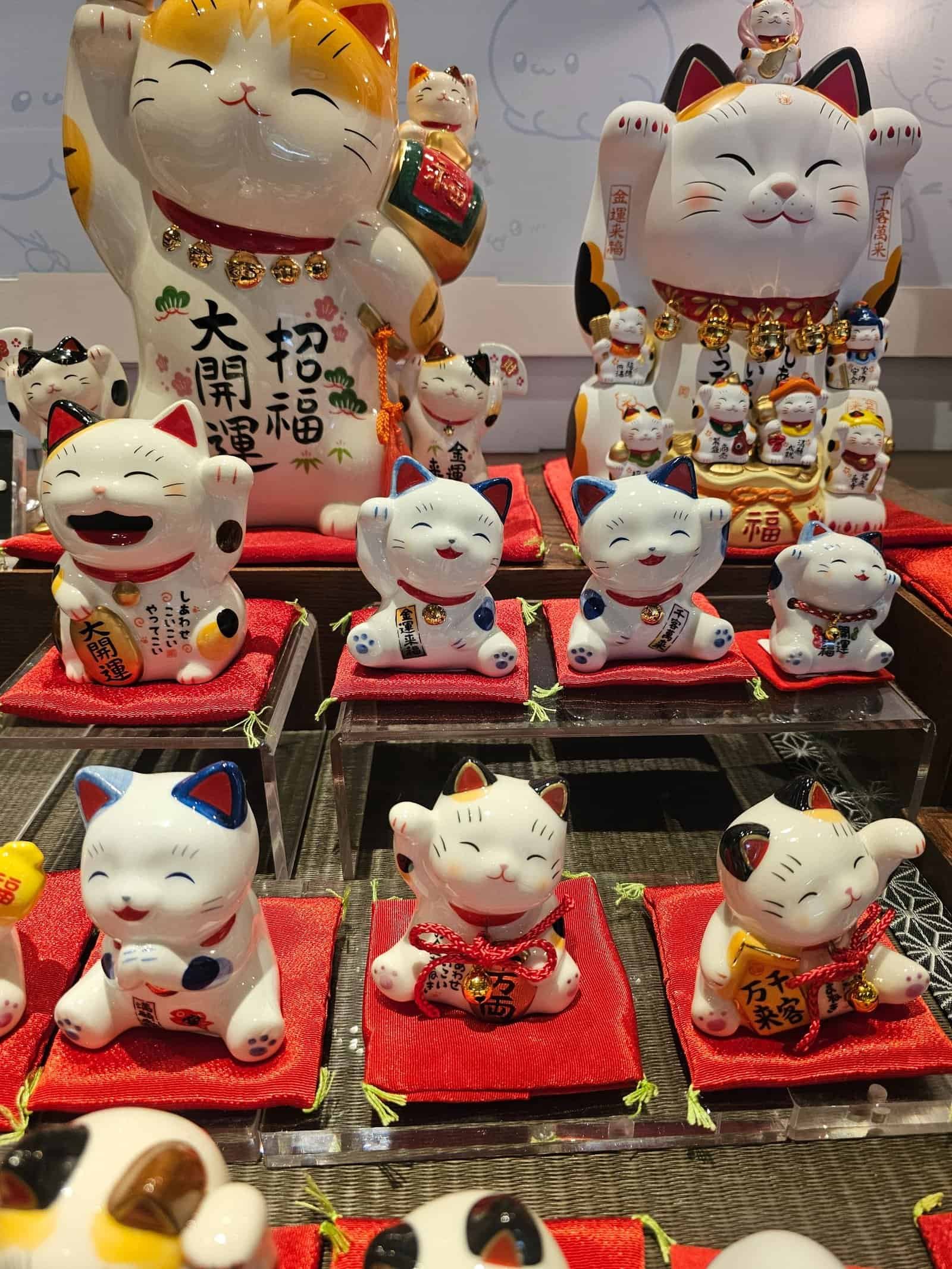
At some point I ducked into a coffee shop to get out of the heat, and it turned out to be a good one. The place was full of fresh flowers — big bunches of pink roses everywhere you looked — and lined with shelves of those waving lucky cats, the ceramic ones with one paw up. Dozens of them, all sizes, all grinning at me while I drank my coffee. I’m not superstitious, but I figure a room with that many maneki-neko can’t hurt.
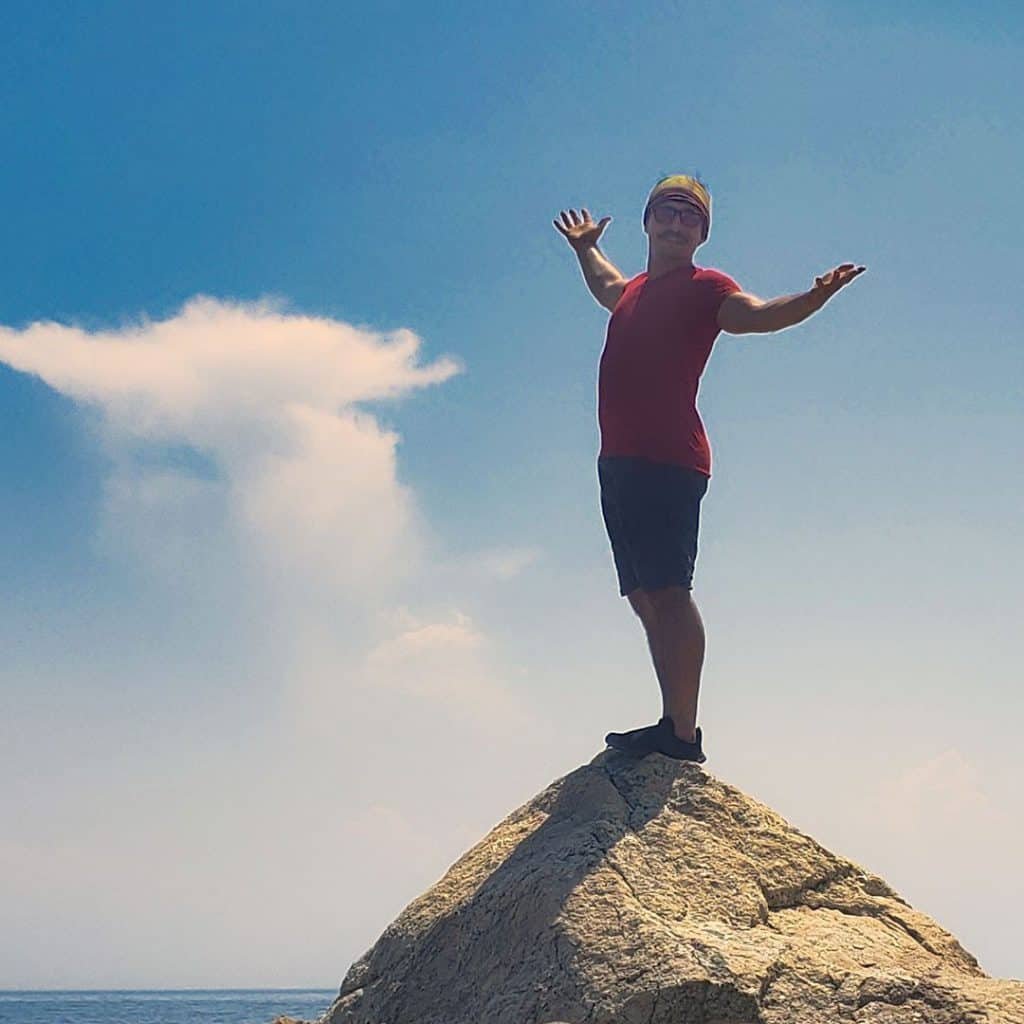
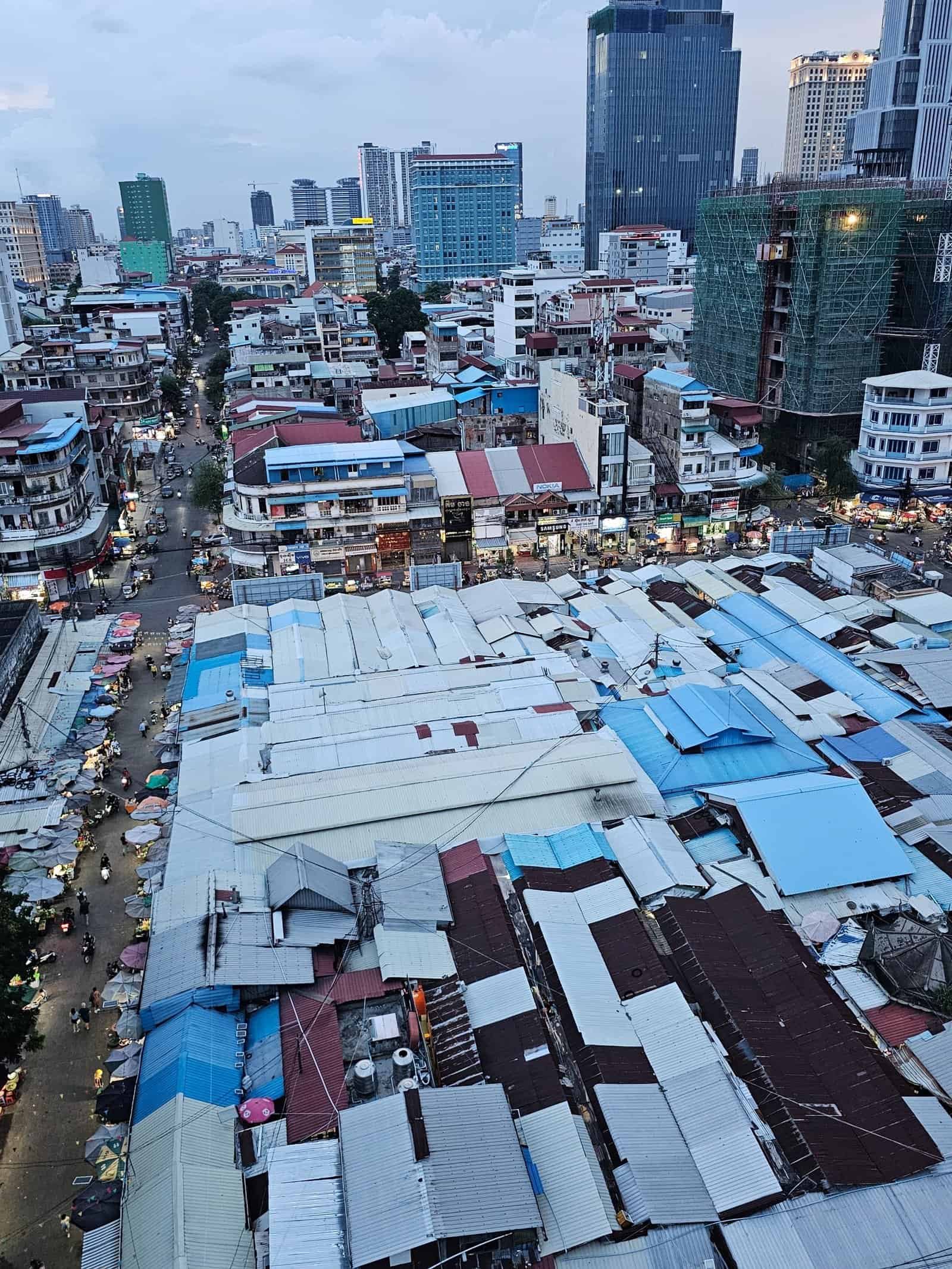
Later on I headed up to the roof of the hotel I was staying at, because you can’t beat a rooftop for taking the measure of a city. I grabbed the obligatory selfie up there — me in a red shirt, the skyline of Phnom Penh spread out behind me, the river off to one side and the high-rises catching the last of the evening light. Classic traveler shot. I’m not above it. But the view that actually got me wasn’t the skyline. It was looking straight down over the market right next to the hotel: block after block of patchwork tin roofs, blue and rust and silver, running off toward the towers in the distance, and down in the gaps between them, people going about their business — vendors under umbrellas, motorbikes threading through, the slow churn of a market day seen from a few floors up.
You Can’t See It All, but You Can Take It In
That’s the thing about a city like this. There’s so much happening at once that you couldn’t take it all in if you tried. Every street has its own thing going, every rooftop hides another little world. You can stand up there and look as long as you want and still only catch a sliver of it. You can never see it all. But you can stand still for a minute and appreciate it all, and honestly, that’s the better deal anyway.
A few days in Phnom Penh didn’t make me an expert on it — I wouldn’t trust anyone who claims a city after one long weekend. What it gave me was a first honest read: a bar lane worth the tuk-tuk, a riverside that runs on neon and fried crickets, and a day of walking that unfolded the more I looked at it. I’ll be back, and next time I’ll go deeper. For now, if you’re pointing yourself at the Cambodian capital, come curious and plan to walk. For the wider country this city anchors, my Cambodia travel guide is the place to start. And if you want the flip side of this trip — the temple town I actually call home — start with my Siem Reap travel guide, or if it’s a proper local night out you’re after, read about the wild bar across town at Dr. Sad. Cheers.