Hello Friends,
There is a fruit stand down the street from my apartment in Siem Reap. Nothing fancy — a woman sets up every morning with a cart carrying more variety than most American supermarkets stock in their entire produce section. Mangosteens, avocados, oranges, whole racks of bananas, watermelons split open to show the red, dragon fruit, pomegranate, coconuts she cracks open while you wait, sugarcane pressed into juice on the spot. And the prices are where it gets interesting: for what a single mango costs back in Connecticut, I walk away with enough fruit for days. Fresh fruit in Cambodia is not a splurge here. It is just breakfast. And somewhere in my daily walk to that cart, it quietly rearranged how I think about what a good life actually costs.
The American Produce Problem
Let me paint the picture of fruit shopping back home. You walk into a supermarket and the produce section looks great at first glance — colorful displays, misters keeping everything dewy, signs promising organic and farm-fresh. Then you actually start shopping.
That mango was picked weeks ago in another hemisphere, shipped across an ocean, gassed to ripen on a schedule, and stored in a cold chain built for shelf life rather than flavor. By the time it reaches your cart it has traveled farther than most people go on vacation, and it costs four or five dollars. For one mango. The strawberries are bred for durability, not taste. The avocados are rock hard when you buy them and then jump straight from unripe to rotten with about a six-hour window of edibility in between. Nothing about it is truly fresh — we have just normalized the compromise because we never knew any different. The whole system is optimized for logistics and margins, not for the person eating the food.
What Fresh Fruit in Cambodia Actually Means
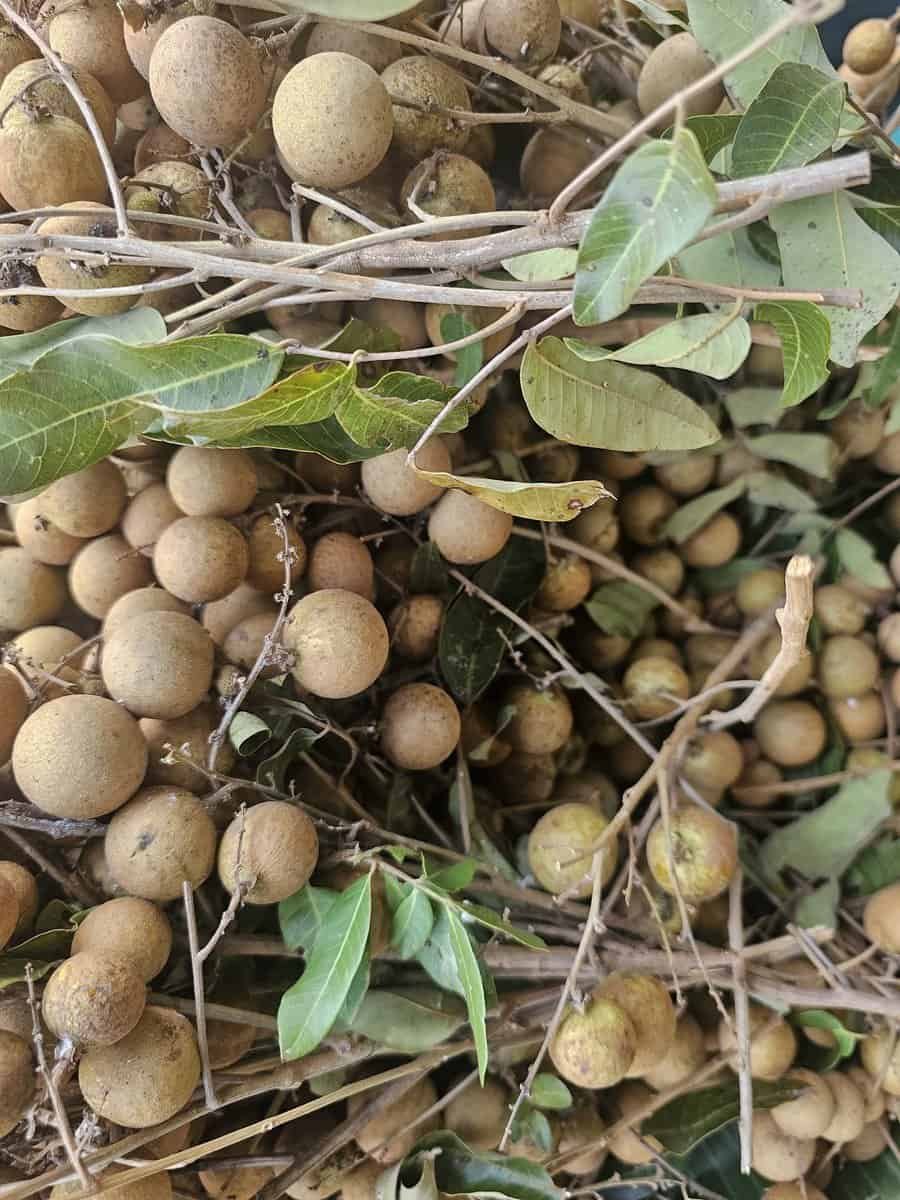
The stand near my apartment runs on a completely different model. That woman is not selling fruit that crossed an ocean. She is selling fruit that was probably on a tree yesterday, maybe this morning. Fresh fruit in Cambodia means something entirely different than it does in America.
Pick up a mangosteen here and the shell gives slightly — not because it is going bad, but because it is actually ripe. Crack it open and the white segments taste like nothing you have had from a Western grocery store: sweet, complex, floral, a texture that melts instead of mushes. There is a reason they call it the queen of fruits in this part of the world, and it earns the title when you eat one that has not been beaten up by industrial shipping. Dragon fruit, which I always thought was overrated back home — beautiful and basically flavorless — turns out to have real sweetness and complexity when it is properly ripe and has not spent weeks in refrigerated transport. I had just never had a good one.

The bananas come in varieties I never knew existed — smaller, sweeter, some better fresh and some better cooked — and the woman at the stand knows which is which and will tell you if you ask. After a few weeks of regular visits she started recommending things based on what I had bought before. That kind of knowledge does not exist at a big-box grocery store. The coconuts she cracks with a machete, sticks a straw in, and hands over cold; the water inside is sweeter and more alive than anything sold as coconut water in an American health-food aisle.
The pomegranates come already cracked open in a bag, the seeds separated and ready to eat — no ten minutes hunched over the sink staining your hands and counter. Somebody already did that work, and they charge almost nothing for it. That is the part that keeps surprising me: back home, convenience and quality are usually opposed, and you pay a premium to get both. Here they just come together by default. The expensive, hard-to-find, feel-good option in America is the ordinary Tuesday-morning option here.
The Math That Changes Everything
Here is where the lifestyle math really lands. A full rack of bananas — fifteen or twenty of them — runs about a dollar, sometimes less. A fresh coconut with a straw, about fifty cents. A big bag of mangosteens, enough for several days of snacking, maybe two dollars. Do that math against an American grocery budget and the numbers get almost absurd.
Back home, eating abundant fresh fruit takes either a real income or a real sacrifice somewhere else in the budget. A family trying to eat healthy on limited money faces genuine trade-offs: fresh produce or protein, organic or quantity. The healthy choice is usually the expensive choice, which means health ends up correlated with wealth in a way we have normalized but shouldn’t have to accept.

Fresh fruit in Cambodia removes that equation entirely. Eating well is not a financial decision here — it is just eating. The default option, the cheap and convenient one, is also the healthy one. That alignment changes daily behavior in ways that compound over time.
My Morning Routine Now
Most mornings start the same way. Wake up, walk down the street, stop at the stand, pick out whatever looks good, carry it home, eat it with coffee. No planning, no meal prep, no expensive smoothie ingredients ordered online, no quiet guilt about the price. Some days it is mangosteen and banana, other days dragon fruit and pomegranate, and when I want something more substantial I grab sugarcane juice or a coconut.
The seasons matter here too — different fruit comes and goes through the year, so the selection shifts on its own, and that rhythm connects you to actual agriculture in a way year-round supermarket availability never does. Compare that to my old American morning: processed cereal, or fruit I felt guilty buying, or just skipping fresh produce because the quality-to-price ratio made it feel pointless. When eating healthy feels like a treat instead of a sacrifice, you do it more consistently. Simple as that.

The Bigger Trade-Off Conversation
That fruit stand cracked open a bigger question I have been chewing on since I moved to Southeast Asia: what actually constitutes quality of life? America has real advantages. I miss the convenience of driving everywhere. The infrastructure works in ways you do not appreciate until you have lived somewhere it doesn’t. Coffee shops with reliable wifi sit on every corner, and customer service makes basic transactions predictable.
But those conveniences come with costs that are not always obvious. The driving convenience means a car, insurance, gas, and maintenance — thousands of dollars a year just to access basic transportation. The infrastructure means property taxes, income taxes, and a cost of living that demands a serious income just to stay stable. The convenience stores sell processed food and sugary drinks because that is what the economics reward. The American system optimizes hard for certain things and quietly accepts the trade-offs elsewhere. Health and nutrition landed on the trade-off side.
What Southeast Asia Gets Right
Living in Cambodia — and before this, six years in Vietnam — has shown me a different set of priorities. The friction here is real: roads can be chaos, bureaucracy runs on its own logic, the power cuts out, and customer service does not match Western norms. Plenty of daily annoyance that I would not have in the States.
But the fundamentals hit differently. Fresh fruit in Cambodia is just the most visible example of a broader pattern. Food generally costs less while often being better. Walking and physical activity fold naturally into daily life because the city is not built exclusively around cars. And the pace does not demand constant productivity just to justify your survival. I do not need to clear thousands of dollars a month to cover the basics, and that single fact changes everything downstream — less financial pressure, more freedom, and freedom tends to produce better choices that compound into a healthier life.
The trade-off runs the other way too, and I want to be honest about it rather than sell you a fantasy. I accept more uncertainty here. Less predictability. Systems that do not always work the way I expect, days where the simplest errand turns into an ordeal, a bureaucracy that can make you want to put your head through a wall. I gave up a lot of the frictionless ease I grew up taking for granted. What I got in return is a quality of daily life that would take real wealth to buy back in the States. For me, right now, that swap is worth it. But it is a swap, not a free upgrade, and anyone who tells you moving abroad is pure gain is skipping the invoice.

No Perfect Scenario Exists
I want to be clear, because this is easy to misread: I am not arguing Southeast Asia is objectively better than America for everyone. That would be as wrong as arguing the reverse. Different people need different things. Someone with specific medical needs might require American healthcare. Someone building a career in certain industries might need American networks. Someone with family obligations might have no real choice about location at all.
And this region has its own problems — corruption, weaker environmental standards, rights and protections that Americans take for granted and that are not guaranteed here. Pretending otherwise would be dishonest. What I am actually arguing is simpler: the trade-offs just work differently in different places, and understanding them honestly matters more than defaulting to whatever answer you were handed by wherever you happened to be born.
What Do You Actually Need?
That is the question the fruit stand keeps handing back to me. The American answer involves a lot of stuff — a car, housing that eats a big share of your income, insurance, retirement savings, emergency funds — all of it before you even start on the things that make life good. The version I am living now, for someone with location-independent income or savings, involves much less: simpler infrastructure, lower costs, different priorities.
The stand down my street will not change anyone’s whole philosophy. But it changed my morning, which changed my diet, which changed my health, which changed my relationship with money and freedom and daily satisfaction. Small things compound. That is maybe the biggest lesson from standing in front of a cart of mangosteens and realizing I can actually afford to eat them every day.
Quality of life is not about maximizing every variable. It is about figuring out which ones actually matter to you and optimizing for those while accepting trade-offs on the rest. For me, cheap fresh fruit — and everything it represents about affordable healthy living — matters more than the American conveniences I gave up. Your calculation might land somewhere else, and that is fine. What matters is doing the calculation honestly.
If you want the fuller picture of the town this stand sits in, it is all in my Siem Reap travel guide, and I get into what daily life here actually feels like in finding my rhythm in Cambodia’s temple town. If you are curious about the fruit itself, the mangosteen really does deserve the “queen of fruits” title once you have had a ripe one. I will be at that stand tomorrow morning. Probably mangosteens again. Cheers.