Siem Reap Botanical Gardens: 1 Free Must-See Gem

A Library That Wasn’t a Library
It started with a text message. A friend asked me to come meet her at a library she’d found, somewhere on the road heading out toward the Angkor temples. I pulled up the location on my phone and squinted at the map. The pin sat a little outside downtown Siem Reap, past the usual cluster of restaurants and guesthouses that make up the tourist core. A library out here? Seemed like a strange spot for one. But this is Cambodia, and if living here has taught me anything, it’s that things don’t always follow the logic you’d expect. People set up businesses in the most unexpected places, and somehow it works.
So I flagged down a tuk-tuk, negotiated a quick fare, and rolled out along the road toward Angkor. The ride took maybe ten minutes, weaving through the usual mix of motos, bicycles, and the occasional SUV loaded with temple-bound tourists. When the driver pulled over and I hopped out, I found myself standing in front of what was clearly a cafe, not a library. The sign read Rukha Cafe & Restaurant, and the whole setup looked more like a peaceful retreat than any library I’d ever visited.

Turns out, there was a small library section attached to the cafe — shelves lined with books about Angkor Wat, Cambodian history, and local plant species. But the main attraction here was clearly the coffee and the atmosphere. I ordered a drink, sat down with my friends in the shaded seating area, and settled into one of those easy conversations that happen when you’re in no rush and the surroundings are this good. The Siem Reap botanical gardens were about to unfold in front of me, and I had no idea.
Walking Into Something Unexpected at the Siem Reap Botanical Gardens
After finishing our coffees, I looked around and noticed the area behind the cafe was more than just a nice patio. There were pathways winding off into what looked like carefully maintained grounds. I asked my friend if we could go for a walk and explore. She said yes without hesitation.

The first thing we came across was a series of small pools with fish circling lazily beneath the surface. Nothing dramatic, just calm water features that set the tone for what was coming. Then things got interesting. Around a bend, we stumbled onto a full archery range — not the heavy-duty kind, but a setup with suction cup darts that immediately brought out the competitive side in all of us. We spent a solid fifteen minutes taking turns, laughing at terrible shots and celebrating the occasional bullseye.

Then came the ostriches. Just standing there, tall and unbothered, watching us with that particular brand of bird judgment that only ostriches can pull off. I’ve seen ostriches before, but finding them here, tucked behind what I still thought was just a nice cafe, caught me completely off guard. The Siem Reap botanical gardens were already delivering surprises, and I hadn’t even realized where I was yet.

The Inspiration Garden and Beyond
We headed back to the seating area where we met up with my friend’s sister, and the three of us decided to take a longer walk through the grounds. This is where the experience shifted from casual stroll to genuine exploration.
The first sign I noticed read “Inspiration Garden,” and something clicked. I stopped and looked around with fresh eyes. Was this actually the Siem Reap botanical gardens that I’d been meaning to visit? The landscaping was intentional, the paths were laid out with purpose, and everything around me looked like it belonged to something much bigger than a cafe’s backyard.

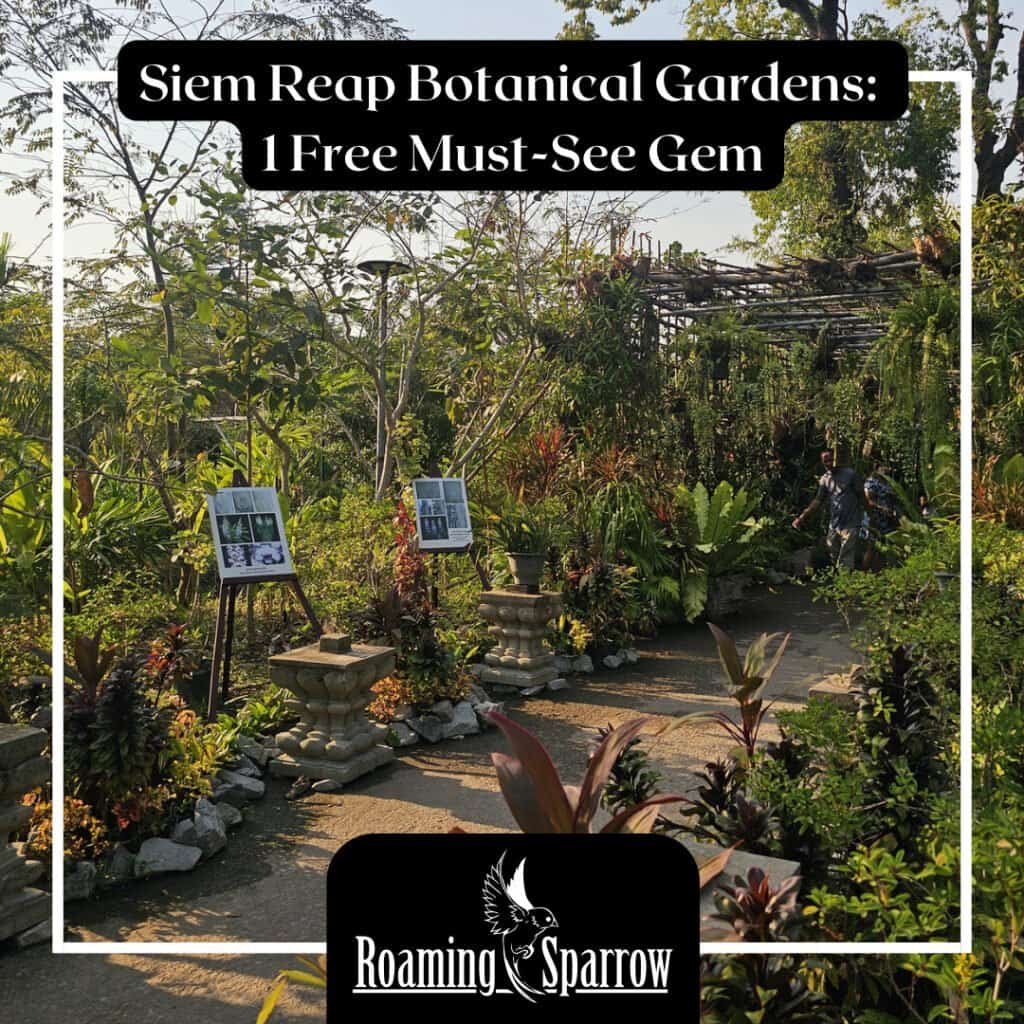
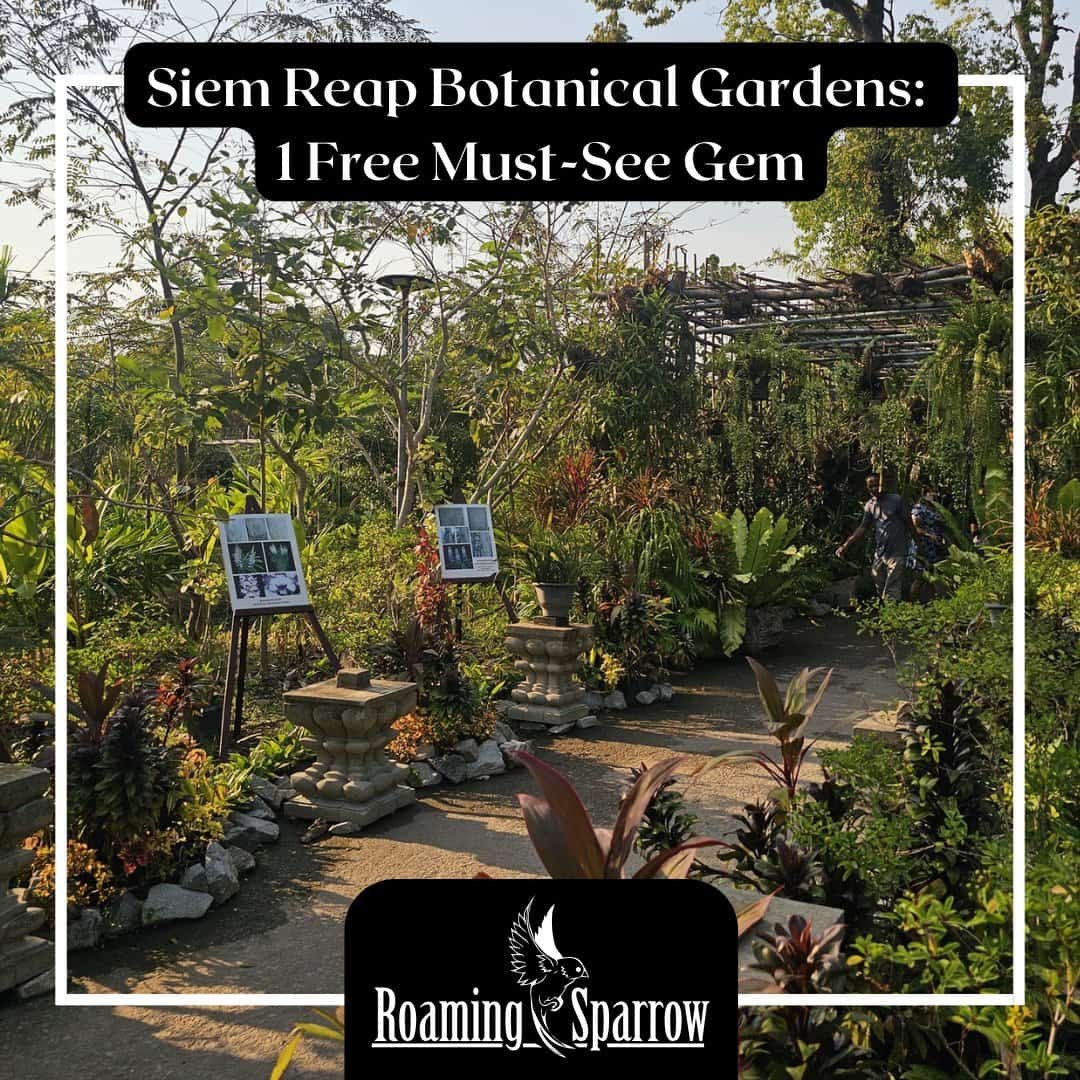
We kept walking, and the scale of the place started to reveal itself. Little lakes appeared, surrounded by shaded pathways that wound through wooded sections thick with tropical vegetation. The air felt different here — cooler, quieter, like the trees had created their own microclimate away from the heat of the Cambodian afternoon. Every few meters brought something new to look at, from flowering plants to carefully labeled specimens that told you exactly what you were seeing.

The medicinal plant displays caught my attention more than I expected. Rows of plants with detailed signs explaining their traditional uses in Cambodian medicine lined the walkways. Some of these plants have been used for generations by local communities for everything from treating fevers to digestive issues, and seeing them organized and labeled gave the whole experience an educational dimension that elevated it beyond just a pretty garden walk. You could spend thirty minutes in this section alone, reading the placards and learning about herbs you’ve probably walked past a hundred times without knowing their significance. The APSARA National Authority, which manages the Angkor Archaeological Park, developed these gardens with conservation and education at the core of the project. Their goal is to preserve rare and endemic species while giving visitors — both local and international — a chance to understand Cambodia’s rich botanical heritage.

Scarecrows, Sunflowers, and Surprises
One of my favorite moments came when we rounded a corner and found a scarecrow standing guard over a makeshift rice field. It was positioned perfectly, straw hat tilted at just the right angle, overlooking the small paddy like it had a job to do. There’s something about finding a scarecrow in a botanical garden that makes you smile — it was a reminder that these gardens aren’t just about exotic plants and curated displays. They’re about showcasing Cambodia’s agricultural roots and the relationship between people and the land.

Not far from the rice field, we came across a section of dead sunflowers. Before you think that sounds depressing, it was actually fascinating. These sunflowers had completed their cycle and were being prepared for seed harvest. The dried heads hung heavy, packed with seeds ready for collection. It was a snapshot of the agricultural process that most visitors never think about when they see a field of bright yellow blooms. Seeing the full lifecycle on display added a layer of authenticity to the Siem Reap botanical gardens that I appreciated.

The palm garden section offered a completely different vibe. Various species of palm trees, coconut varieties, and tropical plants created shaded corridors that felt almost like walking through a natural cathedral. The diversity here is impressive — the gardens house over 500 different plant species across roughly 15 hectares, making it Cambodia’s first and only botanical garden of its kind.
The Gift Shop Plot Twist
Then we walked through a small gift shop, which I thought was kind of an odd thing to find in the middle of a garden. Stalls sold locally produced goods — dried mango, cashew nuts, souvenirs, and more books about Cambodian plants and nature. It wasn’t pushy or commercial, just a quiet collection of local products tucked among the greenery.
But when we walked out the other side of the gift shop area and into the open, everything suddenly made sense. We were standing at what was clearly the main entrance of the Angkor Botanical Garden. The whole time, we had entered from the back side through the cafe. What I thought was just a random library recommendation from a friend had actually led me through the rear entrance of one of Siem Reap’s best free attractions.

I started laughing. The “library” was part of the botanical gardens. The cafe was the gardens’ on-site restaurant. And the incredible grounds we’d been wandering through for the past couple hours were the Siem Reap botanical gardens that I had on my list to visit anyway. Sometimes the best travel experiences are the ones you stumble into backward — literally.
What Makes the Angkor Botanical Garden Worth Your Time
Now that I knew where I actually was, I could appreciate the full scope of what the Angkor Botanical Garden offers. The gardens are divided into five distinct sections: a spice and medicinal garden, a flower garden with ornamental grasses and seasonal blooms, a palm garden set on small hills, a Khmer inspirational garden featuring traditional fruit trees, and a forest and wildlife section that includes the ostriches, turtles, peacocks, and wild chickens we encountered earlier.

The entire place is free to enter. Let that sink in for a second. In a city where temple passes run $37 for a single day, here’s a 15-hectare garden with over 500 plant species, wildlife encounters, an archery range, a solid cafe, and peaceful walking paths, and it costs absolutely nothing. They’ll ask you to scan a QR code to follow their social media pages, which seems like a fair trade for everything you’re getting.
The location is strategic too. Sitting right on the road to Angkor Wat, the Siem Reap botanical gardens make for a perfect addition to a temple day. Hit it on the way to or from the temples, or dedicate a standalone morning or afternoon to exploring at your own pace. A tuk-tuk from downtown runs about $1.50-2 each way, making it one of the most accessible attractions in the city. For those looking for more off-the-beaten-path experiences in Cambodia, this should be near the top of your list.

Practical Tips for Visiting the Siem Reap Botanical Gardens
If you’re planning a visit, here are some things worth knowing. The gardens are open from 7:30 AM to 5 PM daily, but they’re closed on Mondays, so plan accordingly. Early morning visits are ideal — the temperatures are more manageable, the light is better for photos, and you’ll have many of the pathways to yourself before tour groups start filtering through.
Bring water, but be aware that plastic bottles need to be left at the entrance as part of their sustainability policy. The Rukha Cafe inside the grounds serves drinks and fresh juices at reasonable prices, so you won’t go thirsty. Wear comfortable walking shoes because you’ll cover some ground across the 15-hectare site. Budget at least 90 minutes for a proper visit, though you could easily spend two to three hours if you take your time and stop for coffee.
For anyone coming from downtown, getting around Cambodia by tuk-tuk is straightforward and affordable. The botanical gardens sit along Charles De Gaulle Boulevard, making them easy to find and easy to combine with other activities along the temple route. There’s also a forest trail that now connects the gardens directly to Angkor Wat — a peaceful walk far from road traffic that takes about 35 minutes.

The wildlife section is worth seeking out, especially if you’re traveling with kids. Feeding the fish and birds costs just 1,000 riel (about $0.25), and watching the ostriches and peacocks never gets old. The koi ponds scattered throughout the grounds are surprisingly entertaining — grab some fish feed at the entrance and watch the water erupt as dozens of fish compete for your attention. The entire experience is family-friendly and suitable for all ages and fitness levels, making it one of those rare attractions that works equally well for solo travelers, couples, and families with young children.
Why This Matters for Siem Reap
The Angkor Botanical Garden represents something bigger than just another tourist attraction. Developed by the APSARA National Authority, these gardens serve as Cambodia’s first dedicated botanical garden and play an important role in preserving rare plant species, supporting environmental education, and protecting the broader Angkor archaeological area from development encroachment. The garden was established on what started as a modest 2-hectare spice garden back in 2005, later transformed into the full 15-hectare botanical garden that officially opened to the public in May 2022. The landscaping includes an automatic irrigation system linked to the Siem Reap River, feeding the ponds, canals, and waterfalls that make the grounds feel so lush even during the dry season.
There are plans to expand the gardens from the current 15 hectares to as much as 150 hectares, creating an even larger protected green space with wildlife corridors, walking bridges through natural forest, and expanded research facilities. For a country that’s rapidly developing its tourism infrastructure, having a world-class botanical garden that’s free and accessible feels like a genuine commitment to sustainable tourism.
For travelers exploring Cambodia’s cultural attractions beyond Angkor Wat, the botanical gardens offer a completely different kind of experience — one that connects you with the natural heritage of the region rather than the architectural one. Both are essential to understanding what makes this part of Cambodia so extraordinary.

The Best Things Happen When You Aren’t Looking
Looking back on that afternoon, I can’t help but appreciate how perfectly the whole thing unfolded. A friend invited me to a “library.” I expected shelves and silence. Instead, I got ostriches, archery, medicinal plants, scarecrows, sunflower harvests, and one of the most peaceful walks I’ve had since arriving in Cambodia. All because I said yes to something without overthinking it.

That’s the thing about living in Siem Reap — or any place, really. The best experiences don’t always come from a carefully researched itinerary. Sometimes they come from following a friend’s recommendation to a place that turns out to be something completely different from what you expected. The Siem Reap botanical gardens were already on my to-do list, but discovering them through the back door of a cafe made the experience infinitely more memorable.
If you’re in Siem Reap and looking for something beyond the temples, something free, something peaceful, and something genuinely worth your time, put the Angkor Botanical Garden high on your list. Whether you enter through the front gate like a normal person or stumble in through the back like I did, you’re going to walk away impressed. And if you do find yourself at Rukha Cafe first, grab a coffee and enjoy the view. You might just discover that the best adventures in Cambodia are the ones you never planned.
Have you ever stumbled into an experience that completely surprised you while traveling? I’d love to hear about it in the comments below.