Hello Friends,
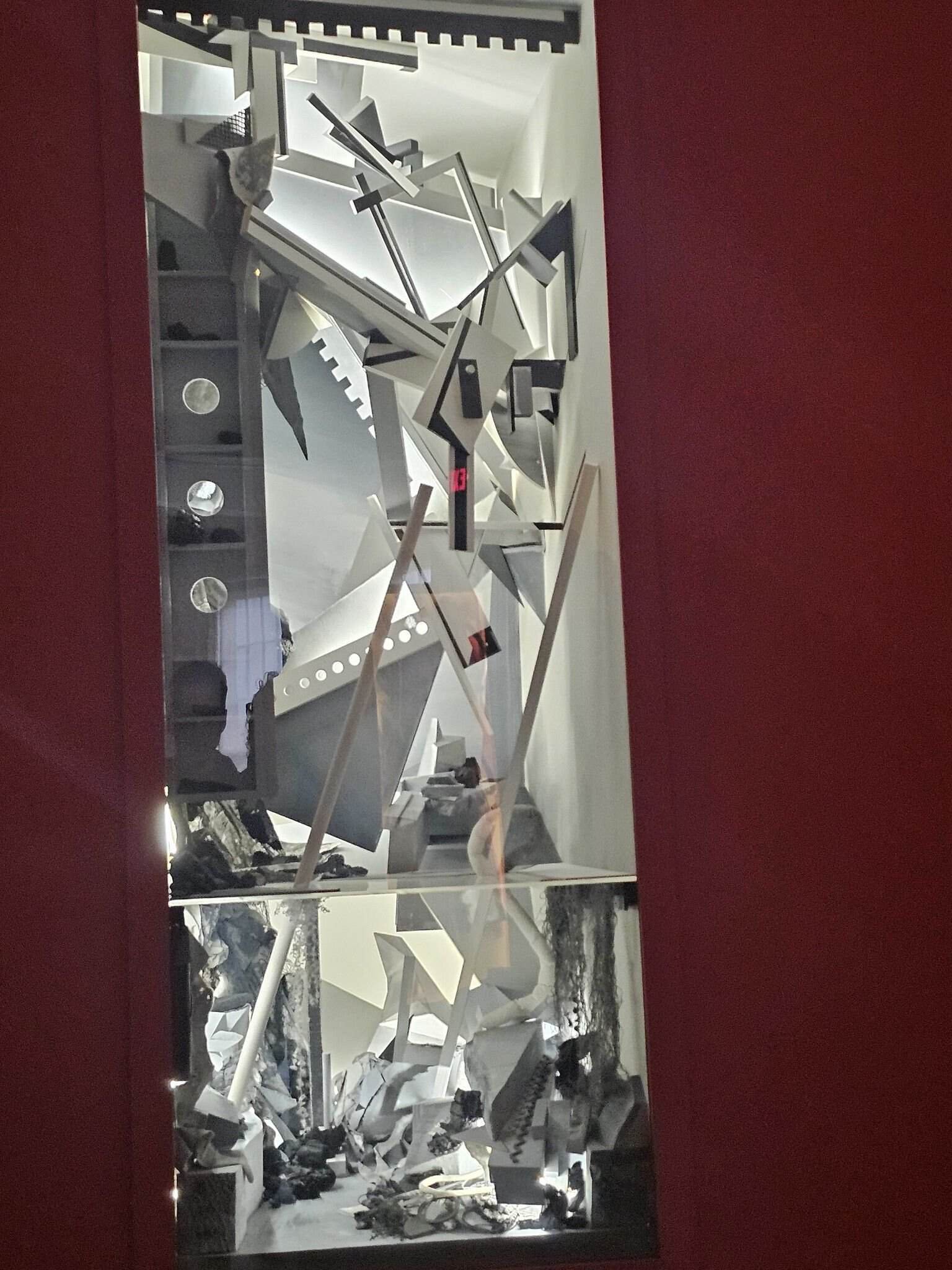
Sometimes the most memorable trips happen close to home. When my mom, my little sister, and I wanted a weekend to reconnect and do something creative together, we landed on the Massachusetts Museum of Contemporary Art — better known as Mass MoCA — up in North Adams, in the Berkshire hills. This is not a stuffy, hushed, don’t-touch-anything art museum, and that’s exactly what makes it worth the drive. It’s one of the largest contemporary art centers in the country, built inside a sprawling old factory, full of things that blink and make sound and invite you to play. Here’s what a family weekend at Mass MoCA is actually like.
More Than a Museum: A Factory Transformed
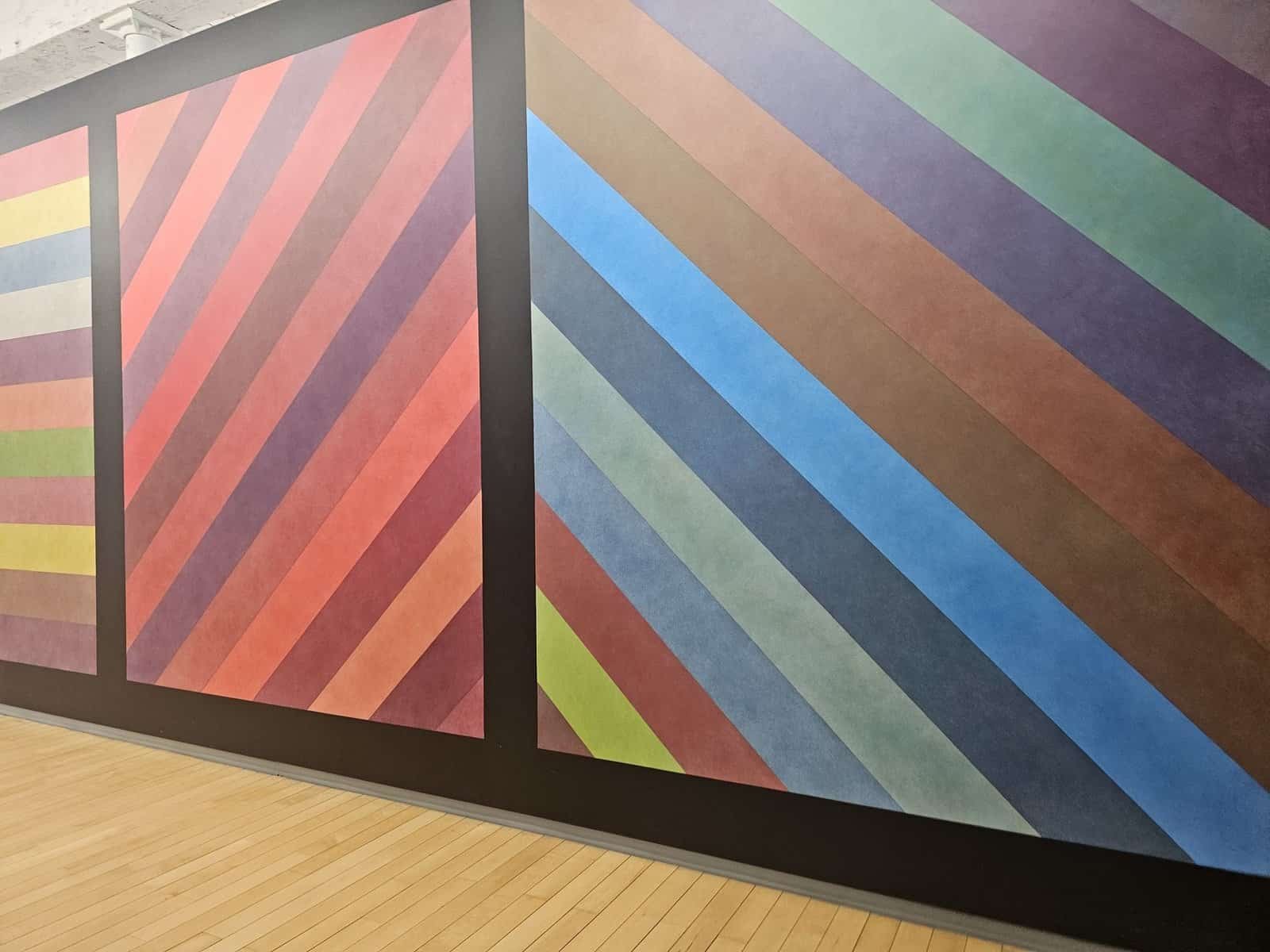
The first thing that hits you at Mass MoCA isn’t the art — it’s the building. The museum occupies 26 buildings across 13 acres of the former Sprague Electric complex, a 19th-century factory that once made textiles and later electrical components. Instead of hiding that industrial past, the curators leaned all the way into it. Original brick walls, exposed beams, soaring ceilings, and worn wooden floors — complete with the fascinating patterns where old support beams were cut down to level the surface — become part of the experience.
These aren’t the pristine white cubes of a traditional gallery. Rooms are painted in bold colors, rough brick and industrial fixtures frame the installations, and the result is a backdrop that’s both raw and sophisticated. There’s something genuinely moving about seeing ambitious, cutting-edge art in spaces where people once made tangible goods with their hands. The building tells its own story, and every piece inside is in conversation with it.

The Installations That Got Us
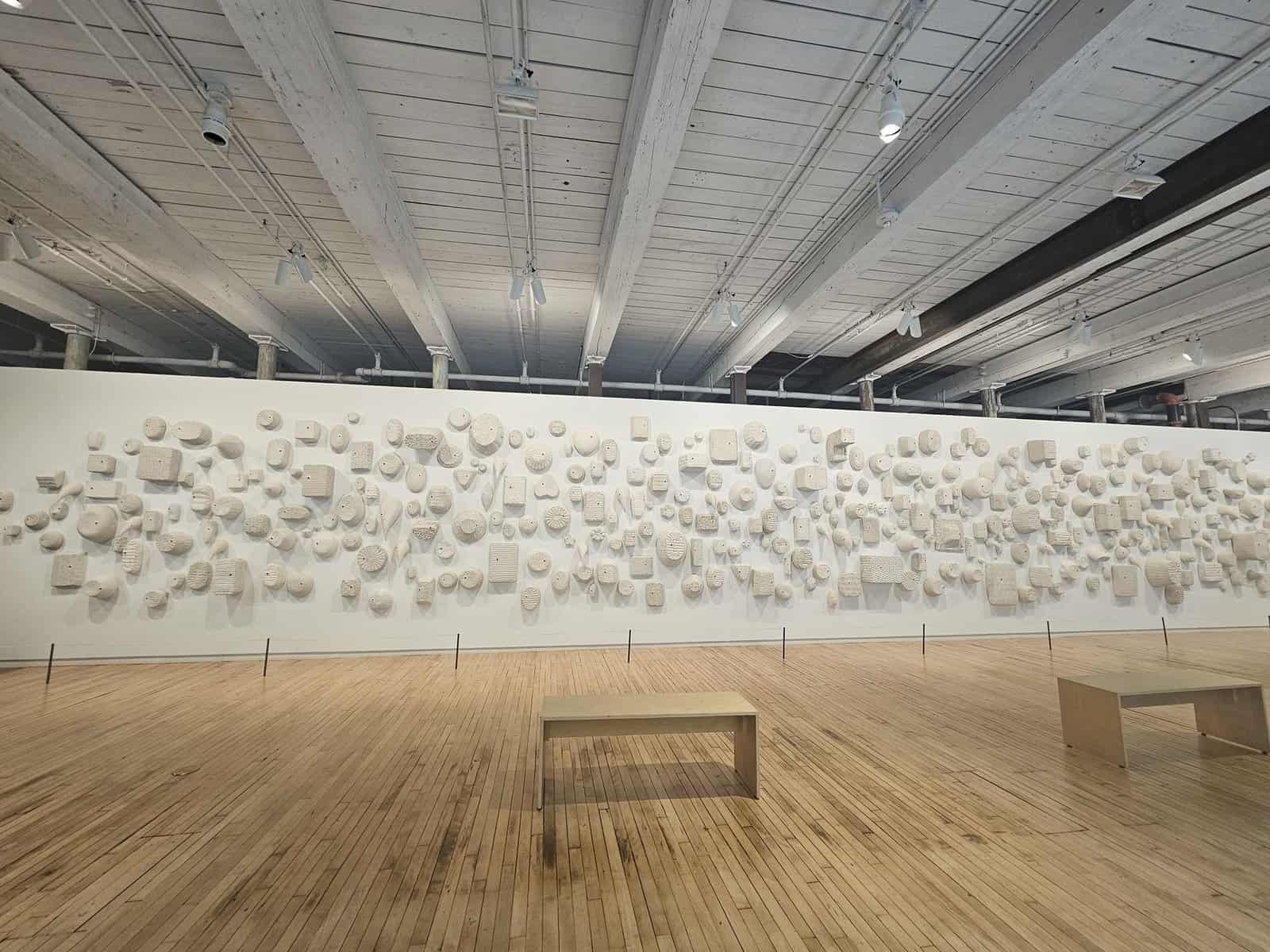
Our visit was one unexpected discovery after another. The most memorable piece was a wall of dozens of ceramic faces, each nestled in a handwoven basket, and each with a single eyeball that would slowly blink open and closed with a gentle tinking sound. My sister and I stood there a solid fifteen minutes, laughing every time the eyes synced up their blinking. It’s the kind of thing that has no business being as mesmerizing as it is.
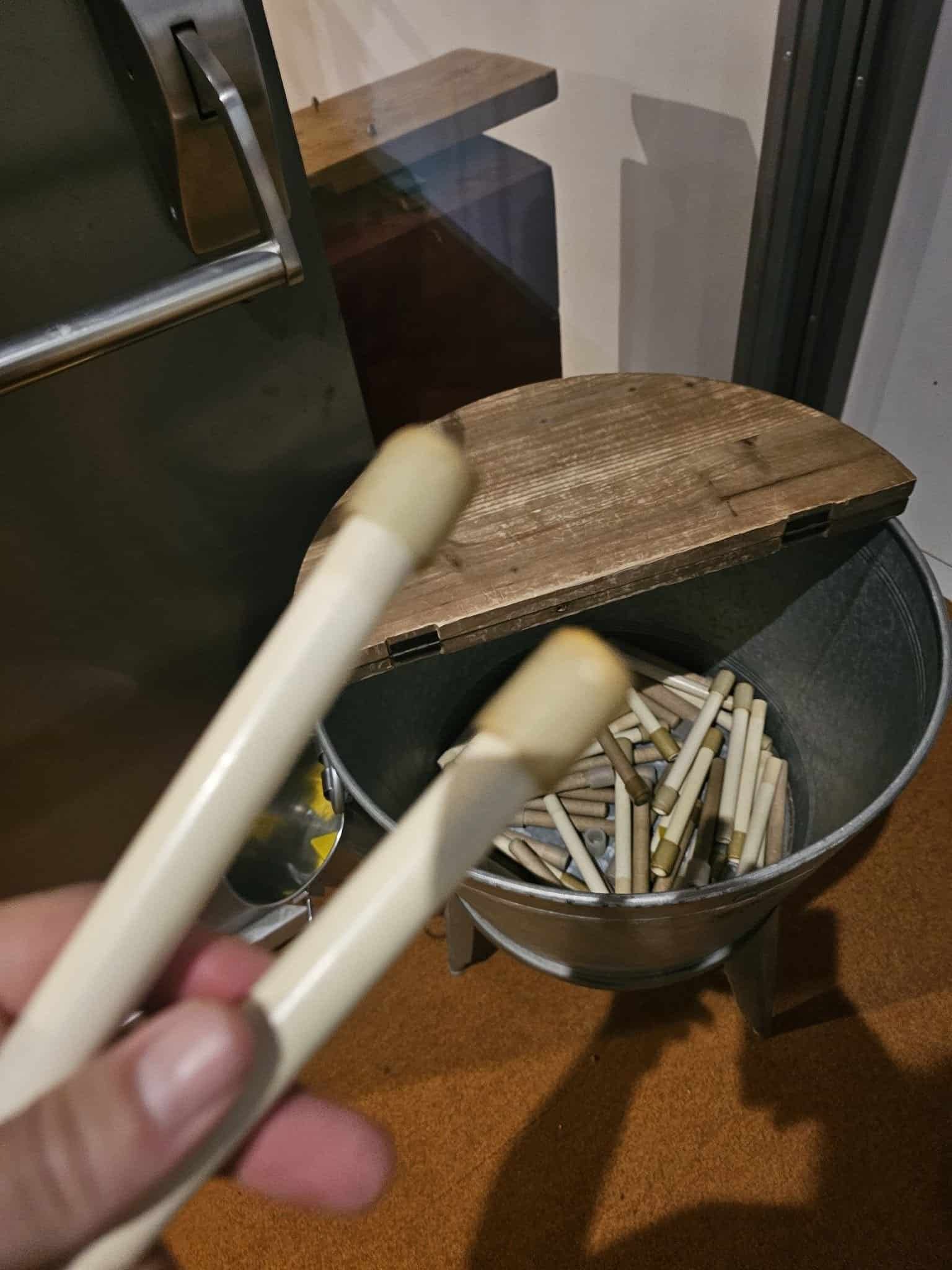
Mass MoCA loves work that engages more than your eyes. We found a room full of handmade musical instruments — strange, wonderful contraptions that visitors are actually encouraged to play. With a crowd all experimenting at once it can tip into cacophony, but there’s something freeing about being invited to make noise as part of the art. Another installation asked visitors to write their heart’s deepest desire on a slip of paper, which became part of an evolving piece about longing and fulfillment — personal and universal at the same time.
Powerful Voices and Big Spaces
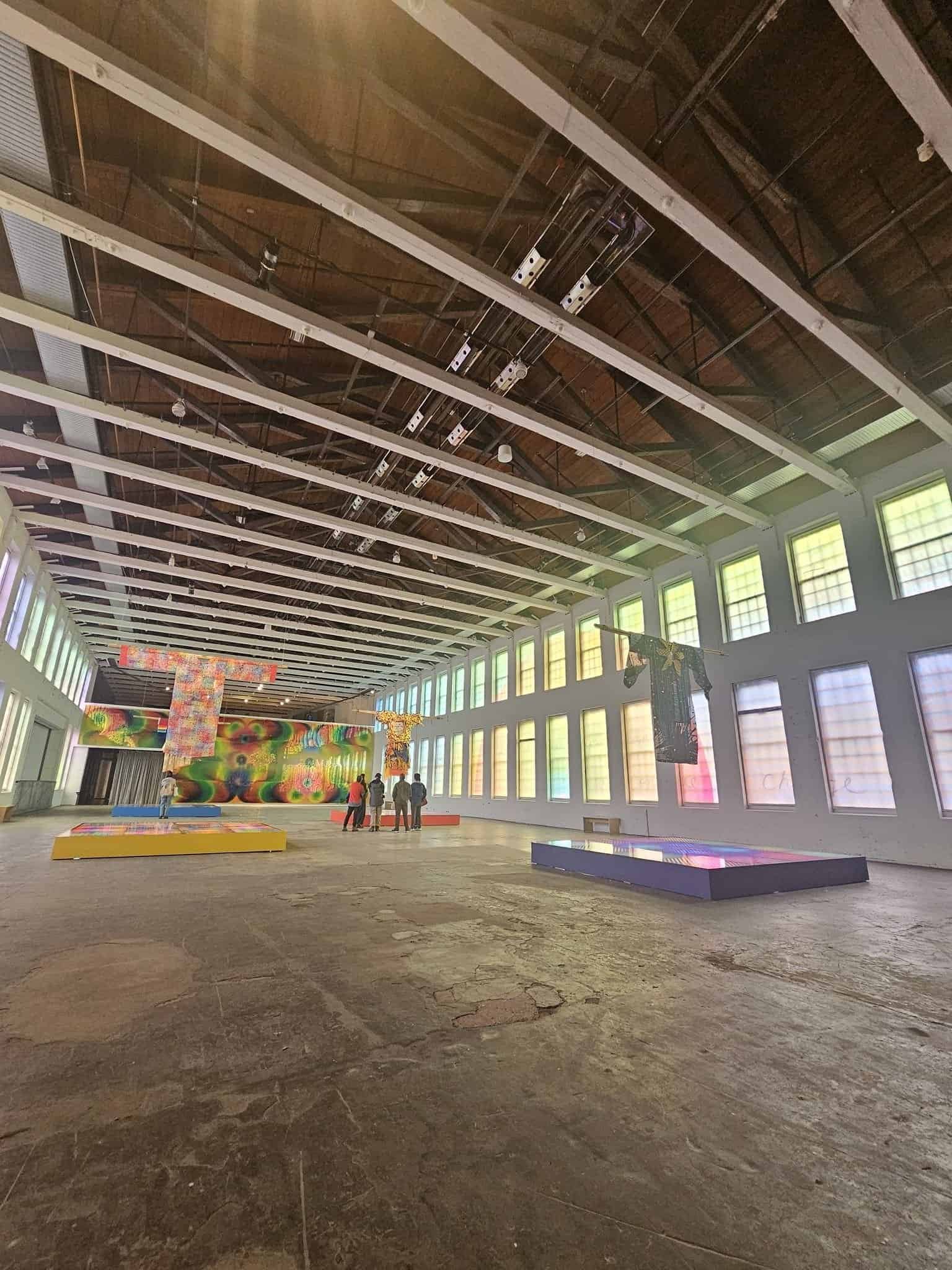
One of the most impactful things we saw filled the museum’s largest gallery: an installation by a Native American artist, with vibrant hanging wardrobes and powerful, rhythmic music washing over the whole room. Contemporary art doesn’t land the same way for everyone, and not every family member connected with the message identically — but there was no denying the force of the artist’s use of color, sound, and space to build a fully immersive environment exploring identity and heritage. Even where the specific meaning didn’t grab us, we all respected how bold and unapologetic it was.
That willingness to hand over an enormous room to a single challenging idea is what sets Mass MoCA apart. The scale lets artists attempt things that simply wouldn’t be possible in a conventional museum, and the industrial bones of the place can absorb it.
Art You’re Allowed to Touch
Unlike most museums, where “do not touch” signs run the show, Mass MoCA encourages interaction wherever it can. Beyond the instrument room, we kept finding pieces that invited participation rather than passive observation. There’s something refreshing about being trusted to physically engage with art and build your own experience of it. The open industrial floor plans help too — they create natural gathering spots where families and friends can stop, react, and talk about what they’re seeing.
That approach also makes the place unusually welcoming to kids without ever talking down to adults. My little sister found plenty to hold her attention, from the blinking eyes to the noise-making instruments, while there was more than enough depth to keep my mom and me engaged. The unspoken permission here — that it’s fine not to “understand” everything, that you can simply experience and react — takes the intimidation out of contemporary art.
What’s Changed Since I Was a Kid
I’d visited Mass MoCA as a child, so I was curious how it had evolved. The most notable change was the absence of the iconic upside-down trees that once hung outside the building — a playful signature I missed, though their disappearance is a fair reminder that a contemporary art museum is a living, changing thing, not a fixed collection. During our visit one big gallery was mid-transformation, being prepped for a new installation, and from the upper balcony I sneaked a look at the setup: illuminated boxes being arranged on the floor in patterns that would clearly become part of something larger and interactive. Even the behind-the-scenes churn is interesting here.
Outside, the museum’s ambition continues. “Big Bling,” a massive sculpture of brass rings, anchors the campus, and the outdoor spaces give you room to breathe and reflect between the intense indoor galleries.
Planning Your Visit
A few practical notes. Mass MoCA sits in North Adams, deep in the Berkshires, and the official site at massmoca.org has current hours, tickets, and what’s on show — check it before you go, because the museum sometimes closes early to prep for evening events (during our visit it was shutting down for an art gala, which trimmed our time). Even so, two hours felt about right to take in the major installations without hitting museum fatigue; you could easily stretch it longer. North Adams itself has good restaurants and places to stay, so it’s easy to turn a visit into a full Berkshires weekend.
The region rewards that kind of trip. In winter there’s cheap, family-friendly skiing a short drive south at Otis Ridge, and the rest of the year the Berkshires and the northwest Connecticut hills next door are full of trails, from the waterfall at Race Brook Falls to the whole cluster in my guide to hiking in Connecticut.
Final Thoughts
Our family weekend at Mass MoCA reminded me why physical, in-person art still matters in a world drowning in screens. The museum works because it embraces both its factory heritage and its experimental mission, building spaces where past and present talk to each other and where your own reaction counts as much as any curator’s intent. Would I go back? Without hesitation — the exhibitions constantly change, so every visit turns up something new. Whether you’re an art person or someone who usually avoids museums entirely, Mass MoCA offers something genuinely different. Just check those hours first — you never know when they’re prepping for the next big celebration. Cheers.