Editor’s Note: This is a little different from my usual content — but when I sat down for coffee with Lisa in Siem Reap and heard her story, I felt it was too compelling not to share. This is a sponsored article, but every word is my own. The views expressed are Lisa’s and don’t necessarily reflect my own. At the interviewee’s request, her name and some identifying details have been changed due to the personal nature of her story.
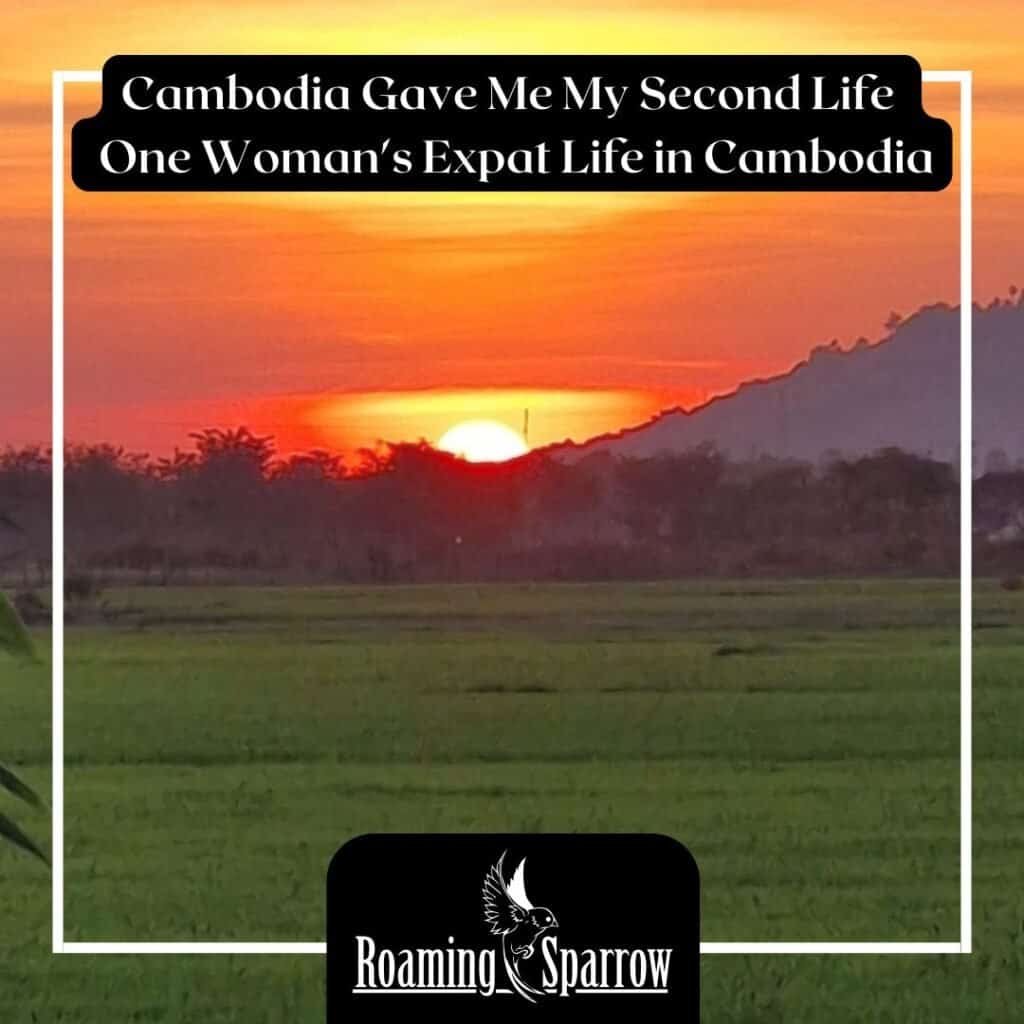
Cambodia Gave Me My Second Life
One woman’s journey from collapse to community — and why she chose to stay when everyone else was leaving.
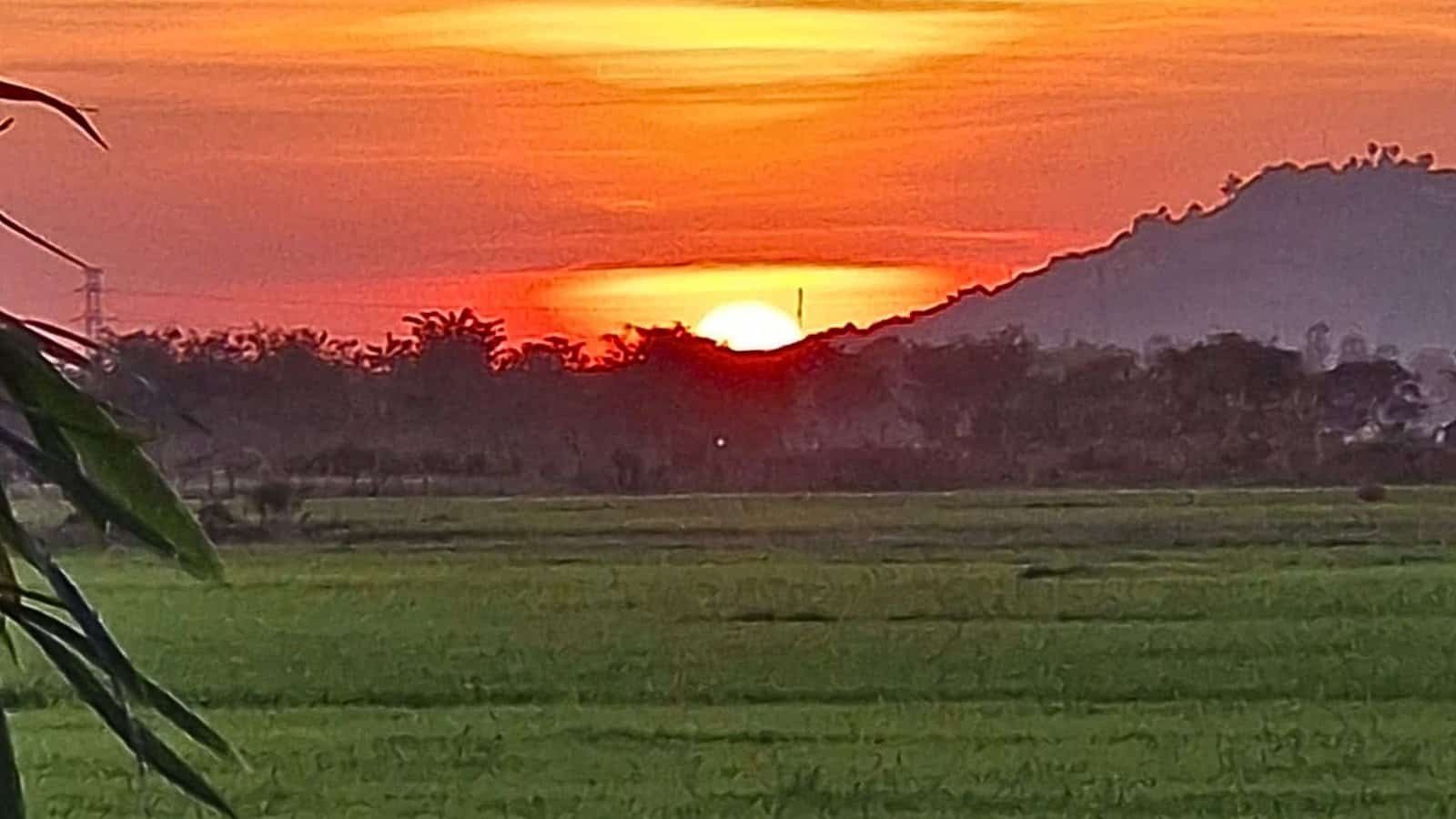
Some people come to Southeast Asia for the temples. Some come for the food, the cost of living, the sunsets over rice paddies. Lisa came because she was running out of time.
Not in the dramatic, cinematic sense — though the reality wasn’t far off. A medical scare that left her waiting on biopsy results, the particular quiet terror of sitting in a waiting room not knowing. A drawn-out legal battle that dragged her through courts and correspondence and the slow grinding machinery of a system that doesn’t care much about how exhausted you are. A fractured relationship with her daughter that sat like a stone in her chest. By the end of it, she describes herself as caged — a person going through the motions of a life that had stopped feeling like hers a long time ago.
“I was on my way to passing away,” she told me simply, over coffee in Siem Reap on a quiet Tuesday morning. There was no self-pity in the way she said it. No performance. Just the matter-of-fact clarity of someone who has genuinely stared into the abyss — and then, with considerable effort, chose differently.
We were sitting in one of Siem Reap’s quieter neighbourhoods, away from the tourist drag, the kind of cafe that locals and long-termers use rather than people ticking off bucket lists. It felt like the right place to have this conversation. Unhurried. Unperformed.
Lisa is European, in her early sixties, and has the kind of directness that can catch you off guard. She laughs easily but wastes few words. She spent the better part of a decade in motion after leaving Europe — across South America, North Africa, back and forth across continents — looking for something she couldn’t quite name. She first passed through Cambodia years ago and felt something. A pull, an energy she still struggles to fully articulate but clearly hasn’t forgotten. She left. But it stayed with her.
When everything in her life collapsed at once, she came back.
A Life in Motion
To understand why Cambodia meant so much, you need to understand what came before it.
Lisa left Europe in 2017 on her first major relocation — not a holiday, not an extended trip, but a genuine attempt to find a different life. She landed in Ecuador and stayed for a year. From there the route wound through years of searching: back to Europe during the pandemic, bouncing between countries, trying to make the familiar work again. It didn’t. After Corona she pushed further — a year in Egypt, then Mexico, then six months in Buenos Aires, which she loved deeply enough that she cried when she left. From there, back to Europe briefly, then Cambodia.
The pattern isn’t restlessness for its own sake. It’s something more deliberate — a woman testing places against an internal benchmark she couldn’t quite articulate, looking for the one that didn’t require her to make herself smaller to fit.
Through all of it, she carried a quiet longing she traces back more than twenty years. She had always been drawn to Buddhism and meditation — not as a tourist interest but as a genuine calling. In her forties, she had a serious intention to relocate to Nepal, to build a life there, possibly to marry. She had visited the region six or seven times. Life intervened. Her mother’s health, obligations that couldn’t be deferred, the thousand quiet anchors that hold us in place. “I had obligations,” she said, with the tone of someone who has long since made peace with it. “But the Dalai Lama was always in my mind.”
She mentions, almost as an aside, that she eventually met someone connected to that world at a community event in Siem Reap. One of those small moments travel generates with unusual frequency — the right person in the right room at the right time. “It’s never too late,” she said, and smiled like someone who genuinely believes it.
Some people who travel are running away from something. Others are running toward something they can’t yet see clearly. Lisa seems to have always been the second kind — she just needed the circumstances to get bad enough that she finally ran out of reasons to delay.
The Return
She arrived back in Cambodia with little more than her savings and a vague but insistent feeling that this time she was going to stop. Not stop moving, exactly — but stop searching. Stop auditioning places to belong.
The early weeks weren’t without difficulty. The adjustment from the pressure-cooker of her European situation to the slower pace of Siem Reap wasn’t seamless. When you’ve been in crisis mode for a long time, the absence of it can feel disorienting. There’s a period many long-term travellers describe where the stillness of a new place feels less like peace and more like waiting for the next thing to go wrong. Lisa went through that. She’s honest about it.
Within weeks she had found her way to a local school initiative, helping with fundraising, teaching, and community outreach for kids in need. It wasn’t something she had planned. It’s just where her feet took her. And when she started spending time with the children, something clicked.
“The kids give me energy and power,” she told me. “It’s not something I expected — but for me it was not surprising either, because I had worked with children before. The difference is that here it is real. The need is real. The connection is real.” She paused. “In the Western world, the kids are so spoiled. The work doesn’t feel the same.”
She’s careful to add that she has had difficult experiences in the world of community work and fundraising too — people more interested in commissions than causes, the cynical machinery that can sit just behind the facade of charity. She doesn’t romanticise it. But the children themselves, she says, are untouched by that. They are the reason she gets up at 6am.
She has hopes for them — that they won’t be absorbed by the creeping westernisation she sees spreading through Southeast Asia. “When Starbucks rolls in,” she says with a wry smile, “everything starts to change.” She knows she can’t stop that. But she can show up. She can teach. She can fundraise. She can be present.
Finding a Tribe — Finding Roots
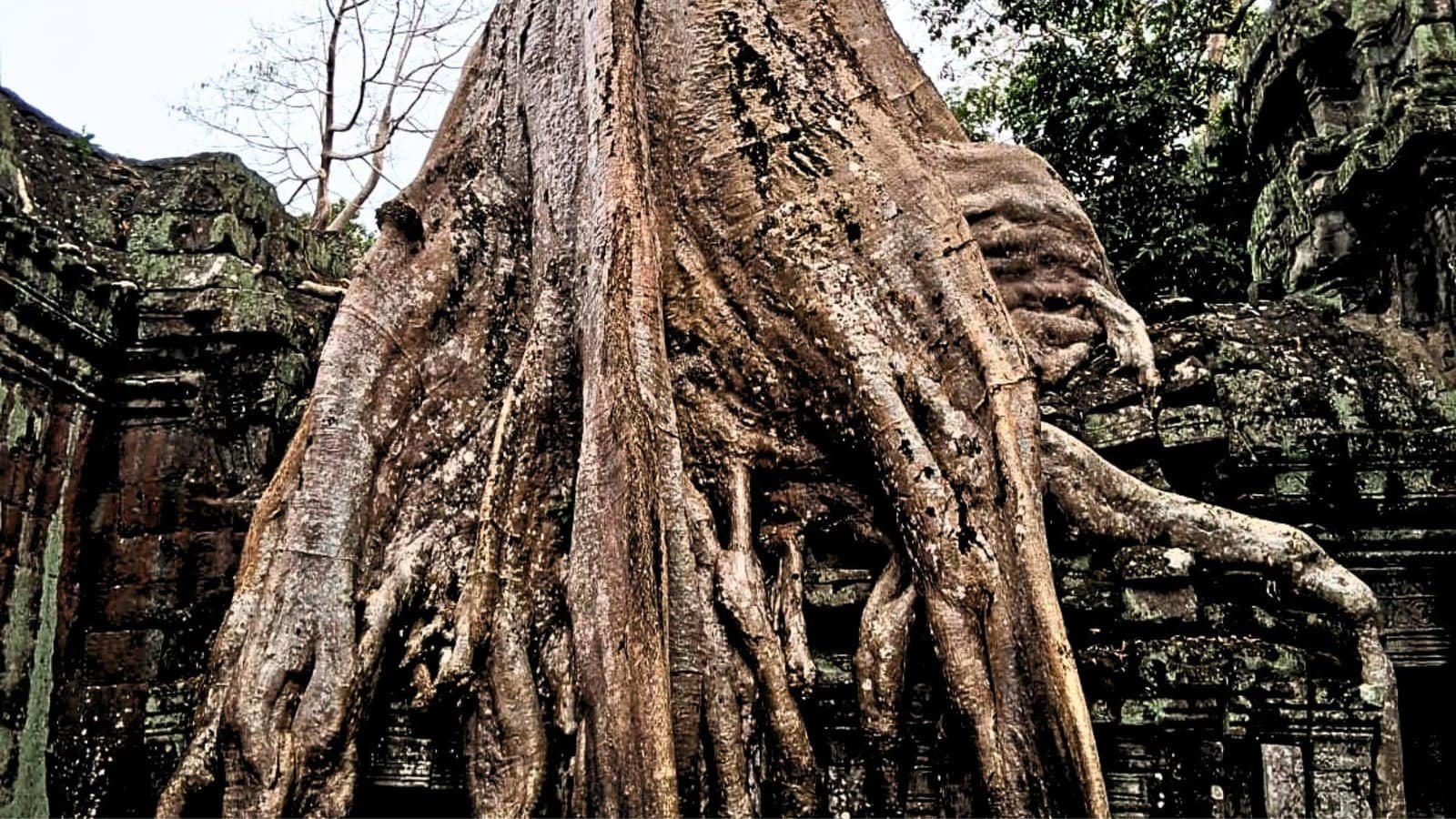
What surprised her most about Siem Reap wasn’t the temples or the cost of living or even the warmth of the Cambodian people — though she values all of those things. It was the community she found herself inside.
“These are my tribe,” she said, when I asked about the people she’s surrounded herself with. “A collective family.” People from all over the world, she explains, drawn to this particular corner of Cambodia not because it’s cheap or exotic, but because of something harder to define. A quality in the air. A pace that allows actual thought. A community that didn’t build itself around a nightclub strip or a co-working space but around people who wanted to actually live somewhere, not just Instagram it.
“Collective family” landed with me. Because that’s exactly what Siem Reap can be, if you approach it right. Not a party destination or a budget stopover, but a place that quietly collects people who needed somewhere to put down roots. I’ve met enough of them here in my own time to know it isn’t just Lisa’s experience. There is a particular kind of person who ends up staying in this city past their original plan — and they tend to find each other.
She’s also found her rhythm. She doesn’t stay at home after 6pm — that way lies the slow drift into sleep and inertia, she says with the authority of someone who has tested this theory. She goes out. She meets people. She’s awake early for meditation. Her days have a shape now, a structure built from intention rather than obligation, and you can hear the satisfaction in it when she talks about it.
“I need to look after myself first,” she says, “before I can properly be there for anyone else. Love yourself, lift yourself up — and then love the people around you.” It sounds like something you might see printed on a tote bag, but coming from her, after everything she’s navigated to get here, it carries real weight.
She also has her limits — an honesty about where her energy goes and where it doesn’t. She stays away from the expat bar scene, the revolving door of people passing through for a long weekend. The tribe she talks about is people who have roots here, or are putting them down. Quality over volume. Depth over noise.
Staying When Others Left
The moment Lisa describes as her true turning point — the moment Cambodia shifted from somewhere she was staying to somewhere she belonged — was unexpected.
When regional border tensions flared in late 2025, unsettling expat communities across the country, many people quietly started making contingency plans. Flights were checked. Emergency bags were half-packed. Group chats buzzed with speculation and low-grade anxiety.
Lisa didn’t pack a bag. She didn’t check flights. She remembers a feeling — she points at her chest when she says it — telling her: “You are not going back. Why should you go back?”
“The war made this country my home,” she said. “When you stay through the hard times and the good times — that’s when you belong somewhere. Not like the people who disappear when things get difficult.”
There is something profound in that. Most of us travel with an invisible escape hatch — the return flight, the backup plan, the life waiting back home. We keep one foot in and one foot out, which means we never fully arrive. Lisa closed her escape hatch. Cambodia wasn’t a chapter. It wasn’t just a milestone on the journey.
It was where the journey finally found its footing.
There’s a particular kind of belonging that can only come from choosing a place in full knowledge of its imperfections. Not the honeymoon-phase belonging of the first few months, when everything is novel and the light falls at an interesting angle and you’re still excited by the menu. But the deeper, harder-won belonging that comes from staying through something difficult, from knowing a place well enough to be occasionally exasperated by it, and choosing it anyway. That’s what Lisa has found.
She’s been here about a year since coming back. Already it’s starting to feel like sixty.
The “Western Disease”
I want to be transparent: the following is Lisa’s perspective, not an editorial position of Roaming Sparrow. But she said something that stuck with me, and it feels dishonest to leave it out.
She talks about what she calls a kind of Western disease — a set of cultural defaults that most of us carry without examining them. The accumulation of things. The performance of productivity. The relentless treadmill of obligation, comparison, and quiet dissatisfaction. The sense that life is something happening slightly out of reach, and if you could just get the next thing — the promotion, the house, the relationship — it would finally click into place.
She’s not anti-Western in any simplistic sense — she grew up in that world, built a life there, and speaks about parts of it with real affection. What she’s describing is something more specific: the particular exhaustion of a life lived primarily in service of appearances, of keeping up, of never quite feeling like enough.
She does believe that stripping away the accumulated noise — the lawsuits, the mortgages, the social performance — can create space for something that actually matters.
“When we are born, we come with nothing,” she said. “No cars. No houses. Just your thoughts and what you carry inside you.” She looked out the window for a moment. “And that is also what you leave with.”
I didn’t push back. There are days when it’s hard to argue.
Something Like Peace
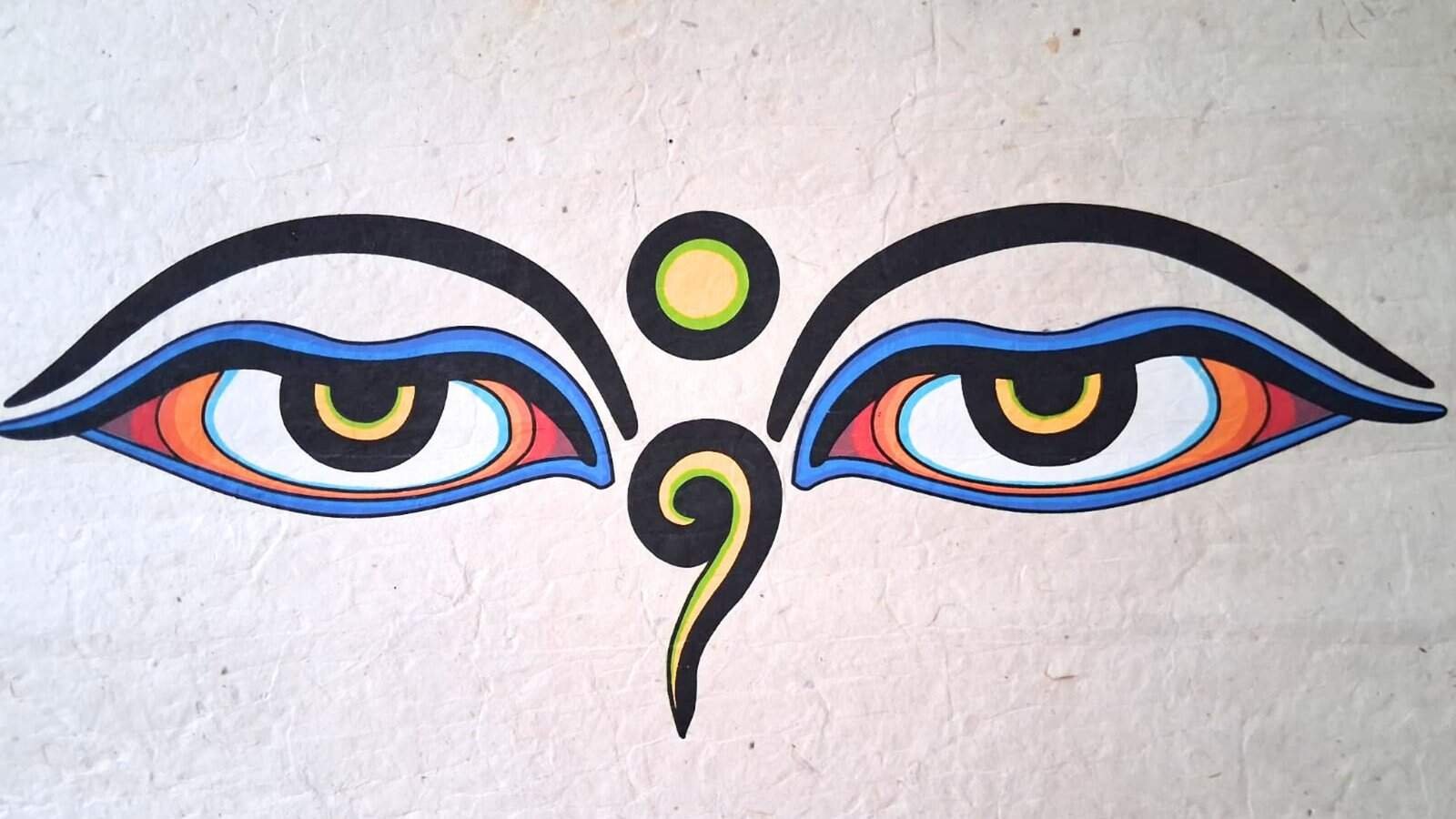
The meditation practice she spent twenty-three years wanting to begin has finally started. She’s not sitting with monks or completing formal retreats — not yet. But every morning at 4am she’s up, listening to a teacher she found, repeating and breathing and working on the slow, frustrating, genuinely difficult process of quieting a mind that has been running at full speed for most of six decades.
“The mind is always spinning,” she admitted. “But I am working on it.” She laughed when she said it — not a defeated laugh, but the laugh of someone who has accepted the difficulty without giving up on the destination.
She’s arrived at a personal philosophy that sounds almost Buddhist in its framing, even if she’d resist any easy label. She believes in something like the continuity of experience across lives — that the distance between any two people is smaller than it appears, that empathy isn’t just a moral choice but a recognition of something genuinely true about how we’re all connected. I’m not sure I share that belief entirely, but I understand the value of living as though you do. It makes you slower to judge. More likely to sit across from a stranger and actually listen rather than just wait for your turn to talk.
We veered into a brief philosophical tangent — as conversations with Lisa tend to do — about what exactly we carry with us through a life. She kept coming back to the idea that the things we accumulate mean very little compared to what we build inside. Part of that, she says, comes from her mother. As she was passing, her mother left her with something simple and devastating: live the life you want to live, and have no regrets. It wasn’t advice so much as a final permission slip — the push that helped Lisa stop living inside other people’s patterns and start building her own.
That philosophy shaped something Lisa carries with her — a saying she holds onto, drawn from an old European expression: “Your last dress has no pockets.” You arrive with nothing and you leave with nothing. What matters is what you chose to do in between.
It occurs to me, sitting with Lisa, that this is also what travel does to you if you’re lucky and paying attention — it wears down the certainty that your way of seeing things is the only way. Each place you stay in long enough chips away a little more of that certainty. Cambodia has been that for her. Not a solution, exactly. More like a widening of what she thought was possible.
What She Wants You to Take Away
I asked her, near the end of our conversation, what she’d want someone to take away from reading her story. She thought about it properly — not the reflexive answer, but the real one.
“There is always a way. But you have to give yourself the ability and the wish — the drive and the motivation to change.”
That’s it, really. Not a prescription for moving to Cambodia. Not a manifesto about Western society or the virtues of voluntary simplicity. Just a woman who hit the wall — the biopsy, the courtroom, the estranged daughter, the whole accumulated weight of a life coming apart — looked for a door, and found one somewhere between the temples and the rice fields of Cambodia.
She’s not fixed, and she doesn’t pretend to be. She still has hard days — legal matters in Europe that drift into her mornings like bad weather, the residual noise of a life she hasn’t quite finished closing the door on. She mentioned dealing with lawyers on the phone and how impossibly distant that world feels from where she’s sitting now. “Seems so far away,” she said. “And it is.”
But she’s here. She’s present. She’s leaving the house at 6am instead of lying in bed watching the ceiling. She’s meditating in the dark before the city wakes up. She’s teaching and fundraising for kids in a country she has chosen — actively, consciously, deliberately chosen — as her home.
I think what stays with me most from our conversation is not any single thing she said, but the quality of how she sat with it all. The hard history. The ongoing complications. The imperfect, still-unfinished nature of a life in the middle of being rebuilt. She wasn’t performing resilience or packaging her experience into something neat. She was just telling me what happened — and what happened next.
I don’t know if Siem Reap is your answer. I don’t know if uprooting your life and traveling across the world is the right move for you. This blog has never been about telling you what to do — it’s about showing you what’s possible, what’s out there, what other human beings have discovered when they went looking.
“When life hurts, Siem Reap heals”.
Stories like Lisa’s are exactly why I keep traveling, keep talking to strangers in coffee shops, keep writing. Because sometimes you sit down expecting a quick chat — and you walk away carrying something you didn’t know you needed to hear.
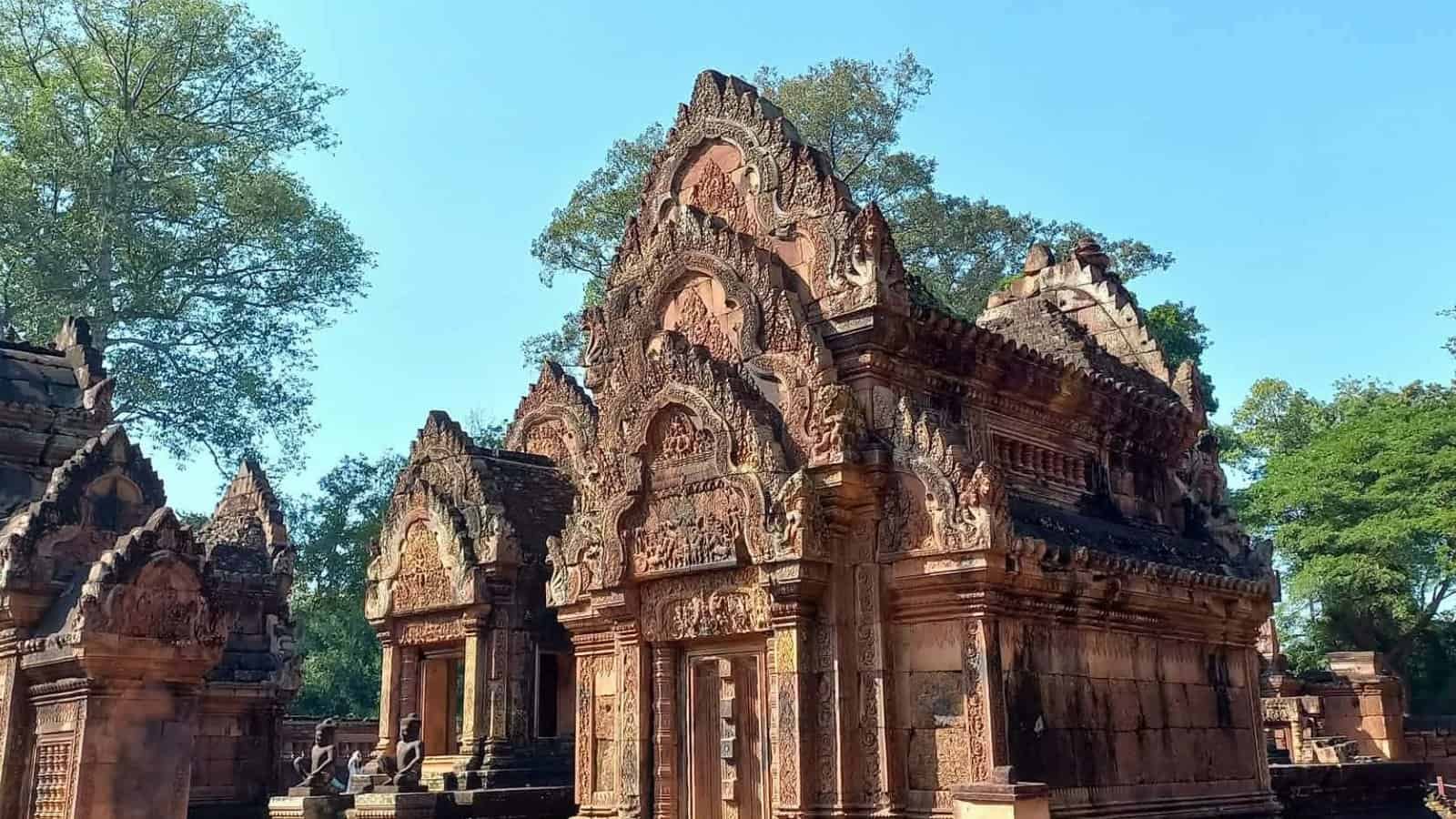
“Lisa” is a European retiree living, teaching, and volunteering in Siem Reap, Cambodia. Her name and some personal details have been changed at her request due to the personal nature of her story.
Sponsored Content Disclosure: This article was commissioned and paid for by the subject. While the content is sponsored, all editorial decisions, words, and framing are my own. The story has not been altered on behalf of the subject.