Hello Friends,
Everyone sells the tropical island the same way: white sand, blue water, a hammock, a drink with fruit in it. Nobody sells you the part where you are lying in a windowless room at three in the morning, soaked in sweat, having fever dreams about coconuts, with the nearest real pharmacy a thirty-minute boat ride across open water. But that is also part of living on Koh Rong Sanloem, and if I am going to tell you the truth about this place, I have to tell you about the two weeks it tried to take me apart.
Planning a Cambodia island trip yourself? This is one chapter of living on the islands — the full planning picture is in my Cambodia Island Hopping guide.
Thirteen Days In, Paradise Turned On Me
I had the routine dialed. Up at six, down to the beach by six-thirty, a workout and a swim in water that is always somehow the perfect temperature, then work for a hostel client under the palms. Thirteen days into a seven-month stay and I thought I understood island life on Koh Rong Sanloem. Then my body filed a complaint.
It started as ordinary tiredness — the kind you write off as tropical fatigue. I did my beach workout anyway, knocked out some marketing work, and headed down for a drink before the evening got going. That is when it went sideways. Not the good tired you earn from a long day of exploring, but a bone-deep exhaustion that made my eyelids feel like wet sandbags. I crashed in a beach chair under the palms and was gone for thirty minutes. When I woke up, I already knew the day was over.

The Pharmacy Was a Woman Named Mama
Here is the thing about getting sick on a small Cambodian island: there is no urgent care. There is no familiar pharmacy with a bored clerk and a wall of options. There is a local market, and behind the counter there was an older woman who told me to call her Mama, doing her best to read my pointing and grimacing.
She handed me some over-the-counter medication. Later, when I actually looked it up, I found out it had been banned in the United States and several other countries since 2000 over health concerns. Welcome to island medicine, where your options are whatever is on the shelf and your phone is the only thing standing between you and poisoning yourself. I did not take it. I stumbled to a different shop, found throat lozenges and ordinary aspirin — the non-banned kind — and retreated back to my room.
The Worst Night In Years
I strapped in for what turned into the worst night of travel sickness I have had in a long time. No sleep. Just sweat, sand stuck to everything, and fever dreams on a loop. In the dreams I was trying to screw rusty bolts into buttons that would somehow release coconut juice — my delirious brain had latched onto electrolytes, probably from reading somewhere that coconut water helps you rehydrate. So there I was, all night, mentally building elaborate contraptions to earn my coconut juice while getting up every thirty minutes to run to the bathroom.
The hostel I work out of has sand floors, cold-water showers, fans instead of air conditioning, and no hot showers anywhere. When you are healthy, all of that is part of the adventure. When you are sick, it is a specific kind of hell.

Missing the Party I Helped Promote
The next afternoon — and it was the afternoon before I could lift my head — was supposed to be the big hostel event, an all-nighter I had helped promote before I went down. There was no chance. I could barely stand. The irony of island life is that sometimes you are the guy organizing the party that everyone else is enjoying while you are across the street buying plain rice and coconut water and hoping you can keep it down.
I got some work done and pushed a client meeting to the next day. That is the part the digital-nomad photos never show: the days you are barely functioning but still owe someone a deliverable, so you grind it out at three times the normal speed and then collapse.
I kept asking myself the same question those first few days flat on my back: what is the point of paradise if you cannot enjoy it? But the honest answer, which took me a while to reach, is that I was enjoying it — just differently. Watching the world go by from a basic room with a sand floor. Noticing the small stuff instead of trying to conquer the place or turn every second into content. Maybe the forced slowdown was exactly what I needed. Not what I wanted, definitely not what I planned, but needed all the same.
Recovery Is Mostly Just Showing Up
By day fifteen I was still running on empty, but something in me said get outside. So I dragged myself down to the sand before heading to the hostel to work, just to get sun on my face. When you are recovering from travel illness, the best medicine is not in a pharmacy — banned or otherwise. It is sitting in the sand and remembering why you came here in the first place.
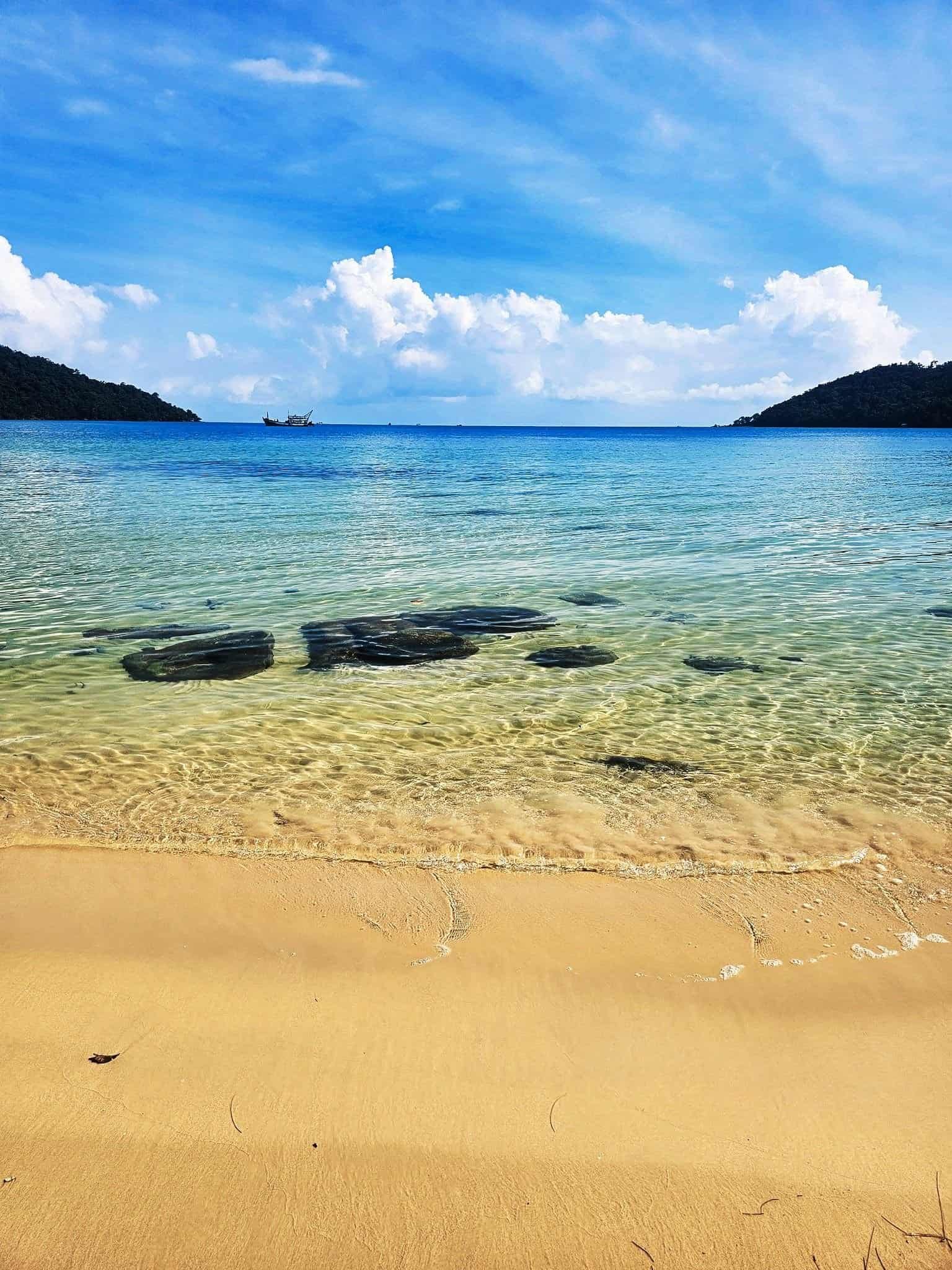
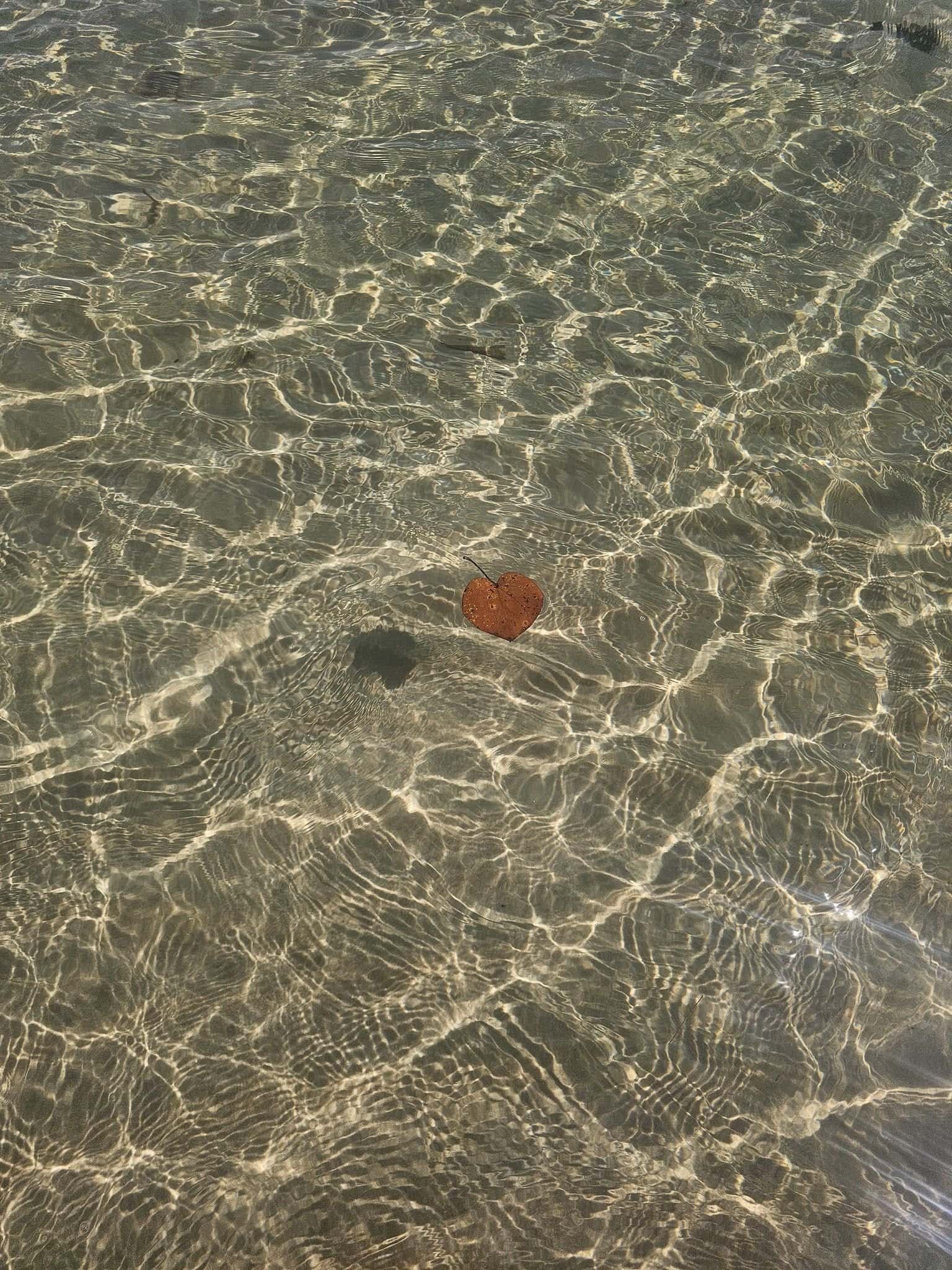
I found a perfectly flat seashell and stared at it far too long, the way you do when you are still running a low fever and every small thing becomes fascinating. The water here does that to you anyway — super blue, so clear that a leaf floating on the surface casts a shadow on the sandy bottom and looks like it is suspended in mid-air. These are the observations you never plan for. They only show up when illness strips away the plans and leaves you standing still.
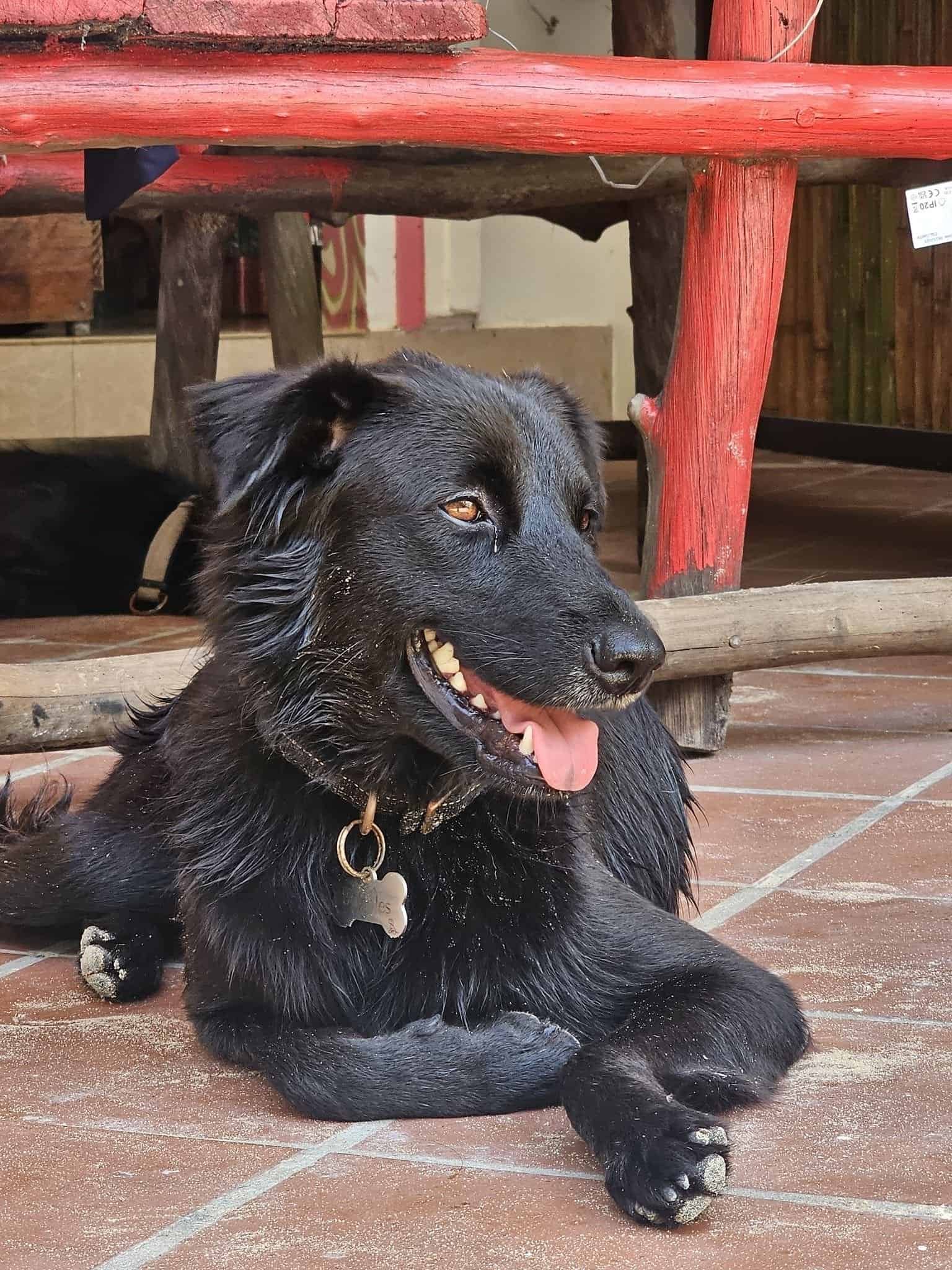
At the hostel there is a black puppy who guards the front door under the red-painted entrance. She greeted me with the full tongue-out dog smile, completely unbothered that I looked like death warmed over. Dogs have a way of making everything feel manageable, and while I battled this thing and my plans fell apart, that dog was just there — happy, simple, reminding me not to take any of it so seriously.
The Morning Swim That Kept Me Sane
The cough was the part that would not quit. Five days, then six, the kind that will not let you sleep lying down, so you prop yourself against the wall and hope for a couple of hours. On day twenty the six a.m. alarm went off and I lay there negotiating with myself, and then the rain started hammering the roof and settled the argument — thirty more minutes.
When the storm passed I went down anyway. No workout, my lungs were not having it, but I could still get in the water, and that is something a Connecticut winter never offered me. The morning beach here is empty and quiet, no crashing surf, just the calm bay lapping the sand, clouds drifting over, long-needled pines lining the shore that I still cannot identify. Even at half capacity, floating in that water resets something. The salt, the temperature, the way sound changes when you are half-submerged — it grounds you when you are sick and frustrated a long way from home.
On the way back I stopped for my breakfast ritual, the one everyone tells me is horrendous: an avocado smoothie with a shot of coffee dumped in. It sounds wrong. It tastes good. I am standing by it, sick or not.

Mainland Runs: Rabies Shots in Sihanoukville
Woven through all of this were the mainland trips, because I was in the middle of a preventive rabies vaccination series — three shots over several weeks. Not because anything bit me. The dogs here are friendly. But when you are committing to seven months on an island surrounded by unvaccinated animals, prevention beats treatment, and getting the series done in Cambodia costs a fraction of what it runs in the States. That is the unglamorous logistics nobody mentions when they romanticize island living: scheduling medical care around boat times.
My second overnight in Sihanoukville taught me more about the town than the first rushed medical trip did. I booked downtown near Otres Market instead of next to the clinic, and the place had no reception desk — just a sign with a Telegram number and instructions to text for check-in. “Room not ready, sit by the pool thirty minutes.” When I finally checked in they could not make change and told me to come back tomorrow for it. But the shower made up for everything: after weeks of weak, lukewarm streams on the island, the water pressure here shot out like a rocket, so hard it flew out of my hand when I turned it on.

Two things I learned the hard way over there. The first: the Pass app — Cambodia’s answer to Uber for tuk-tuks — had been quoting me outrageous prices for weeks because I was clicking the wrong button. Once I found the right booking flow, the real rides were far cheaper. Small technical mistakes cost you the most money in Southeast Asia. The second: I thought the boat back to the island left at 11:30, showed up relaxed at 10:30, and the ticket guy pointed at the water — “Boat leaves at eleven, and it’s leaving now.” I bought the ticket and jumped onto the deck as it pulled off the dock. Cambodia will teach you that “close enough” is not always close enough.
Day Twenty-One: Finally Feeling Alive
Day twenty-one was the first morning I woke up feeling alive instead of like death warmed over. The cough finally broke after seven or eight days. The difference is enormous — from propping yourself against a wall all night to actually sleeping, from dragging through basic tasks to having energy again.
That was the day of the third and final rabies shot, so I was headed for the mainland again. But this time, walking the beach at dawn, I noticed something I had been too sick to see: hermit crab tracks everywhere in the sand, little trails that look like tiny dune buggies drove across the beach all night. You only catch that kind of detail when you are actually present, when your brain is not just trying to survive the day. I stood on the dock waiting for the boat, staring at the same clear water that pulled me to Cambodia in the first place, and realized these short mainland runs do one useful thing: they make you appreciate the island every time you come back to it.
What Getting Sick Here Actually Taught Me
If you are planning extended time on a remote island — Koh Rong Sanloem or anywhere like it — take this from someone who learned it the hard way. Know where the actual pharmacy is before you need it, not just the convenience store. Carry rehydration salts; coconut water is fine but ORS packets are better. Screenshot the names of safe medications in the local language so you are not trusting Mama’s shelf at your worst moment. When your stomach is already off, do not gamble on restaurant food — plain rice and bananas become your best friends. And give yourself an extra recovery day before jumping back in, because pushing through only drags it out.
The whole episode cost me three days of work, one networking event I had helped build, and a few hundred dollars in lost opportunities. But that is real travel, not the version with the perfect sunset. Sometimes it is just survival with a better view.
Still Glad I’m Here
I am on the mend now — back to morning swims, back to client work, the fever dreams gone and the rabies series finished. Would I change anything? Maybe I would have been more careful with food the day before it hit, maybe packed better medical supplies. But getting sick is part of the deal when you spend real time in places like this instead of visiting for a day trip.
This is the island most people photograph and leave. I stayed long enough for it to make me miserable and then hand me the quiet mornings, the hermit crab highways, and the strange peace of being forced to slow all the way down. If you want the honest version of how I ended up here in the first place, it is in the story of the 21-hour trip from Lisbon to Cambodia, and what those early weeks actually felt like in my first week on the island and my month-one reality check. Koh Rong Sanloem was a chapter; these days I am based inland in the temple town, which I write about in my Siem Reap travel guide.
If you have ever been genuinely sick a long way from home, you know it changes how you travel afterward. For the practical side of staying healthy on the road, the CDC’s Cambodia travel-health page is worth a read before you go, and if you are weighing a rabies series yourself, the WHO rabies fact sheet lays out why the pre-exposure shots make sense for long stays. Go with your eyes open. Cheers.