This is one piece of my full Siem Reap Travel Guide — a local’s take on the town I call home.
Heartprint Hub Siem Reap: 11 Years of Hope in One Powerful New Cafe
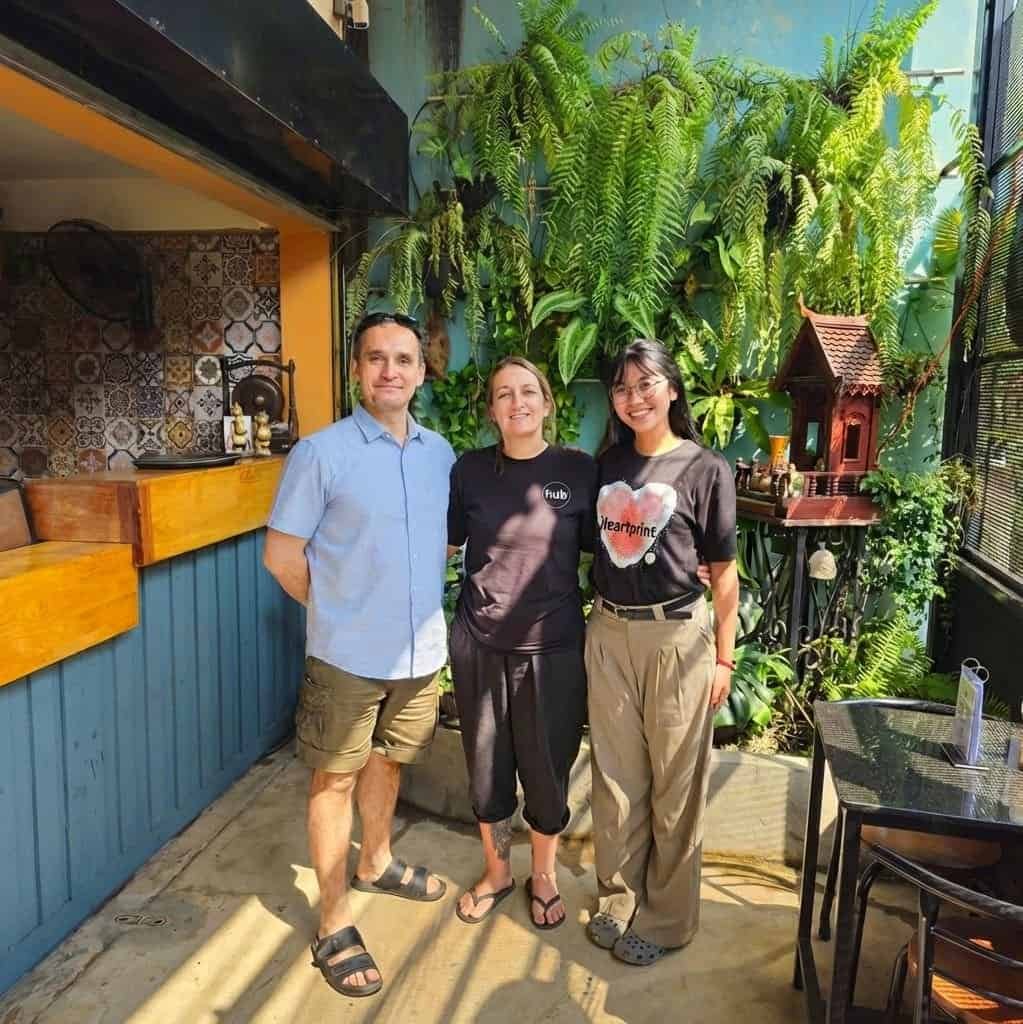
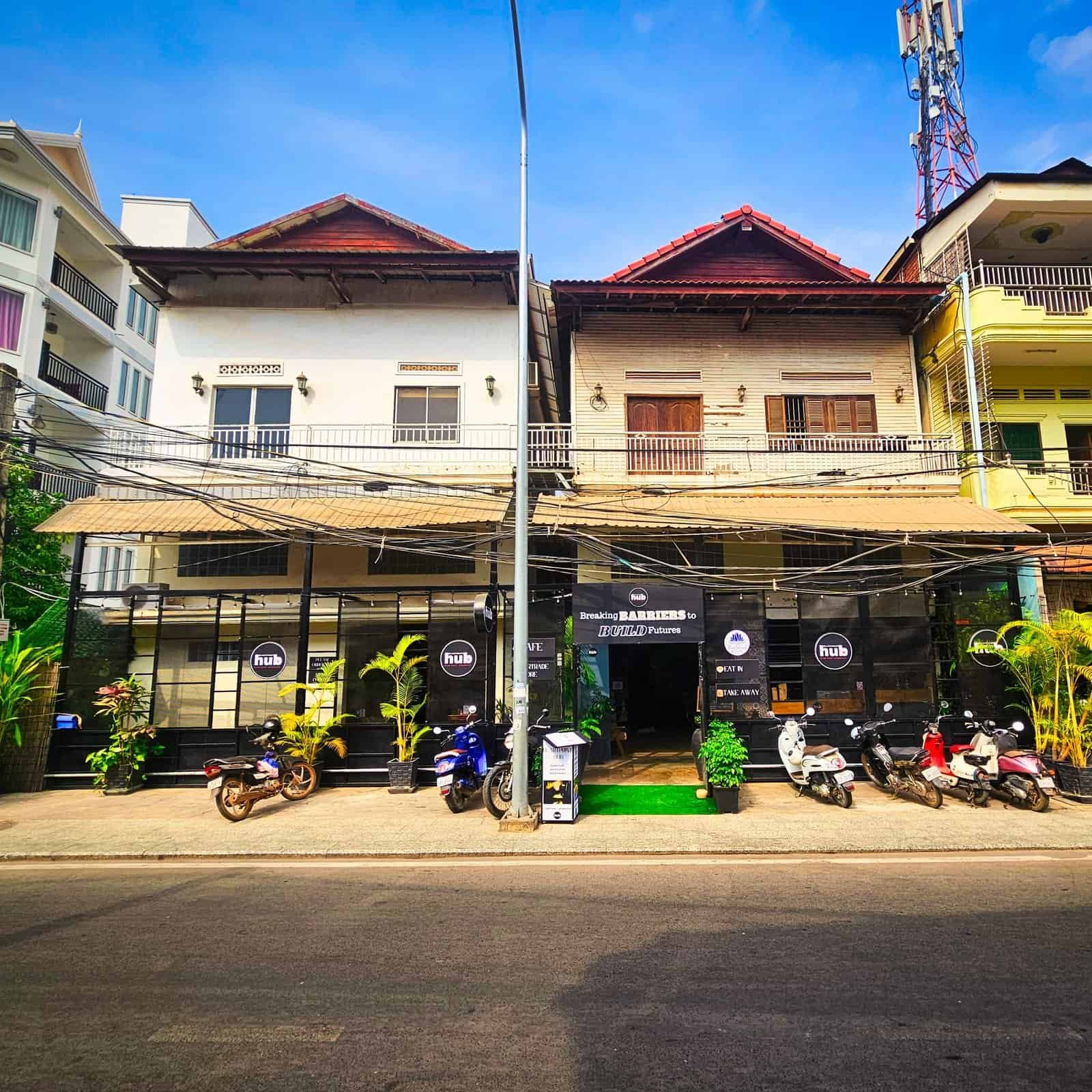
Walking into Heartprint Hub Siem Reap on Angkor Night Market Street, you wouldn’t immediately know the weight of what this place carries. It looks like a solid cafe with air conditioning, good coffee, and a fair trade shop selling handmade goods. But every item on the shelf has a name attached to it. Every staff member has a story. And the woman taking your order might have grown up in the very programs your purchase supports.
That’s exactly how Wendy and Garry O’Brien designed it. The Australian couple behind Heartprint, a registered charity working in Cambodia for over a decade, opened the Hub on January 7th, 2026. It’s the culmination of 11 years building houses, running community programs, and watching kids they once supported grow into adults who now work alongside them.
I sat down with Wendy and Sokla—Heartprint’s 21-year-old Communication Officer who joined the programs at 15—to learn what makes this place different from the dozens of other cafes lining the tourist streets of Siem Reap. What I found was a model worth understanding, whether you’re passing through Cambodia for a week or you’ve been living in Siem Reap long enough to see past the temple crowds.
Why Siem Reap? Why Heartprint Hub?
Ask anyone why they ended up in Siem Reap long-term and you’ll get the same answer. There’s something about this place. The people, mainly. But Wendy and Garry also saw the need.
“Eleven years ago the need was similar to today, but maybe a little more,” Wendy told me. “I like to hope that we’ve had some impact over those years.”
Impact is an understatement. Tomorrow, Heartprint hands over house number 141. That’s 141 families who went from desperate living conditions to having a safe, solid home. But the O’Briens didn’t come here planning to build an empire of community programs. They came to build one house.
“We came to build one house,” Wendy said. “And now it’s just been the branches of a tree that keep growing.”
Those branches now include education support, nutrition programs, university sponsorships, hospitality vocational training, community playgrounds, and skills workshops for parents. The Heartprint Hub Siem Reap sits at the top of that tree, designed to feed resources back down through every branch.
The Model Behind Heartprint Hub Siem Reap
The Hub isn’t a random business venture. Every piece of it connects to the O’Briens’ backgrounds and the community’s needs.
Wendy and Garry owned cafes in Australia before moving to Cambodia. Running a cafe made sense—they knew the business. But there’s more to it. Wendy is a trained hairdresser, and Heartprint has connections with Hair Aid, an international organization that brings volunteer hairdressers to Cambodia each year. Those connections sparked an idea.
The Heartprint Hub Siem Reap now operates as three things working together: a cafe serving proper coffee and homemade food, a fair trade store selling goods made by community members, and soon, a hair and beauty training academy upstairs. The academy should open within the next month, providing local women with practical skills they can use to generate income for years to come.
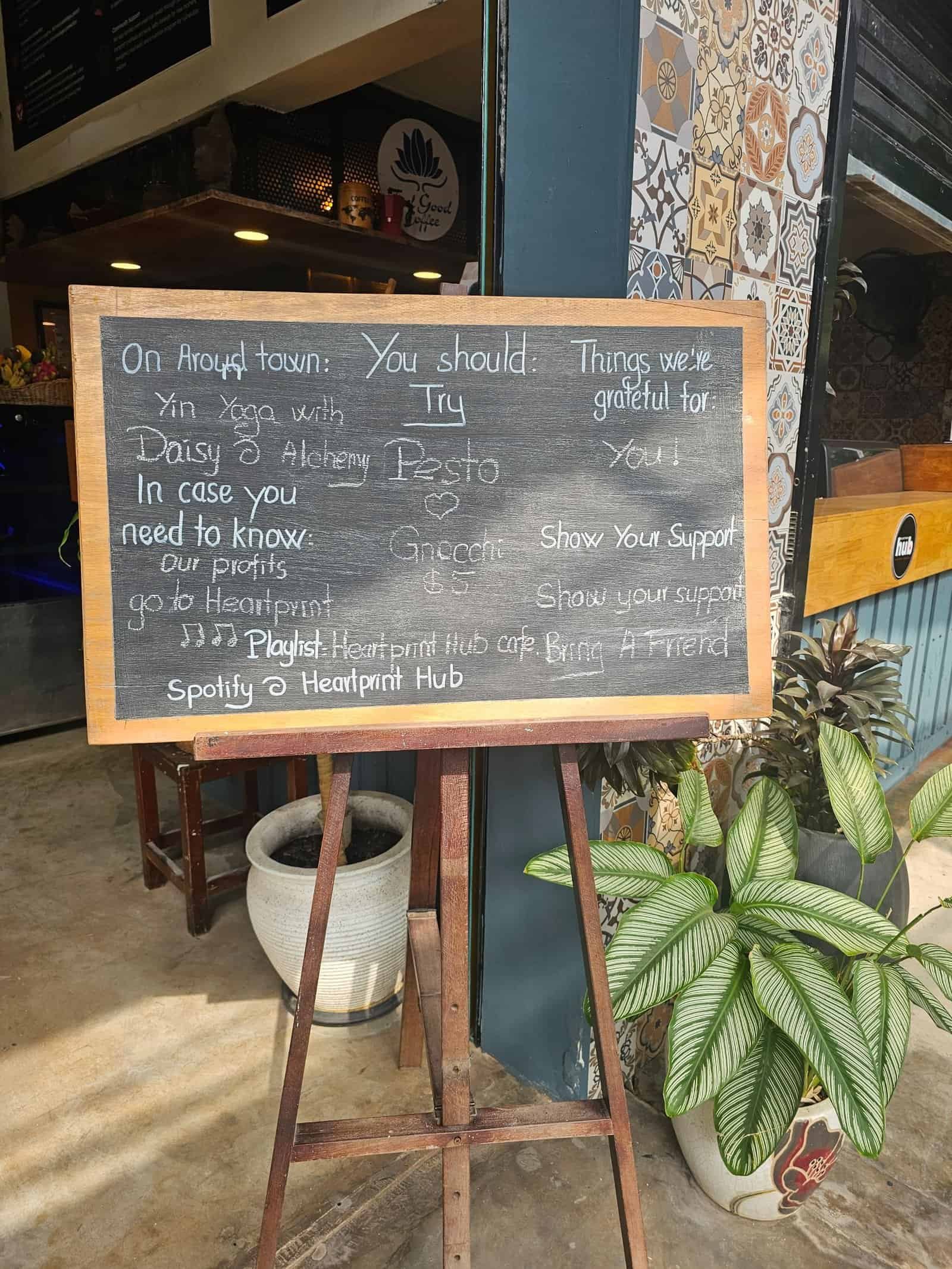
Profits from the Hub flow back into Heartprint’s programs. But the real engine here is the fair trade store, where every purchase directly supports a specific person.
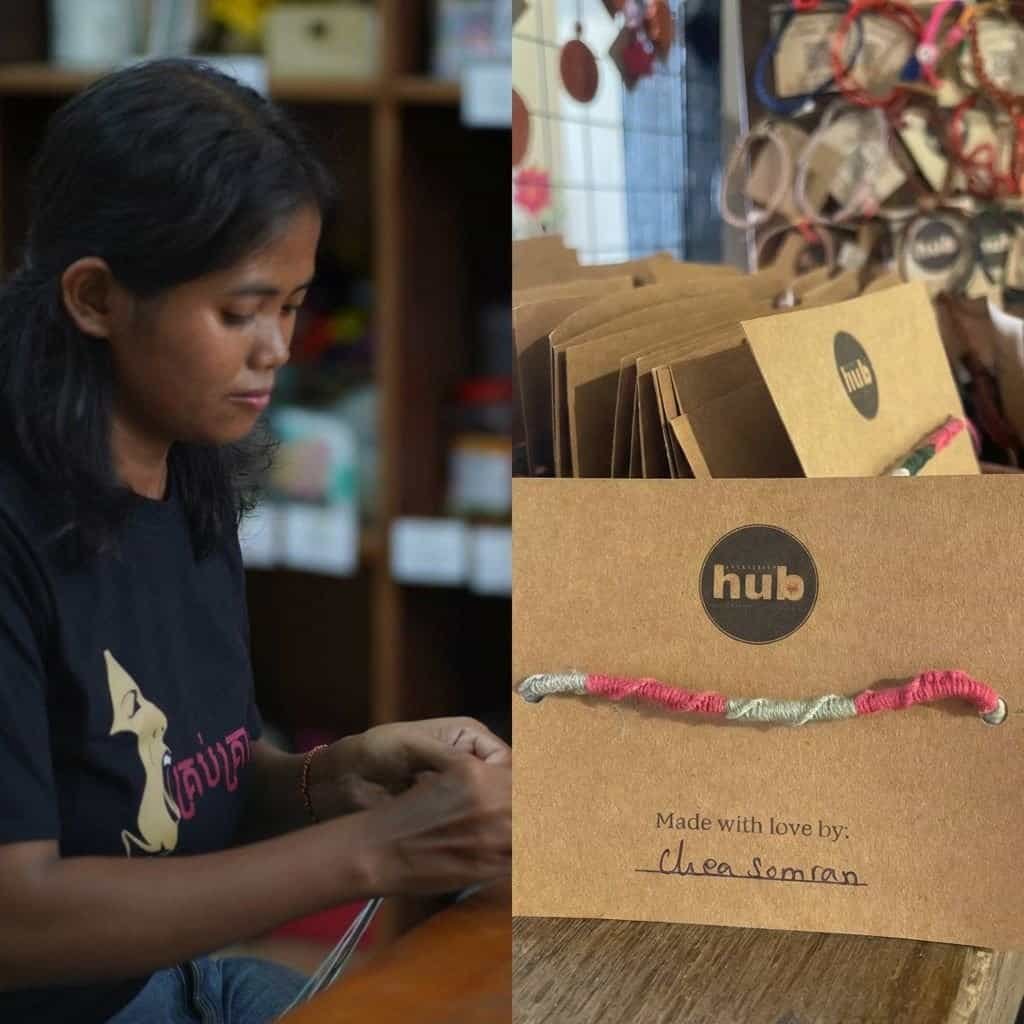
Image used with permission from Heartprint
When You Buy a Bracelet, You’re Supporting Somran
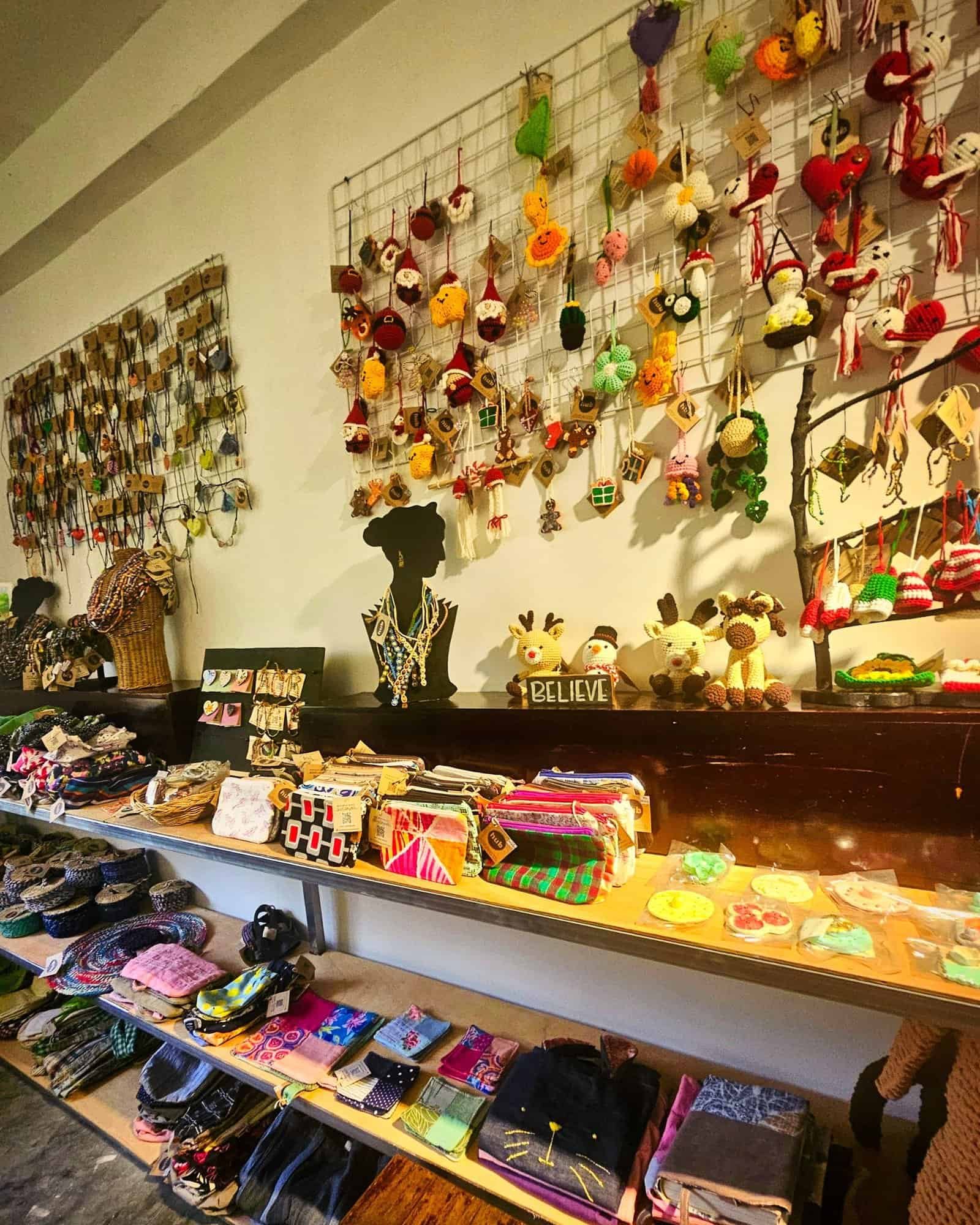
The fair trade store at Heartprint Hub Siem Reap isn’t stocked with anonymous souvenirs. Each product has a maker’s name attached, and many of those makers have stories that would stop you mid-transaction if you knew them.
Take Somran. She’s a devoted single mother raising a five-year-old son and three-year-old daughter. Her journey with Heartprint began in 2023 during one of the hardest periods of her life. Her husband had come to Heartprint seeking support for a house build, but he passed away before the family could be formally enrolled in the program.
Following his death and the completion of the house, Somran was invited to join the Heartprint community. There, she could receive support, earn an income, and connect with other mothers facing similar challenges.
Today, Somran creates bracelets, cards, and string chimes. Jewelry and beadwork are her favorites. She’s completed training programs in women’s empowerment, business skills, and practical hairstyling through Hair Aid. Her dream is to start her own small business someday, building stability for her kids.
Her message to anyone who buys her work: “Thank you so much for helping to support me and my family.”
That’s the difference between picking up a generic keychain at a market stall and buying something from the Heartprint Hub Siem Reap. You know exactly where your money goes and whose hands made what you’re holding.
How the Fair Trade Model Works
The pricing structure at the fair trade store follows a 50/50 split that puts makers first. When someone like Somran creates a product, she receives 25% of the sale price upfront. When that item sells, she receives another 25%. The remaining 50% goes back into supplies and growing the Hub’s capacity to support more makers.
It’s a model that creates ongoing income rather than one-time charity. The mothers and community members making these products aren’t receiving handouts—they’re building skills and earning money through their own work. The Hub simply provides the platform, training, and market access they wouldn’t have otherwise.
Products range from keyrings and bracelets to scrunchies, bags, laptop sleeves, crochet toys, and handmade cards. Everything is priced fairly and travels easily, making them practical souvenirs that actually mean something.
Sokla’s Story: From Program Participant to Communication Director
If you want to understand what Heartprint’s long-term impact looks like, talk to Sokla. She’s 21 now, working as Heartprint’s Communication Officer. But she first walked through their doors at 15.
“I joined the first program at Heartprint when I was 15 years old in 2020,” Sokla told me. “Before that, I began learning computer programs and joining a youth group. I participated in the youth group from 2021 to 2024. After I finished, I started working with Heartprint in 2025.”
What strikes you listening to Sokla isn’t just her trajectory from participant to staff member—it’s how she describes what Heartprint meant to her during those formative years.
“Working for Heartprint has meant a lot to me because this place helped shape who I am today. When I was younger, it wasn’t just an organization to me. It was a safe place. A family. A source of hope.”
Now she’s on the other side of it, helping create that same support system for other kids coming through the programs.
“Being able to work here, I feel like giving back to something that gave me so much. It’s made me proud to be a part of Heartprint in a new way and to help create that same support for other kids too.”
Sokla isn’t unique at Heartprint. The organization specifically hires people who grew up in NGO programs, worked alongside NGOs, or did it tough themselves. They’re always the most passionate, according to Wendy. They understand the work because they’ve lived it.
Breaking Cycles Faster Than Expected
One thing Wendy mentioned that stuck with me was how quickly they’ve seen generational patterns break. The majority of families Heartprint works with come from intense poverty, which often brings addiction, particularly alcohol.
“A lot of these kids grew up with parents struggling with addiction,” Wendy explained. “Breaking that cycle, I thought, was going to be very difficult. I thought it would take generations. But we’re already seeing results now.”
Their youngest builder recently became a dad. His own father passed away when he was young. The fact that he’s now raising his child without repeating patterns that seemed inevitable—that’s the kind of outcome Heartprint hoped for but didn’t expect to see this soon.
Kids from the programs are landing jobs in major hotels through hospitality training partnerships. Many have broken alcohol habits in their own generation, not waiting for the next one to figure it out.
Wendy credits part of this to something she’s observed about Cambodian culture: a genuine willingness to change.
“Cambodians are actually very willing for change, which you don’t see very often with other nationalities,” she said. “If we introduce something—even something as simple as switching from white rice to whole grain—no one here will resist it. Most of our kids now prefer whole grain rice, and that happened within a couple of months.”
Small changes compound. Nutritional shifts, educational access, skills training, stable housing—stack enough of these and you start bending trajectories that seemed fixed.
What Heartprint Hub Siem Reap Offers Visitors
The Hub sits on Angkor Night Market Street, right in the heart of Siem Reap’s tourist zone. It’s open Sunday through Monday, 6:30 AM to 9 PM, closed Tuesdays.
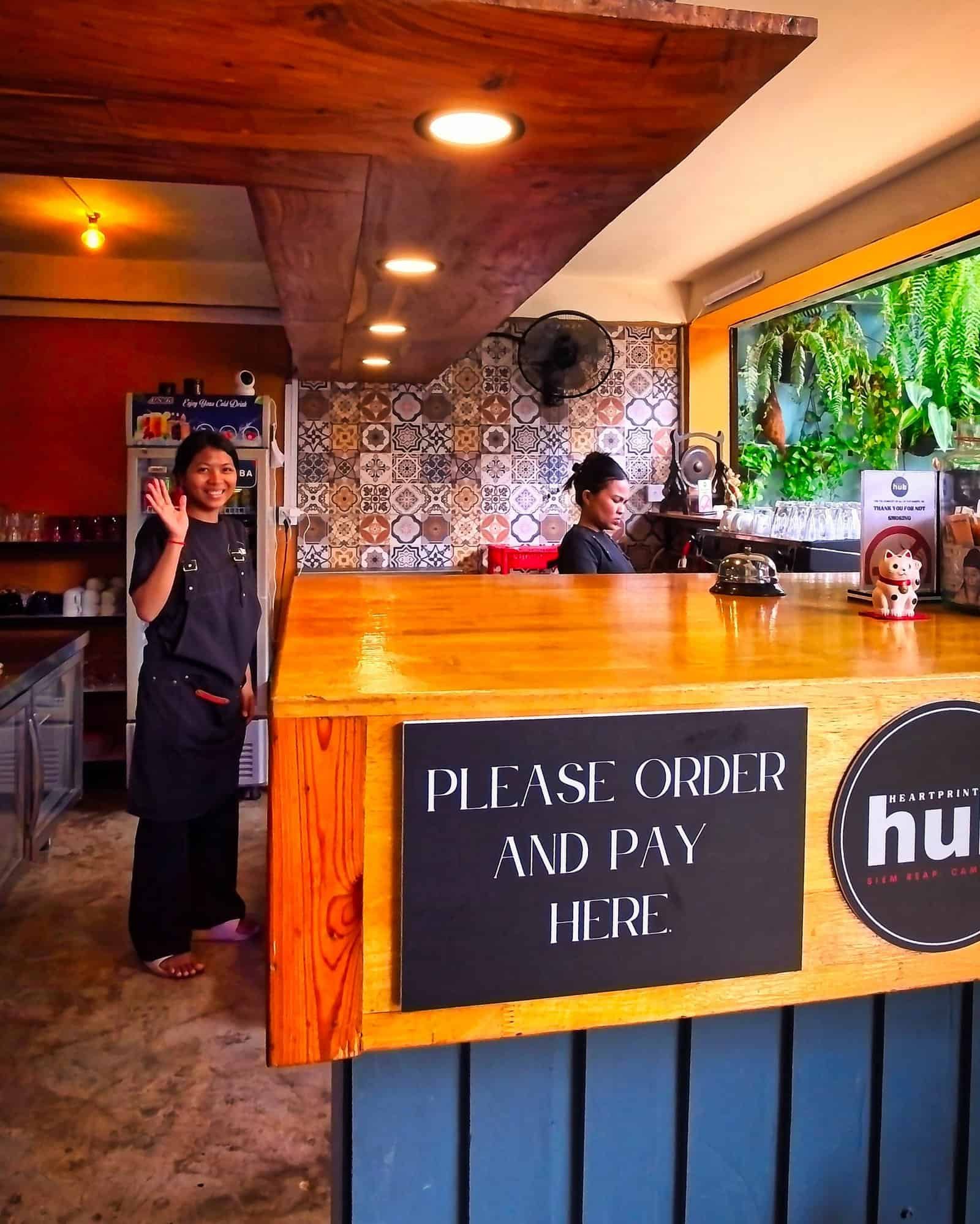
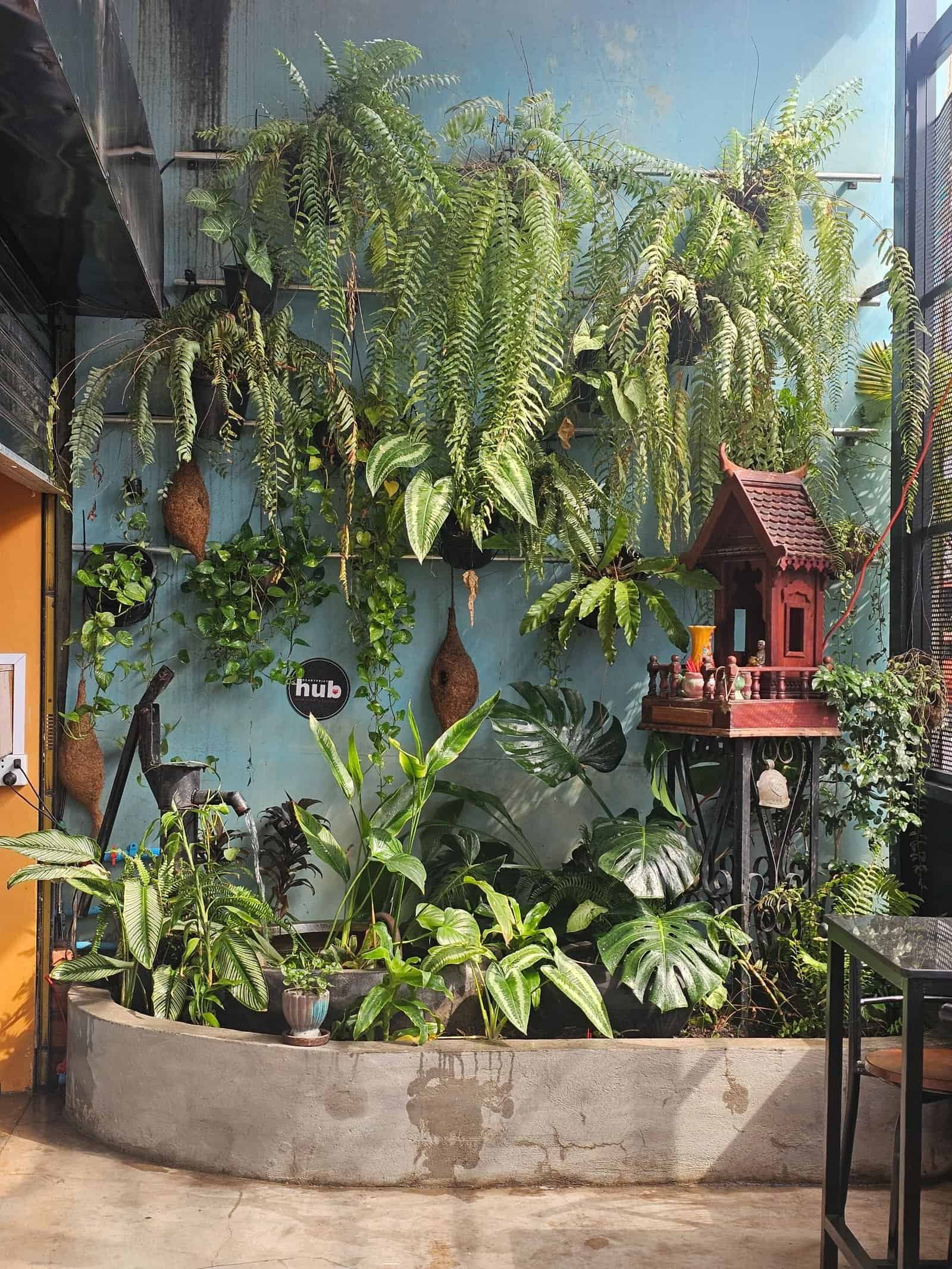
The cafe serves homemade dishes prepared by Khmer staff—fresh breakfasts, all-day meals, Khmer favorites alongside Western comfort food, smoothie bowls, juices, and proper coffee. Vegetarian, vegan, and allergy-friendly options are available. Everything is made on-site.
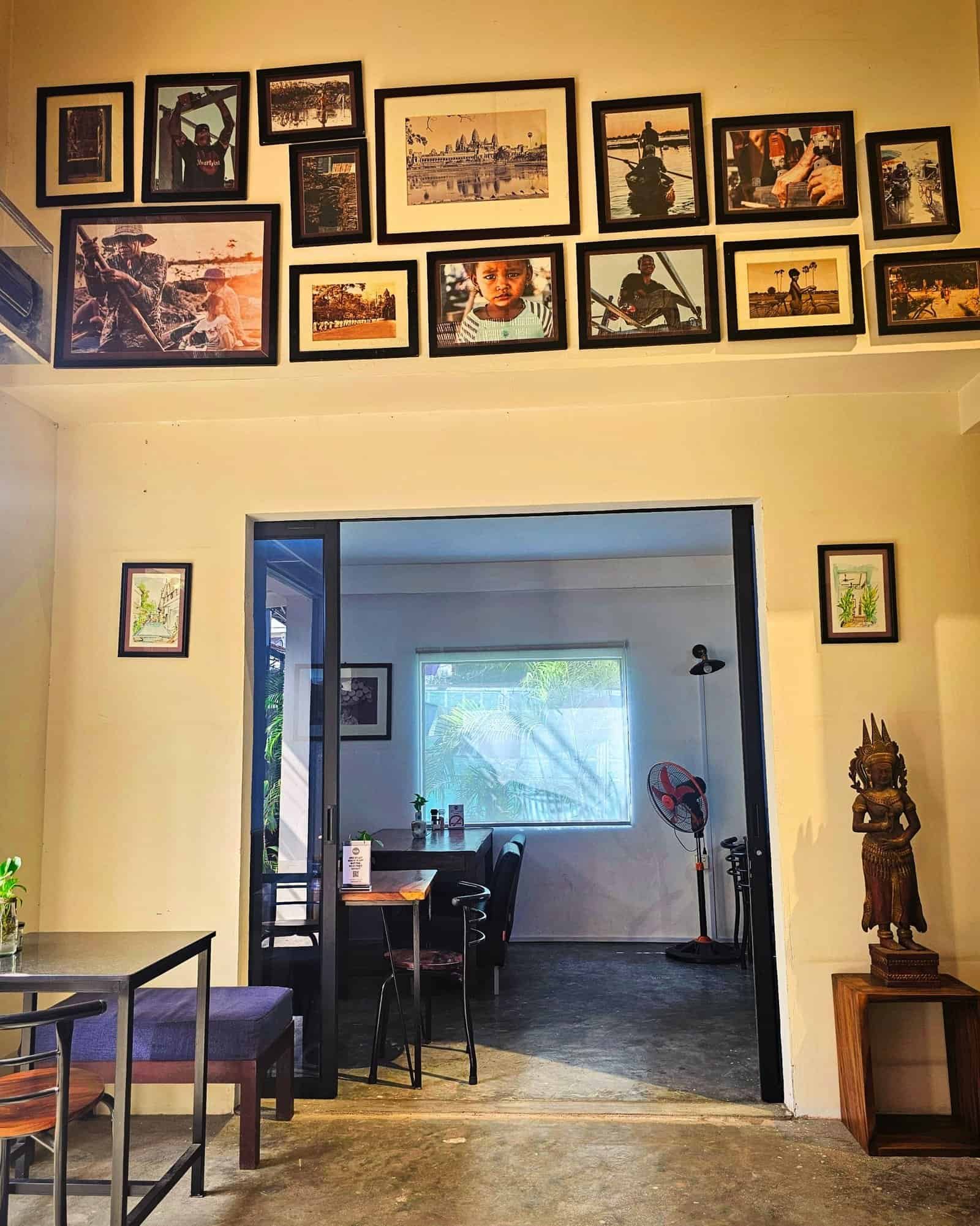
Inside, you’ll find air conditioning, free WiFi, and a calm space designed for people who need somewhere comfortable to sit and recharge. No booking required. Order something, stay as long as you need.
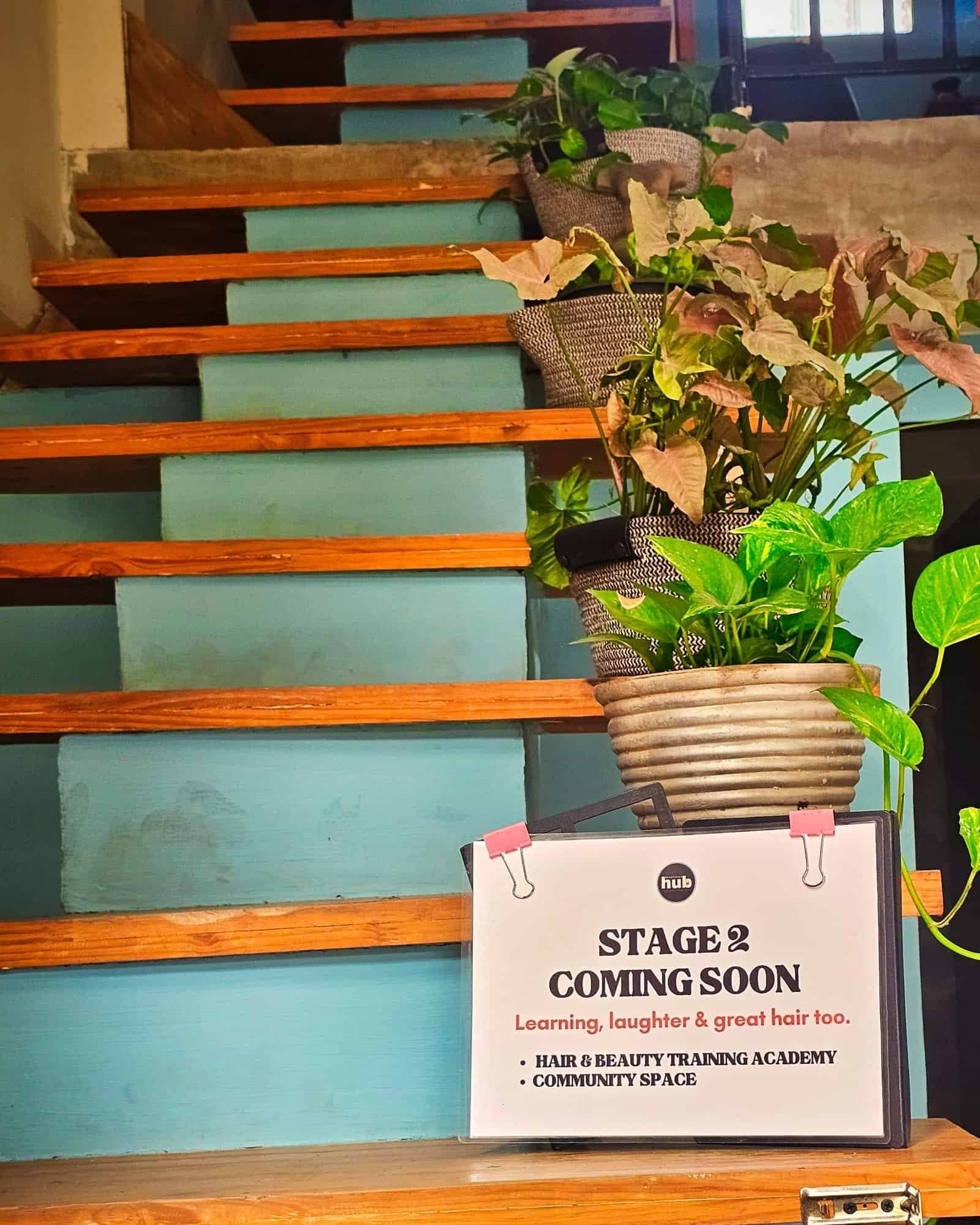
The fair trade store occupies part of the ground floor, stocked with handmade goods from community members. Upstairs, the hair and beauty training academy is being finalized and should open soon.
For anyone planning a trip to Cambodia, the Hub makes an easy addition to your Siem Reap itinerary. Check out our full Cambodia travel guide for more on navigating the country.
The Hair and Beauty Academy: Creating Career Pathways
The upcoming hair and beauty training academy represents the newest branch of Heartprint’s skills development approach. Located upstairs at the Hub, the academy will provide local women with practical hairstyling and beauty skills they can use to generate income independently.
This isn’t random programming. Wendy is a trained hairdresser herself, and Heartprint has maintained a partnership with Hair Aid—an international organization that sends volunteer hairdressers to Cambodia annually. That existing relationship laid the groundwork for something more permanent.
Somran, the bracelet maker mentioned earlier, has already completed Hair Aid training through Heartprint’s programs. The academy will formalize and expand this training, creating a clear pathway from skills acquisition to employment or self-employment.
Once operational, visitors to the Hub will be able to receive affordable hair and beauty services while simultaneously supporting trainees gaining real-world experience. It’s the same model as the cafe and fair trade store: your purchase directly funds someone’s development while you get something valuable in return.
Why Heartprint Doesn’t Allow Casual Voluntourism
Here’s something that sets Heartprint apart from many NGOs in Southeast Asia: they don’t offer drop-in volunteer experiences.
“We have a very strict child protection policy,” Wendy explained. “We don’t allow people to just come and volunteer with the kids.”
Visitors can schedule appointments to see the community center, but the organization doesn’t parade children in front of tourists. The reasoning goes deeper than policy compliance.
“I grew up in poverty, so I know what it feels like when everyone knows you’re the poor kid,” Wendy said. “I don’t want our kids to have to feel that way. They’re not tourist attractions.”
The structure Heartprint has built gives kids pride in who they are and what they can become. Being part of an NGO doesn’t have to mean being on display. The Hub offers visitors a way to support the work without directly impacting the children’s daily lives or dignity.
If you want to engage meaningfully, come have a coffee. Buy something from the store. Learn about what’s happening here. Tell other people. That’s the support Heartprint actually needs—not well-meaning tourists who want to hug kids for an afternoon and post about it.
What Heartprint Needs Most Right Now
When I asked Wendy what the organization needs most, she didn’t lead with money—though obviously financial support matters for any charity.
“Support in many ways,” she said. “Financial support, yes. But also spreading the word. Coming and having a coffee. Actually learning more about what happens here and why we’re doing what we’re doing.”
The Hub is designed to make that easy. You don’t have to donate or commit to anything. Just showing up and buying lunch contributes. Grabbing a gift from the store directly supports a maker and their family. Telling someone else about the place extends the reach.
For those who want to go deeper, Heartprint’s website outlines additional options: sponsoring a university student, joining the Heart of Gold club, or contributing to specific programs. But the Hub exists precisely so that engagement doesn’t require that level of commitment. It meets people where they are.
The Branching Tree: Where Heartprint Hub Fits
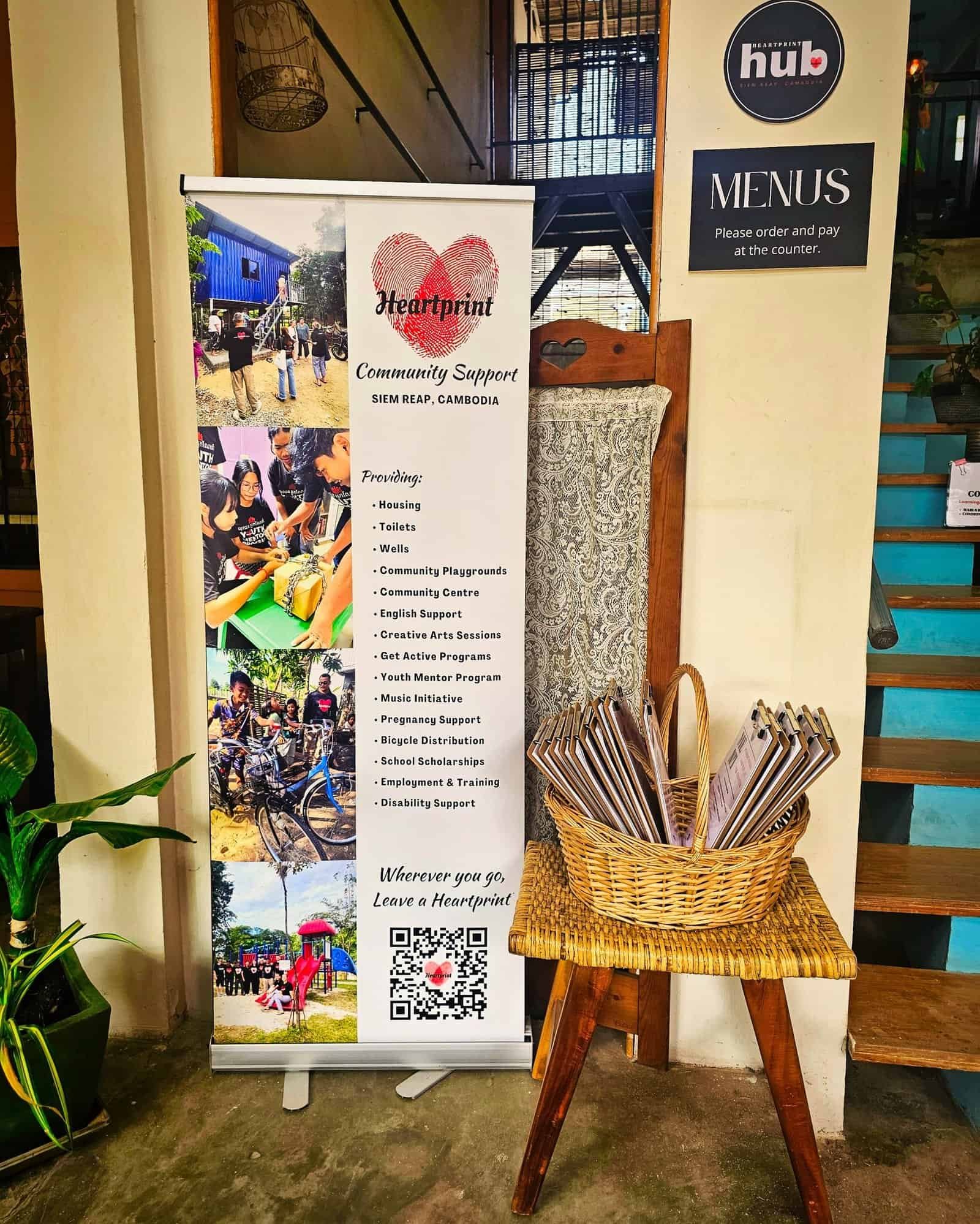
Wendy described the organization’s growth as a branching tree. The trunk is housing—those 141 homes built over 11 years. From there, branches extend into education support, vocational training, nutrition programs, and university sponsorships.
The Heartprint Hub Siem Reap sits at the top of that tree. Its purpose is to feed everything below it. Revenue flows down through the branches to support every program. Training opportunities at the Hub create pathways for community members to gain employable skills. The fair trade store provides income for families enrolled in other programs.
It’s a self-reinforcing system. The more the Hub succeeds, the more resources flow to the people who need them. The more those people develop skills and stability, the stronger the community becomes. Eventually, kids who grew up in the programs end up working at the Hub or elsewhere, contributing back to something that shaped them—exactly like Sokla is doing now.
Visiting Heartprint Hub Siem Reap
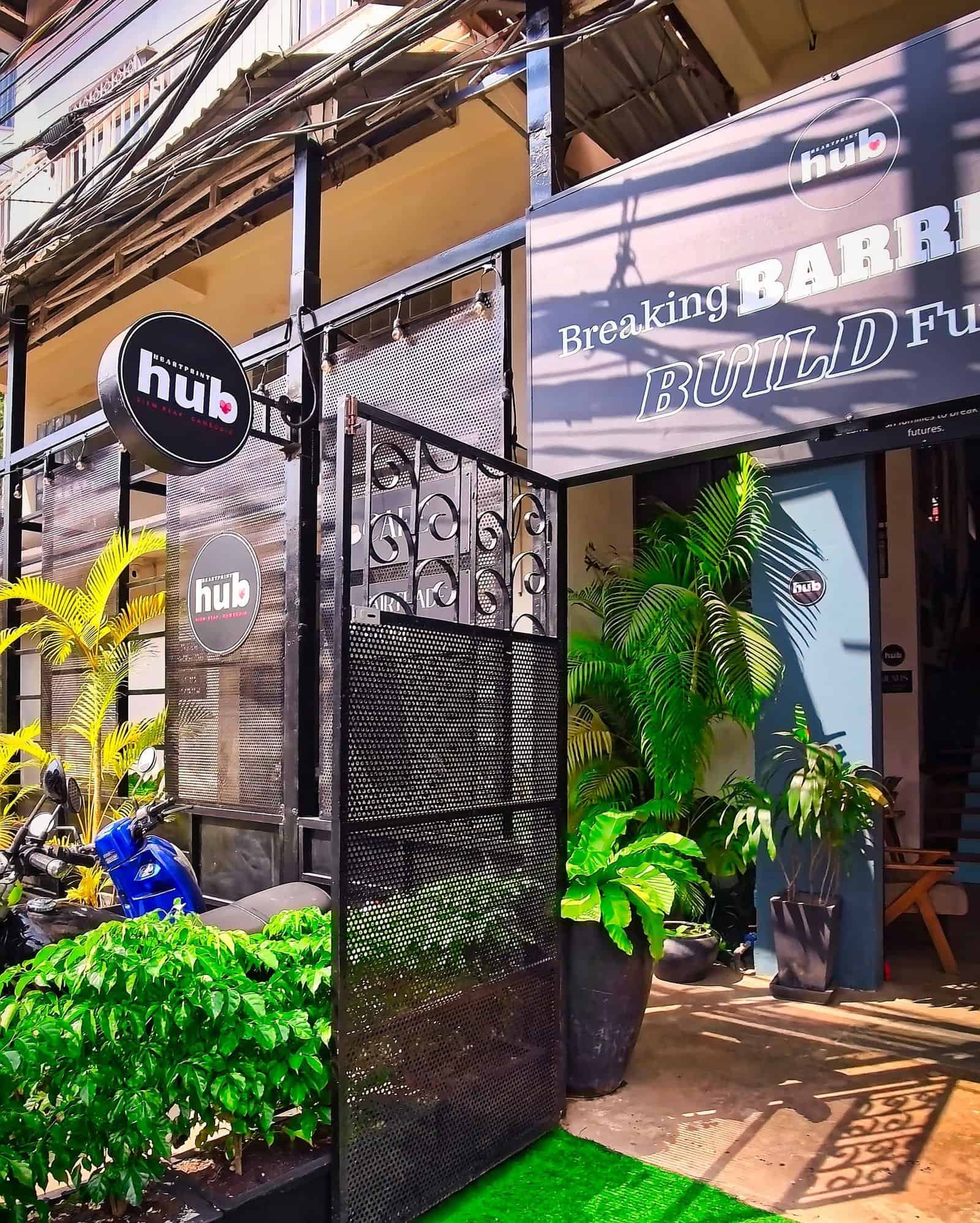
The Hub is located at Angkor Night Market Road in Siem Reap. You can find it on Google Maps here.
Hours: Sunday to Monday, 6:30 AM – 9 PM. Closed Tuesdays.
What to expect: Air-conditioned cafe with homemade food, proper coffee, fair trade store with handmade goods, and a welcoming atmosphere. WiFi available.
Coming soon: Hair and beauty training academy upstairs, offering affordable services while providing real-world training for local women.
Follow Heartprint Hub on social media at @heartprinthub_cambodia on Instagram, and the main Heartprint organization at heartprint.org.au.
Final Thoughts on Heartprint Hub Siem Reap
There’s no shortage of cafes in Siem Reap. There’s no shortage of places selling souvenirs or claiming to support local communities. What makes Heartprint Hub Siem Reap different is the transparency and depth behind it.
You can trace the money. You know the makers’ names. The staff includes people who grew up in the programs. The founders left careers in Australia to live here full-time and do this work for over a decade. House number 141 gets handed over tomorrow.
None of that requires you to do anything heroic. Walk in, order a coffee, maybe grab a bracelet made by Somran or one of the other mothers in the program. That’s it. You supported a family, contributed to breaking generational cycles, and got a decent cup of coffee out of it.
As Sokla put it: Heartprint was a safe place, a family, a source of hope. Now she’s helping create that same support for other kids. That’s what your visit helps sustain.
Have you visited a social enterprise in Southeast Asia that left an impression on you? Drop a comment below—I’d love to hear about it.
Planning your Cambodia trip? Check out our complete Cambodia Travel Guide for practical tips on getting around, where to stay, and what to expect.